



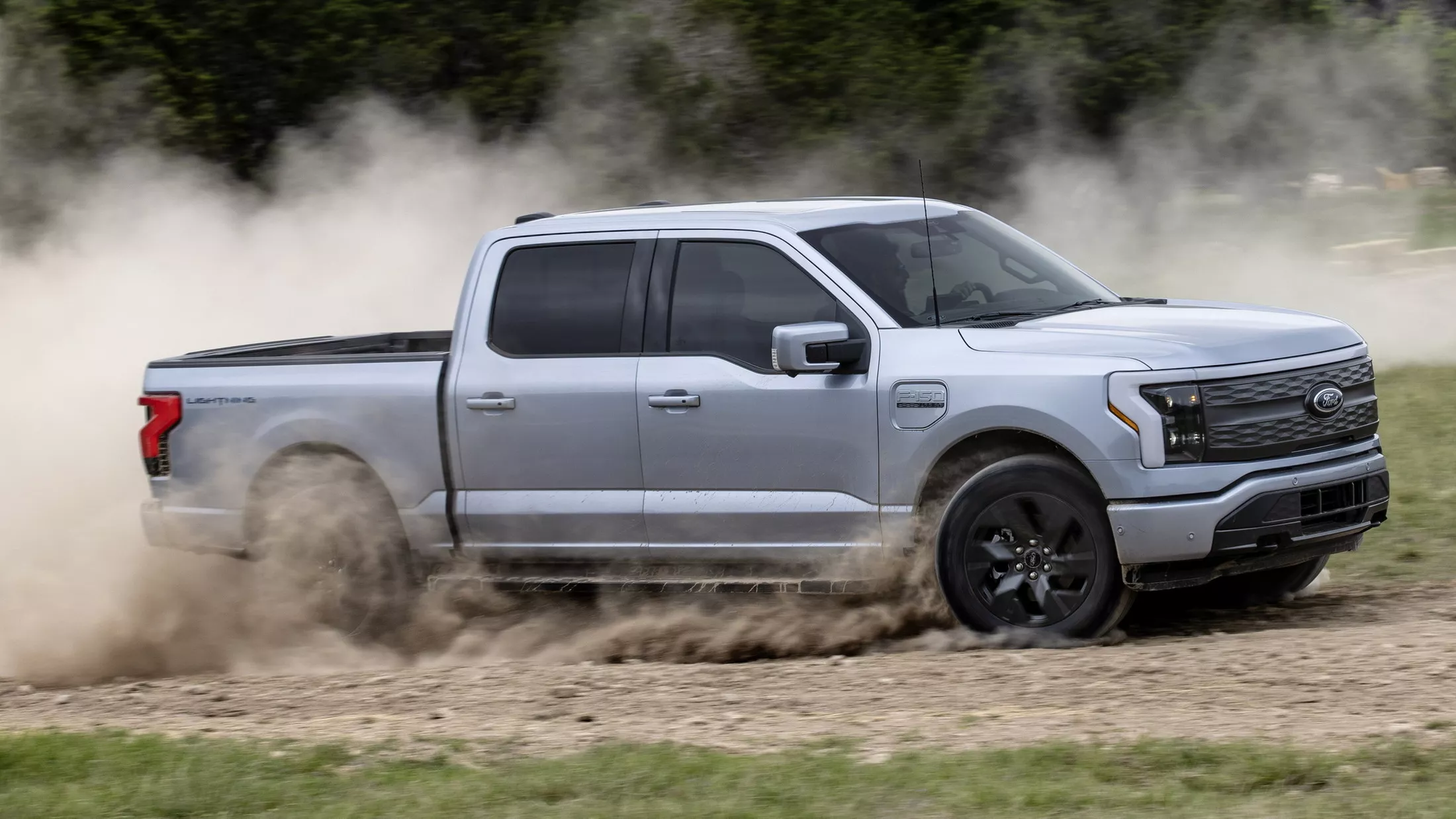
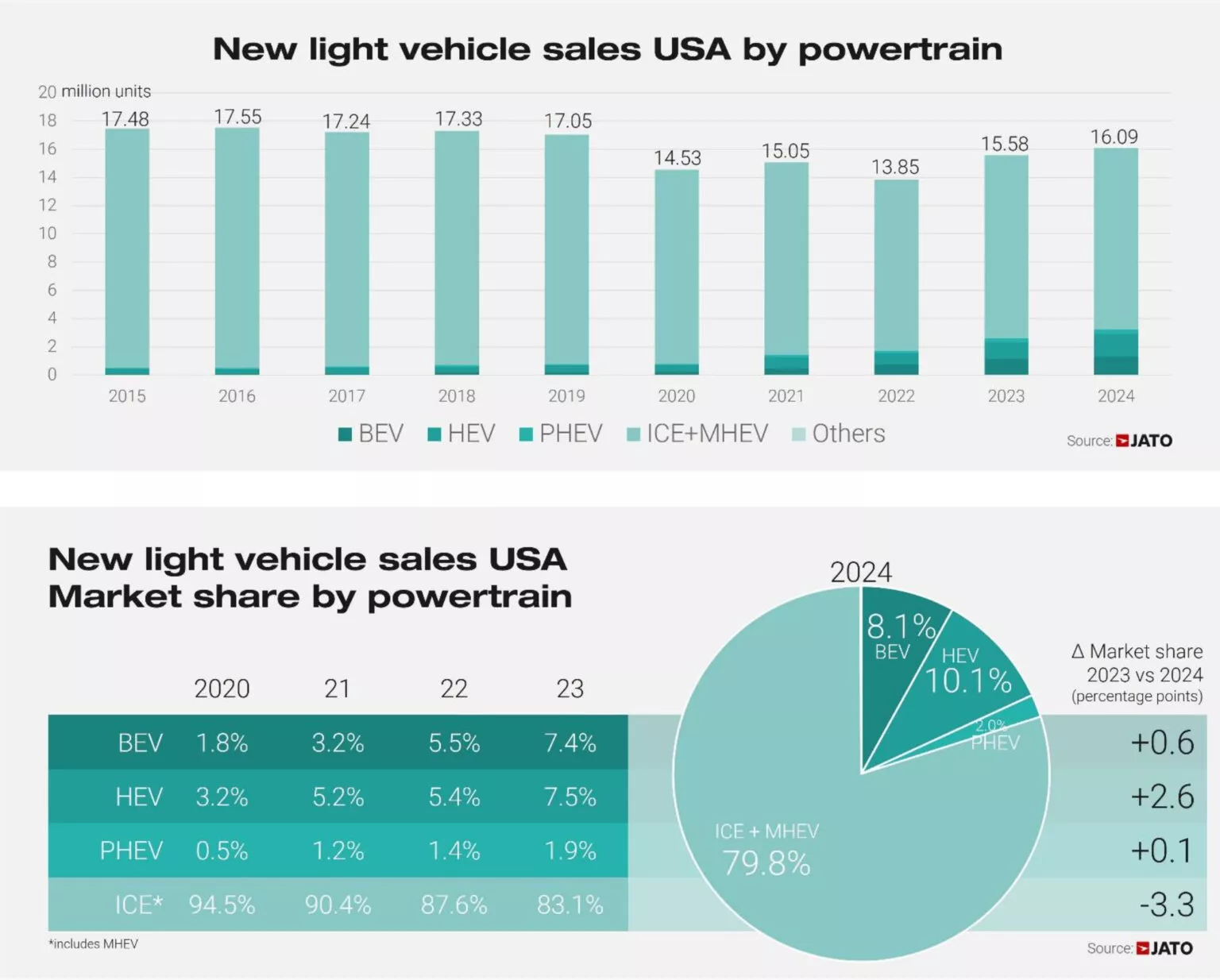
The U.S. automotive market continues to favor larger vehicles, with trucks and SUVs making up 75% of total vehicle registrations in 2024, according to data from JATO Dynamics.
Out of the 16.09 million vehicles sold in the U.S. last year, 9.17 million were SUVs, marking a 5% increase from 2023. General Motors (GM) led the SUV segment with a 15.6% market share, followed by Toyota at 13.3%, Hyundai-Kia at 12.6%, and Ford at 9.6%. Honda, with a 9.4% share, saw the fastest growth in the segment, thanks to strong demand for its CR-V, HR-V, and Pilot models.
See also: Nearly Half of Americans Plan to Buy an EV Within Five Years – Survey

One of the standout performers was the redesigned Chevrolet Trax, which experienced the biggest gain in market share and ranked as the 15th best-selling vehicle in the country. Its success was attributed to its competitive price and significant improvements over the previous model.
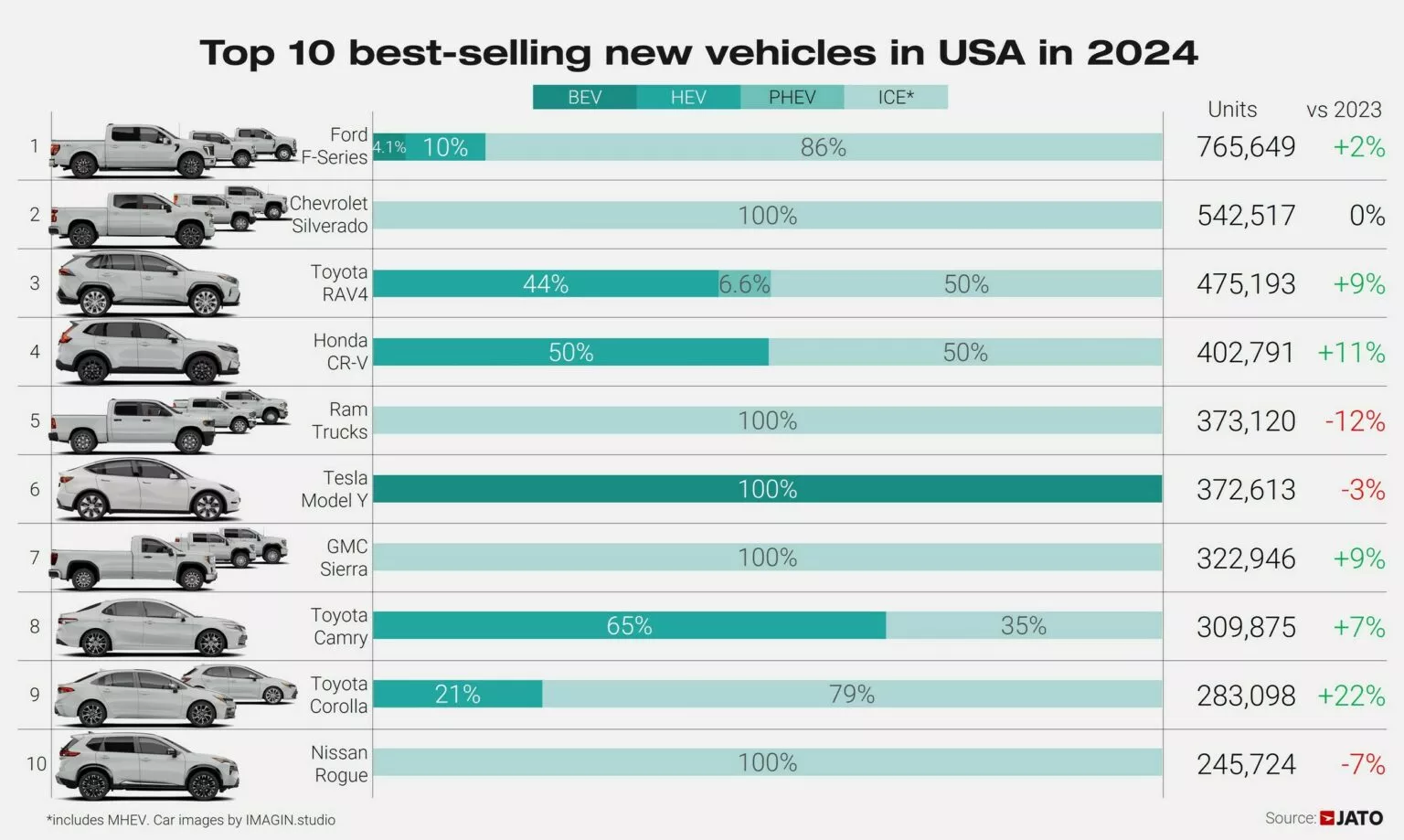
In contrast, the Ford F-150 saw a decline in sales by 5%, dropping to 460,915 units. This shift allowed the Toyota RAV4 to become the best-selling vehicle in the U.S. with 475,193 units sold.
See also: Study Reveals Strong Demand for Affordable Three-Row Electric SUVs

Meanwhile, electric vehicles (EVs) and plug-in hybrids (PHEVs) continued to gain traction, with EV sales increasing by 12% and PHEV sales surging by 39%.
On the other hand, sales of internal combustion engine (ICE) vehicles declined slightly by 0.6%, leading to a drop in their market share below 80%. This reflects the ongoing trend towards electrification in the U.S. automotive market.