



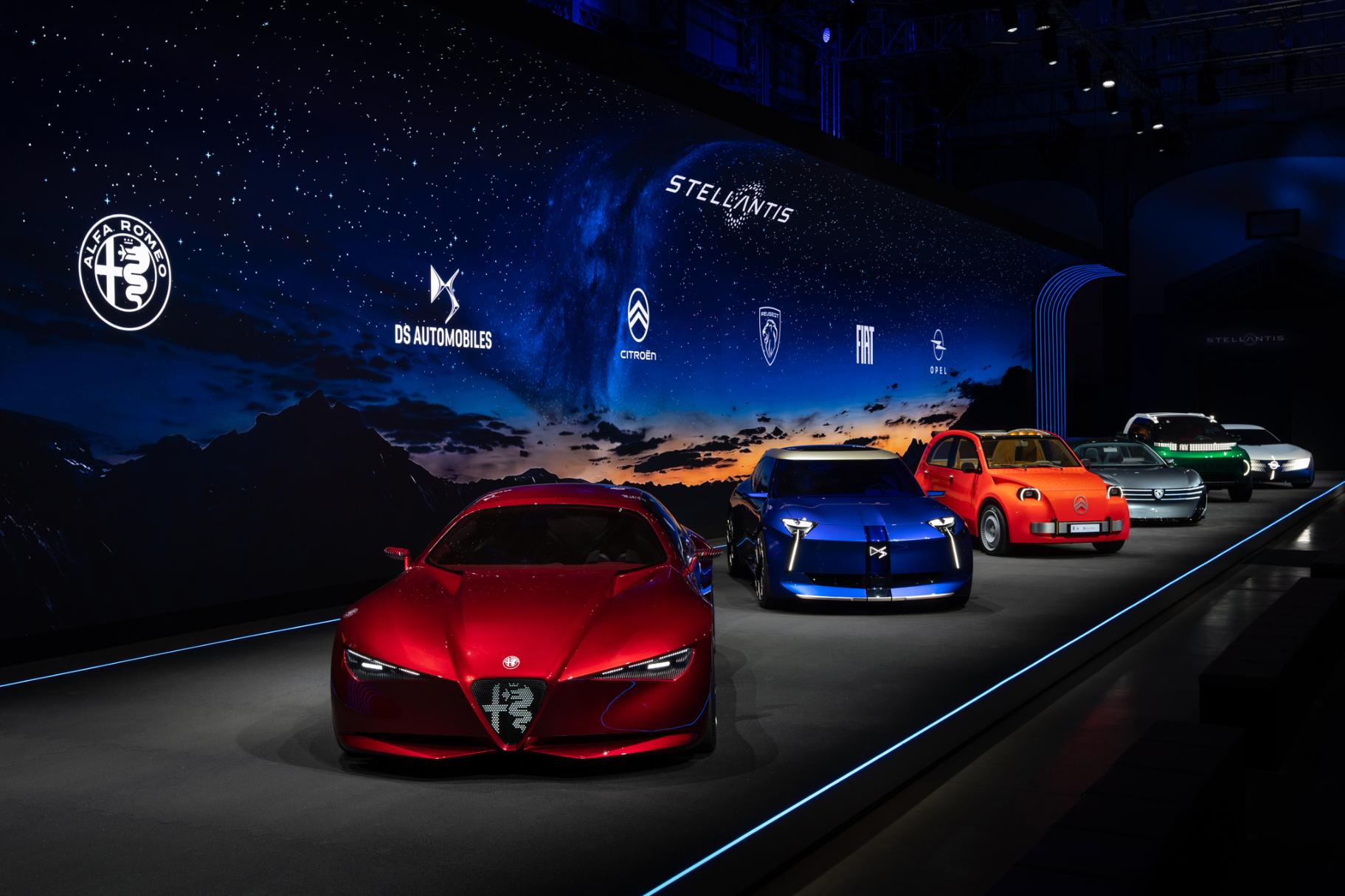
Stellantis has presented six concept cars representing Peugeot, Citroën, Fiat, Opel, Alfa Romeo and DS Automobiles ahead of the 2026 Paris Motor Show. Revealed on 11 October, the concepts explore potential directions for vehicle design, powertrains and in-car technology as the group implements its FaSTLAne 2030 strategic plan.
The six studies cover a range of approaches, from fully electric mobility and performance-oriented hybrid powertrains to adaptable vehicle layouts and new digital interfaces. Stellantis plans to display more than 60 vehicles at the Paris event, with eight of its brands represented, including partner Leapmotor.
The concepts form part of a broader product strategy that calls for more than 50 launches by 2030. Stellantis says the plan is intended to expand its market coverage across Enlarged Europe by 25%.
Six Concepts Explore Different Vehicle Directions
The concepts reflect the individual identities of the six participating brands while examining potential applications for future models.
Citroën 2 CV Concept
Citroën’s 2 CV Concept revisits the idea behind the original 2 CV through a fully electric vehicle designed around affordability and simplicity. Stellantis describes the concept as an electric car manufactured in Europe, with a target price of €15,000.
The study reinterprets the original model’s emphasis on accessible mobility for a contemporary market. The proposed price positions it at the lower end of the European electric car market, although the company has not announced production plans or detailed technical specifications.
Peugeot RCZ Vision
The Peugeot RCZ Vision explores the brand’s future design and driving technology. Based on the STLA One platform, the concept incorporates steer-by-wire technology and previews a new generation of the Peugeot i-Cockpit, including the Hypersquare interface.
Peugeot describes the vehicle as a study of high-performance electric mobility, combining an updated cabin experience with a focus on driving dynamics. The company has not disclosed detailed performance figures.
Opel STX Concept
The Opel STX Concept presents a design direction for future estate cars. Its exterior features the brand’s Vizor lighting signature, animated lighting elements and a more prominent vertical Opel Compass motif.
A downward-sloping rear section contributes to the concept’s overall shape. Opel says elements of the design language will appear in future production models, although it has not identified specific vehicles or launch dates.
Alfa Romeo Cuorerosso
Alfa Romeo’s Cuorerosso concept explores a performance-oriented vehicle using a full-hybrid 2.9-litre V6 powertrain and Q4 all-wheel drive. The proposed configuration also includes a torque converter and carbon-fibre driveshaft.
The concept illustrates how Alfa Romeo could apply multi-energy architectures to future models measuring up to 4.7 metres long, with the potential to accommodate Quadrifoglio performance versions. The announcement does not specify a production schedule or detailed power output.
Fiat Multiplay
The Fiat Multiplay combines elements of a pickup and an SUV in a configurable vehicle layout. Inspired by the Multipla, the concept examines how a vehicle could adapt to different uses and passenger requirements.
Its design focuses on flexibility and shared use, rather than a conventional single-body vehicle category. Fiat has not released technical specifications or confirmed whether the concept will enter production.
DS F3VER
The DS F3VER concept explores the future design direction of DS Automobiles, with an emphasis on personalisation, versatility and distinctive styling.
The study examines how these elements could be combined in future vehicles, but Stellantis has not announced specific powertrain details, dimensions or production plans for the concept.
Stellantis Connects Concepts to Its 2030 Strategy
The six concepts were developed under the leadership of Gilles Vidal, Head of Design for Enlarged Europe. They are intended to demonstrate different design and technology approaches across the group’s brands rather than a single shared vehicle format.
Vidal said:
“With these six concept cars, we are expressing a shared conviction: the future of automotive design must be both bold and meaningful. Each concept explores new ways to enhance everyday experiences while reinforcing the unique identity of its brand. Together, they demonstrate how creativity, innovation and emotion can come together to make people fall in love with cars again,” said Vidal.
Stellantis CEO Antonio Filosa linked the concept programme to the company’s broader product strategy.
“This event brings our FaSTLAne 2030 strategy to life,” said CEO Antonio Filosa. “It reflects the extraordinary effort of our teams and our commitment to shaping the future of mobility through iconic brands, compelling design and innovative technology, giving customers more choice and more reasons to be excited about what’s ahead.”
The company’s plan calls for more than 50 product launches by 2030. Emanuele Cappellano, Chief Operating Officer for Enlarged Europe, said the strategy is intended to increase the group’s market coverage in the region by 25%.
“Stellantis is deeply rooted in Europe and holds a leading position that will be strengthened by the success of all our brands.”
Cappellano also described the role of the brands’ individual identities in the strategy:
“Stellantis wants to fully leverage the competitive advantage set by its iconic brands’ uniqueness, offering cars that are at once rooted in heritage and future-driven, based on robust know-how and distinguished by their unmatched design beauty, to shape the future of mobility with more than 50 products to be launched by 2030. These achievements, based on the execution of our strategic plan, will enable Stellantis to expand its market coverage in Enlarged Europe by 25%,” added Cappellano.
Multiple Powertrain Approaches Remain in the Line-Up
The concepts illustrate the different technologies and vehicle formats Stellantis is exploring across its brands. Citroën and Peugeot focus on electric mobility, while Alfa Romeo’s Cuorerosso uses a full-hybrid V6 configuration. The Fiat, Opel and DS studies concentrate on vehicle layout and design direction, with detailed powertrain information not disclosed for every concept.
Together, the six vehicles provide an overview of Stellantis’ design development ahead of the Paris Motor Show. Their presentation also reflects the group’s plan to use its separate brands to address different segments and customer requirements as it develops its product portfolio through 2030.