
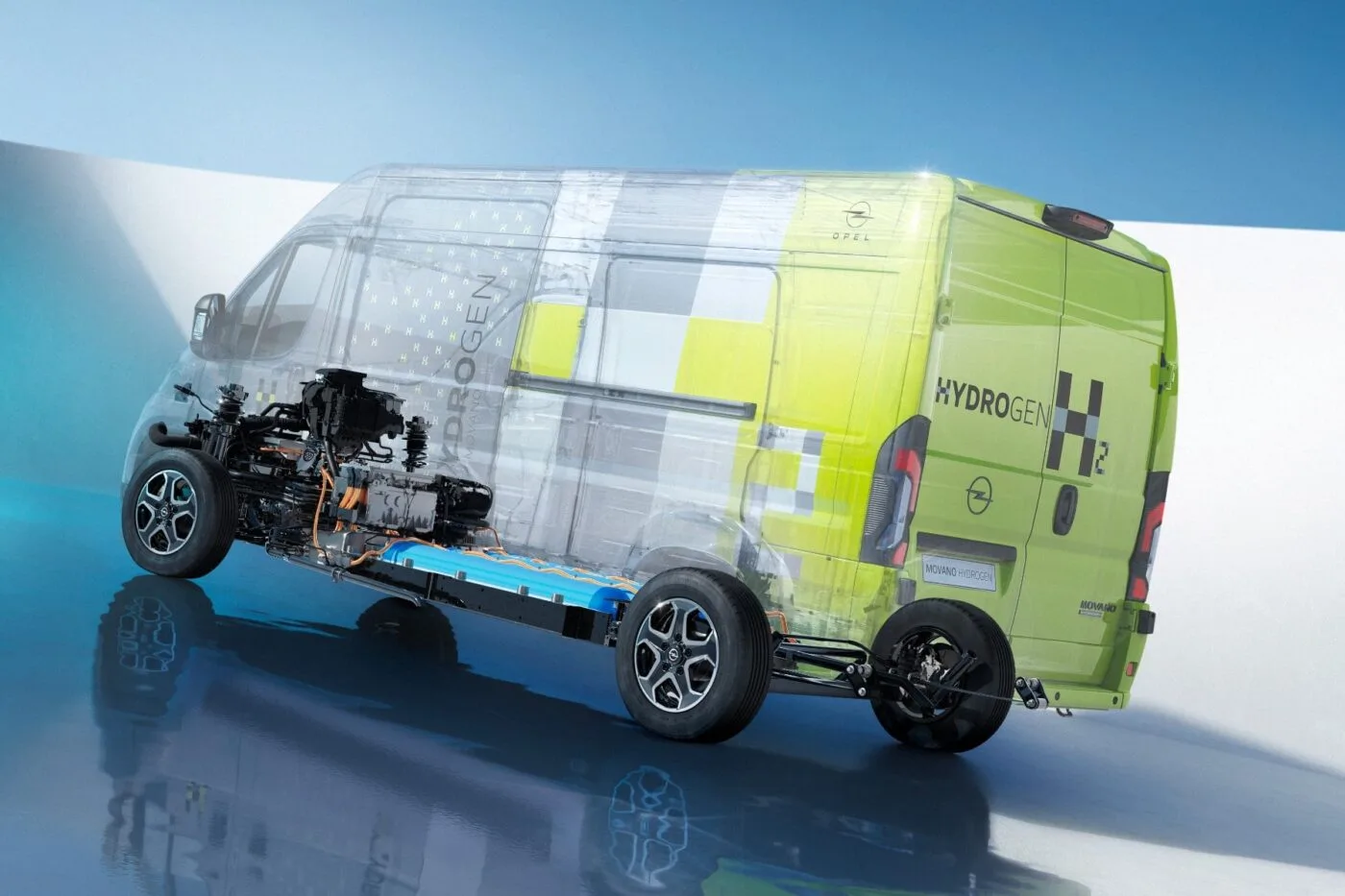
Stellantis no longer sees a viable market for its hydrogen-powered light commercial vehicles in the UK, citing inadequate infrastructure and a lack of national subsidies, a company official said this week.
“It is not the right time to push hydrogen,” said Fedele Ragusa, Product Manager at Stellantis, in comments to Fleet News. “There is no investment in incentives and infrastructure, so we are not pushing it commercially.”
The statement marks a significant reversal from previous company forecasts. In April, Jean-Michel Billig, head of Stellantis’ hydrogen programme, had projected that hydrogen-powered vans could account for up to 40% of the market. The company only began series production of its medium and large fuel cell electric vehicles (FCEVs) earlier this year, with manufacturing centred in Hordain, France, and Gliwice, Poland.
Stellantis currently offers hydrogen variants in several of its commercial models, including the Citroën ë-Jumpy, Fiat E-Scudo, Opel/Vauxhall Vivaro, and Peugeot E-Expert. These medium vans feature second-generation fuel cell systems offering a range of up to 400 km and a refuelling time under four minutes. Larger models such as the ë-Jumper, E-Ducato, Movano, and E-Boxer offer up to 500 km of range with a five-minute refuelling time.
However, the UK lacks a sufficient hydrogen refuelling network, and national policy has not provided the kind of financial incentives seen in other markets. Without those supports, the high upfront cost of hydrogen vans makes them a difficult sell to fleet customers.
Stellantis has not clarified whether it will continue to offer its hydrogen van models in the UK or simply scale back marketing and sales activities. The longer-term impact on other European markets also remains uncertain. In France, the company was previously a partner in the Hype hydrogen taxi initiative in Paris, which has since shifted its focus toward battery-electric vehicles.
Despite continuing to offer both battery-electric and combustion engine vans, Stellantis’ pause on hydrogen strategy in the UK highlights broader challenges for hydrogen mobility across Europe.
Source: fleetnews.co.uk