



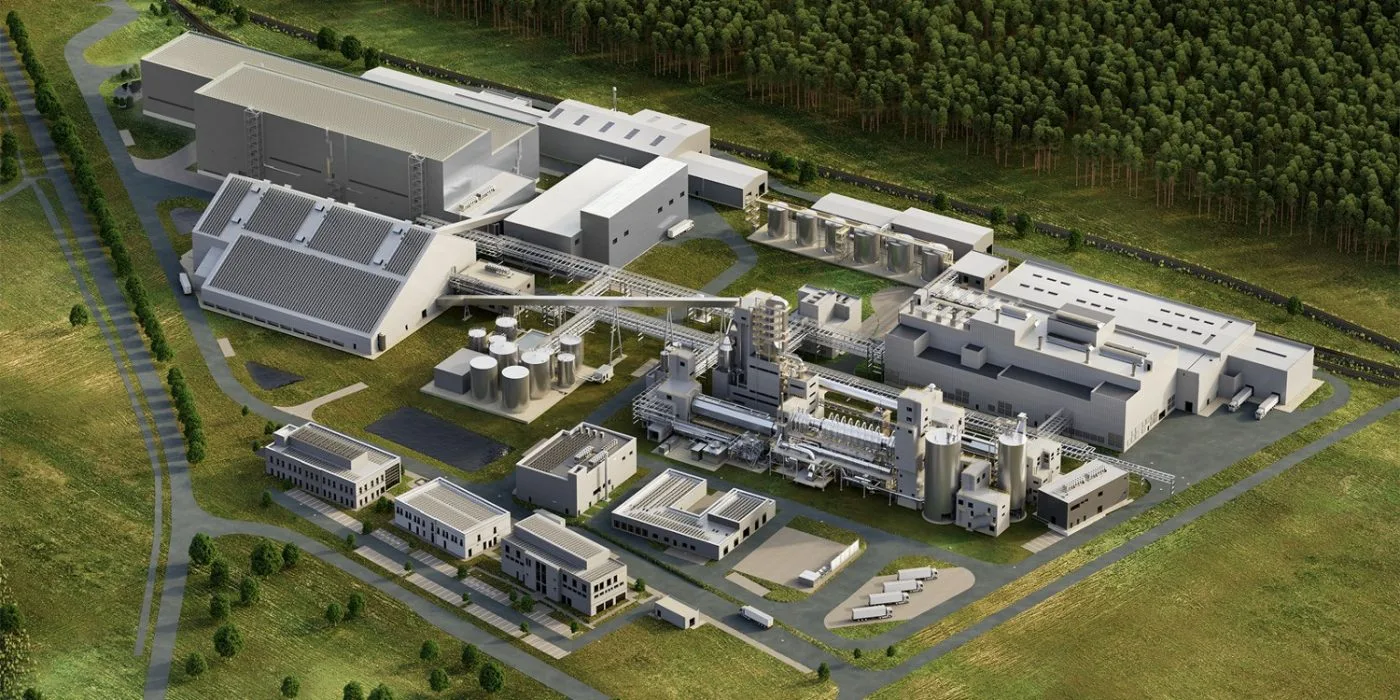
Rock Tech Lithium is facing financing challenges that are delaying progress on its planned lithium converter in Guben, Germany, raising further uncertainty over the timeline for one of Europe’s largest battery materials projects.
Financing Remains the Main Obstacle
According to statements made by company representatives during a Guben city council meeting, the project’s biggest hurdle is securing the estimated €750 million required to build the facility. The company said it continues to seek private investors, whose participation is considered essential before public funding can be unlocked.
Although Rock Tech remains committed to constructing the converter, company representatives were unable to provide a revised construction timeline. Once work begins, construction is expected to take approximately two and a half years.
Startup Status Adds Funding Challenges
The financing effort is complicated by Rock Tech Lithium’s position as a growth-stage company. While publicly listed, the German-Canadian developer has yet to generate significant commercial revenue because both the Guben converter and a planned facility in Canada would represent its first industrial-scale operations.
The company is also navigating uncertainty surrounding the pace of electric vehicle adoption in Europe, where demand for battery-grade lithium hydroxide remains closely tied to EV production.
Focus Remains on Final Investment Decision
In its latest quarterly report, Rock Tech said discussions with potential lenders are continuing as it works toward a final investment decision.
The company is currently focused on advancing project financing, updating its Front-End Loading Phase 3 (FEL3) engineering study, and completing detailed engineering and procurement planning while also refining its production process to lower future operating costs.
Europe’s Largest Planned Lithium Converter
The Guben facility is designed to produce approximately 24,000 tonnes of battery-grade lithium hydroxide annually, enough to supply around 30 GWh of battery production or approximately 500,000 electric vehicles each year.
Production was originally targeted to begin in 2027, but current expectations suggest commercial operations are unlikely before 2029.
Despite the financing delays, the project has already secured both construction and operating permits, allowing the company to move forward once funding is in place.


