


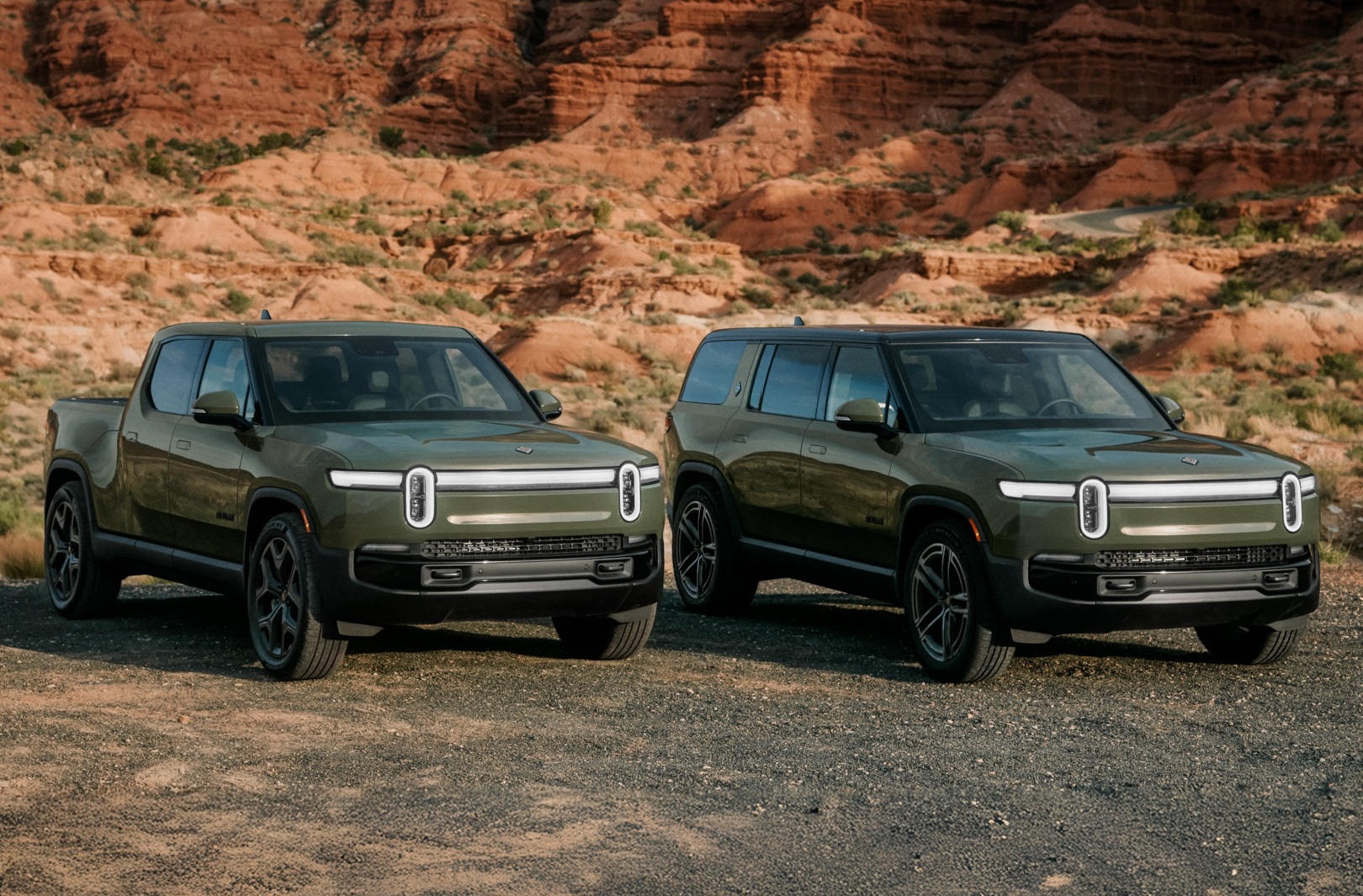
Rivian’s updated R1T and R1S electric vehicles offer over 1,000 horsepower and advanced quad-motor powertrains, delivering strong performance across diverse terrain. But while the setup enables precise torque control, off-road enthusiasts say it still has limitations compared with traditional mechanical systems.
In a recent test near Lake Tahoe, video host Roman Mica navigated a revised R1T over a steep rock pile, demonstrating the vehicle’s off-road capability. Though the Rivian eventually climbed the obstacle, it exhibited noticeable wheel slip and required significant throttle input to maintain momentum—challenges not typically faced by vehicles with locking differentials.

“A four-motor EV powertrain is always going to have more wheel slip than you’d get in a vehicle with locking differentials,” the report said. Unlike mechanical lockers, which split torque evenly between wheels regardless of terrain, quad-motor EVs must detect slippage before software can adjust power distribution.
That dynamic can make for a less predictable experience in extreme conditions. “There is just a slight sense that I would prefer a mechanical locker so that all four wheels are spinning all of the time,” Mica noted in the video.
Despite the complexity, Rivian’s system succeeded in getting drivers up the hill without issue. The quad-motor setup enables torque vectoring, which improves both on- and off-road handling. Still, for enthusiasts focused solely on off-road performance, traditional locking differentials remain a preferred solution.
Looking ahead, new entrants like Scout, which plans to launch an electric truck with front and rear lockers, may appeal to those seeking a more conventional off-road experience. While these vehicles may trade on-road speed for low-speed stability, off-road purists could find that a worthwhile compromise.