



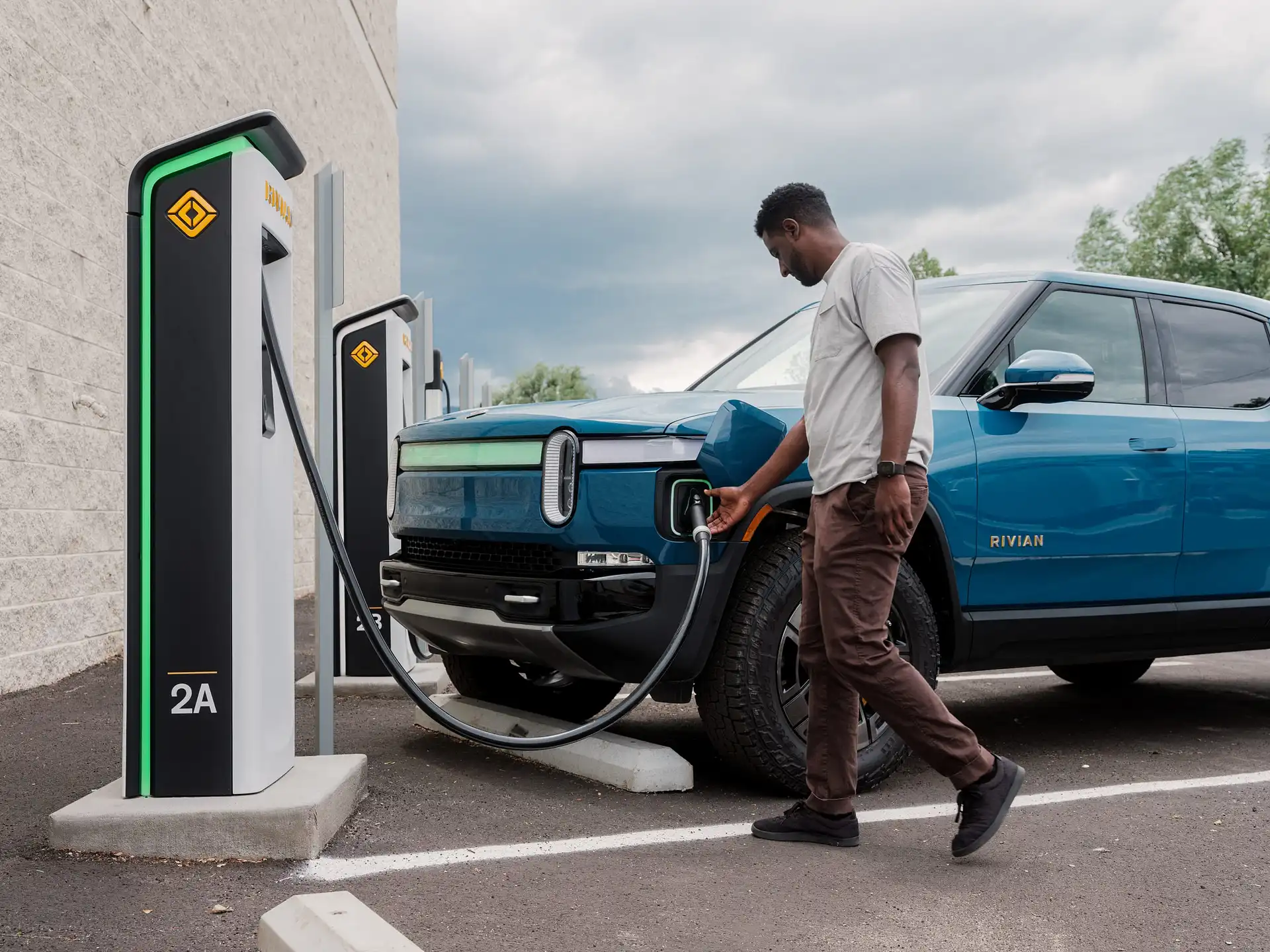
Rivian has partnered with vehicle-grid integration platform ChargeScape to connect its electric vehicles with utility-managed charging programs across North America, allowing drivers to support grid reliability while potentially reducing their charging costs.
The collaboration will enable Rivian owners to enroll in utility programs available through ChargeScape’s growing network of electricity providers, helping shift charging demand away from peak periods and providing additional flexibility to the power grid.
Expanding Vehicle-Grid Integration
Under the agreement, Rivian vehicles will be integrated into ChargeScape’s platform, which connects automakers, electric utilities and energy providers through a common vehicle-grid integration framework.
The companies said the partnership will allow participating utilities to access flexible charging capacity from Rivian vehicles, helping balance electricity demand during periods of high consumption.
Customers will continue to manage their charging preferences and program participation through Rivian’s existing digital platforms and mobile applications.
Supporting Grid Stability
Rivian noted that its vehicles already include software-based energy management capabilities designed to support grid-friendly charging.
Through the ChargeScape integration, those capabilities can be directly linked to utility-managed demand response and managed charging programs.
The companies said the approach can help reduce strain on the electricity grid while enabling EV owners to benefit from lower electricity rates and incentive programs offered by participating utilities.
Focus on Scalable Energy Solutions
ChargeScape said the partnership reflects a broader industry effort to create scalable and interoperable vehicle-grid solutions involving direct participation from automakers.
The platform currently supports managed charging programs based on V1G technology, which adjusts charging schedules to align with grid needs, while also offering vehicle-to-everything (V2X) capabilities through selected utility partners.
Joseph Vellone, Chief Executive Officer of ChargeScape, said the agreement strengthens industry collaboration around smart charging infrastructure.
“This is a significant step forward in aligning automakers around a common platform and charging standard.”
“Rivian’s partnership with ChargeScape will bring some of the largest batteries on the road onto an industry-owned, shared infrastructure.”
He added that managed charging programs can deliver meaningful savings for EV drivers while helping utilities manage growing electricity demand.
Growing Industry Participation
ChargeScape was established in 2023 as a joint industry platform created by BMW, Ford and Honda to connect electric vehicles with utility programs.
Nissan later joined as an investor, while other automakers, including Tesla and Stellantis, have also adopted the platform.
The company aims to accelerate the deployment of smart charging and energy management services as EV adoption continues to grow.
Rivian Expands Energy Strategy
For Rivian, the partnership aligns with its broader strategy of leveraging software-defined vehicle capabilities beyond transportation.
The company views electric vehicles as mobile energy assets that can provide value to both customers and the wider electricity system.
Andrew Peterman, Director of Advanced Energy Solutions at Rivian, said the collaboration demonstrates how EVs can play a role in supporting a more resilient energy infrastructure.
“Through this collaboration with ChargeScape and other partners, Rivian’s software-enabled vehicles are a perfect, nimble partner to help balance the energy grid and enable drivers to get more value out of their vehicle.”
“These solutions demonstrate how electric vehicles can help reduce electricity costs and support a more resilient energy grid for everyone, whether you own an EV or not.”
As utilities increasingly seek flexible energy resources to support electrification, partnerships between automakers and grid operators are expected to become an increasingly important part of the evolving energy ecosystem.


