



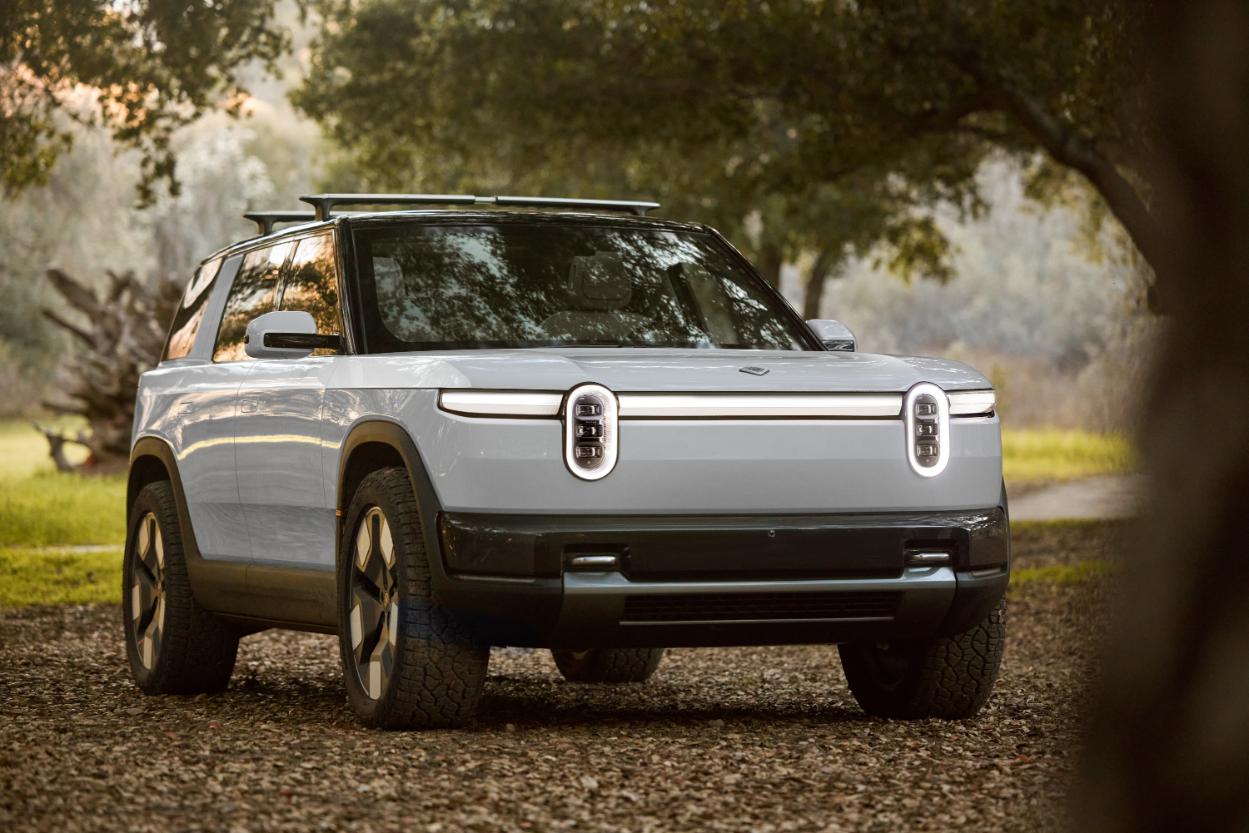
Rivian is pushing ahead with plans to produce its more affordable R2 electric SUV, targeting a mid-2026 production start despite growing trade uncertainties and newly imposed tariffs on imported auto parts, CEO R.J. Scaringe said during the company’s earnings call this week.
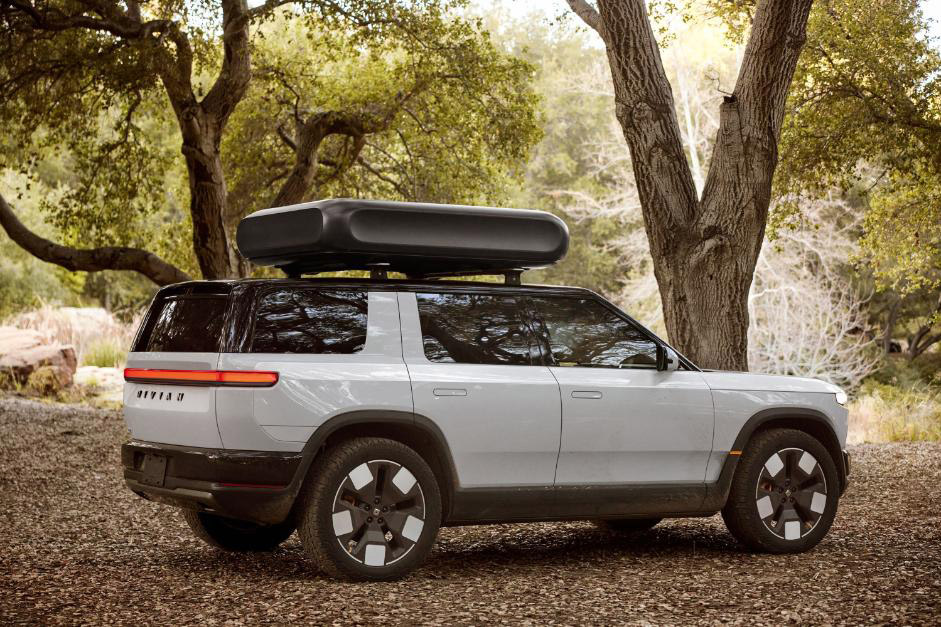
The R2, first unveiled in March, is designed to offer over 300 miles of range and a base price of approximately $45,000. It will also feature an optional tri-motor all-wheel-drive version. Seen as critical to Rivian’s long-term viability, the R2 aims to compete directly with the Tesla Model Y and broaden the startup’s customer base beyond its premium R1T pickup and R1S SUV models.
See also: Rivian CEO RJ Scaringe Shares New R2 EV Build Images as Production Nears
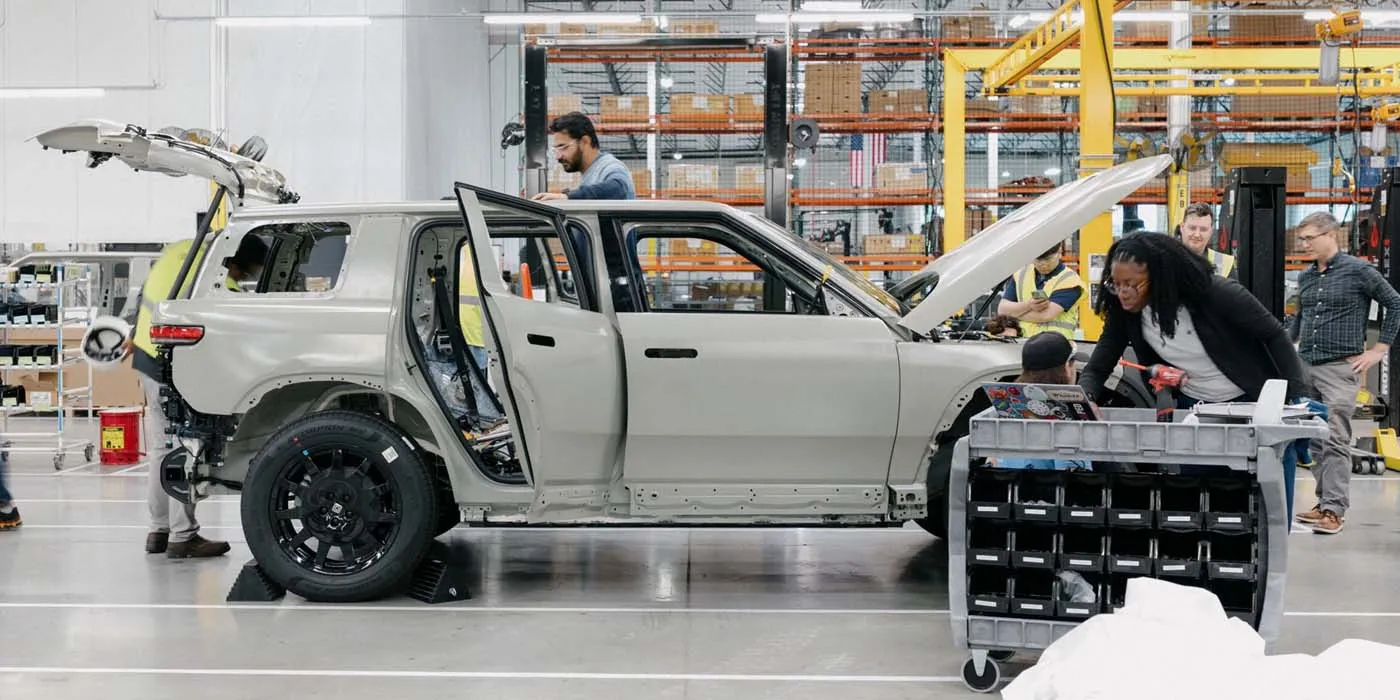
Scaringe said Rivian had begun producing “validation builds” using mostly production tooling and confirmed the R2 remains on schedule for launch in the first half of 2026. “Development is well underway,” he said, adding that early production activity has shifted from a planned Georgia factory to Rivian’s existing plant in Normal, Illinois.
The company noted that the Illinois site is undergoing expansion to support R2 production, with the new assembly and paint facilities already constructed. Chief Operating Officer Javier Varela said manufacturing equipment for the R2 has been sourced and is currently being installed and calibrated.
See also: Rivian R2 Battery Pack Uses Fewer, Larger Cells Than R1 Models

While Rivian was awarded a $6.6 billion U.S. Department of Energy loan to support construction of the Georgia plant, the site is now slated to begin production in 2028. In the meantime, the Normal factory will ramp up to a targeted capacity of 155,000 R2 units per year.
Despite newly imposed tariffs on Chinese goods and increased global trade volatility, Rivian reiterated its plan to maintain the R2’s $45,000 starting price. “We have time before production begins to address increased costs and avoid passing them on to customers,” Scaringe said. He acknowledged, however, that tariffs could impact overall demand, prompting Rivian to lower its 2025 delivery forecast to 40,000–46,000 vehicles, down from 46,000–51,000.
See also: Rivian R2 Coming with Rooftop Tent Movie Projector

Battery sourcing is expected to play a critical role in Rivian’s cost strategy. The automaker has a supply agreement with LG Energy Solution for its 4695 cylindrical battery cells—billed as more energy-dense and space-efficient. While initial battery supplies will come from South Korea, Scaringe confirmed that U.S. production will begin at a new LGES facility in Arizona by early 2027, helping offset tariff impacts.
Rivian remains unprofitable, forecasting a loss between $1.7 and $1.9 billion this year. But executives are optimistic that the lower-priced R2 will boost volume and drive the company closer to profitability. Rivian also plans to further diversify its lineup with the upcoming R3 and R3X subcompact models, scheduled for 2027.


