



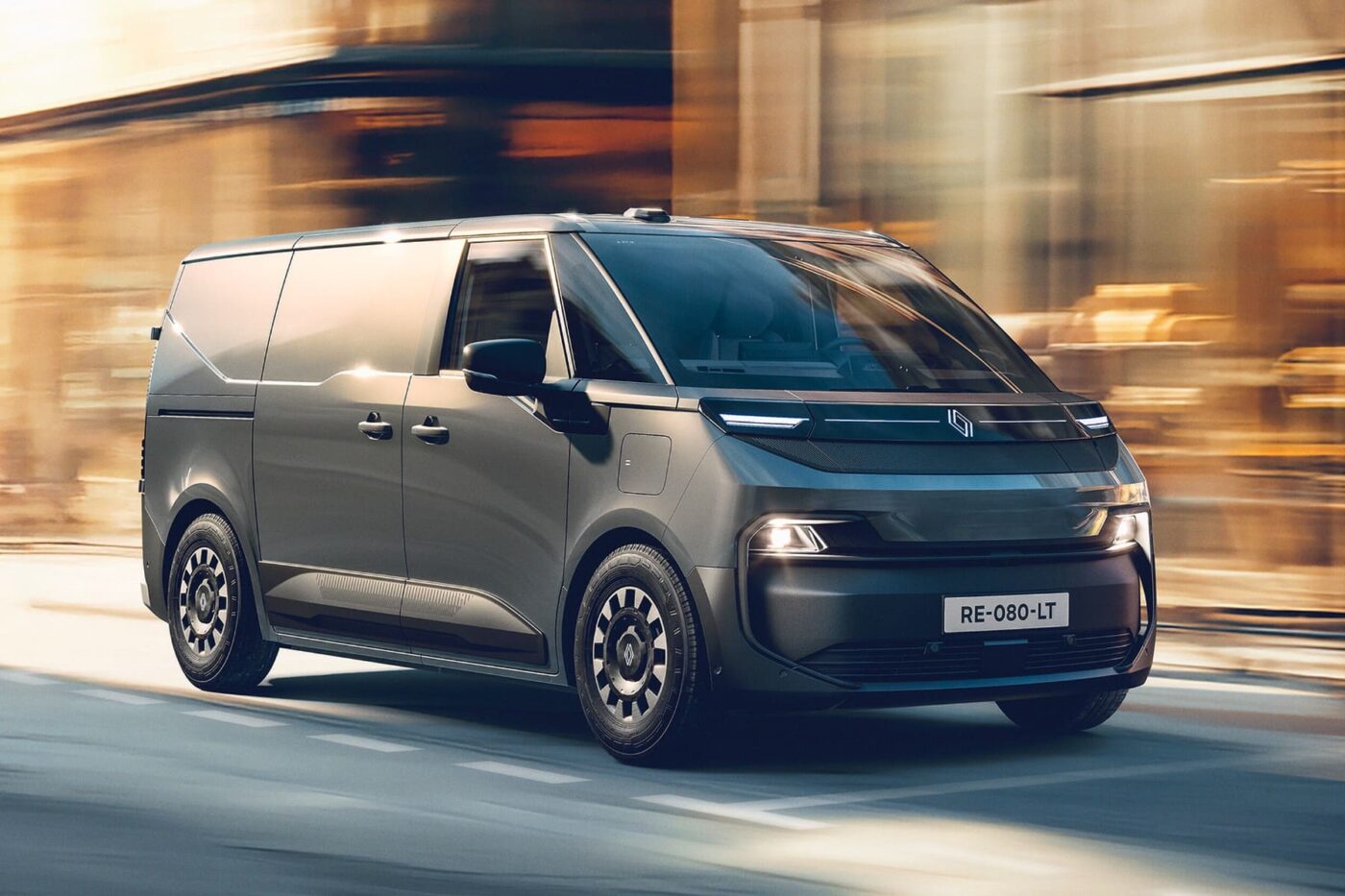
Renault has presented the production version of the Trafic E-Tech Electric at the Solutrans 2025 transport exhibition in Lyon, marking the company’s first model based on Ampere’s flexible software-defined vehicle (SDV) architecture and its first use of 800-volt technology in a Renault-branded vehicle. The electric van is scheduled to reach the market at the end of 2026, with additional body styles to follow.
Renault confirmed that the Trafic E-Tech will offer a 150-kW electric motor producing 345 Nm of torque, paired with either an NMC battery for up to 450 km of WLTP range or a lower-cost LFP pack targeting around 350 km. The automaker reiterated earlier indications that the 800-volt system will support charging from 15% to 80% in under 20 minutes. Final battery capacity details were not disclosed.

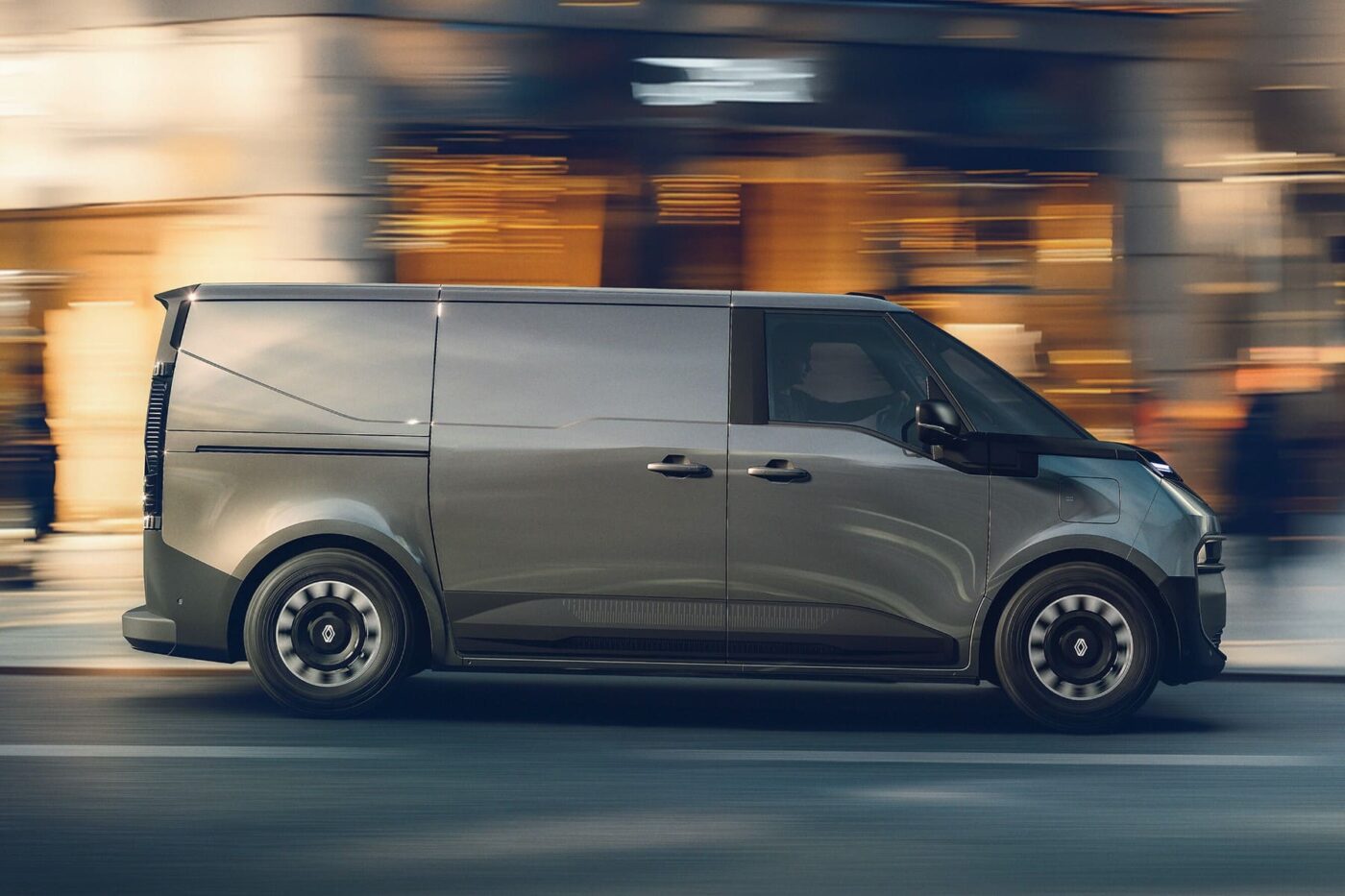
The brand highlighted new figures for towing and payload capability, stating: “The combination of a powerful engine and a robust platform enables a towing capacity of two tonnes and a payload of up to 1.25 tonnes (homologation pending).” The L1 version provides 5.1 cubic metres of cargo space, while the L2 increases capacity to 5.8 cubic metres. Both models share a width of 1.92 metres and a height of 1.90 metres. Lengths are 4.87 metres (L1) and 5.27 metres (L2).
Built on a dedicated electric skateboard platform, the van is designed to maximise manoeuvrability, with Renault stating the Trafic E-Tech achieves a turning circle comparable to the compact Renault Clio. The production model retains the angular design of its earlier concept, featuring a continuous front light bar and illuminated Renault badge.
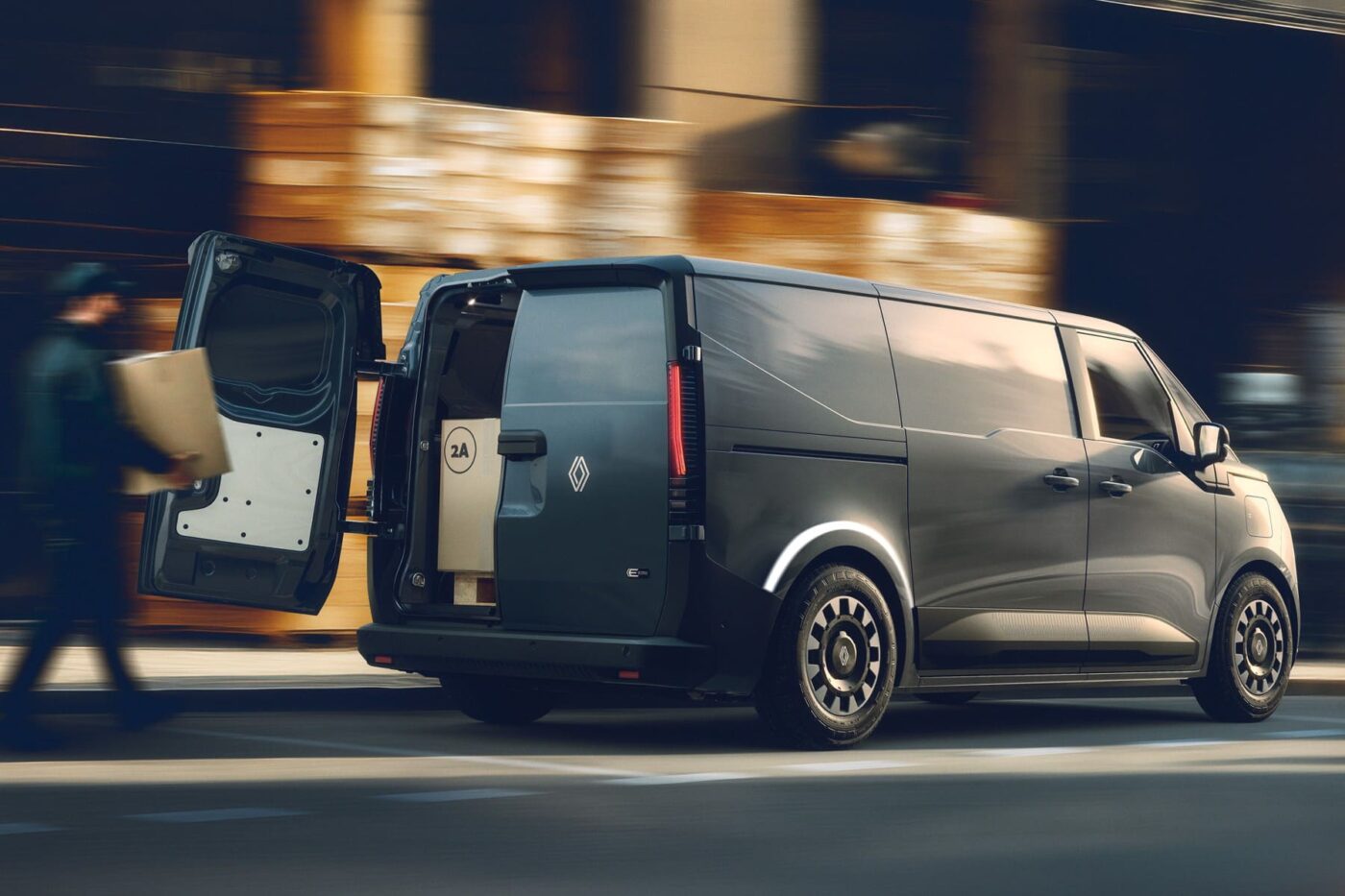
Renault is positioning the Trafic E-Tech as a “technological breakthrough” in software-defined vehicles. “Software is no longer limited to specific functions, as in previous architectures, but shapes the entire vehicle,” the company said. The new CAR OS, developed by Ampere on Google’s Android Automotive OS, allows real-time, over-the-air updates and personalised features based on driving habits and vehicle usage.
The system is designed to support specialised apps for converted vehicles such as ambulances, refrigerated vans and delivery fleets. Renault said companies using their own operating systems will be able to integrate them directly into the onboard multimedia platform, enabling real-time updates for drivers. For refrigerated models, the system can proactively schedule charging sessions to maintain the cold chain.
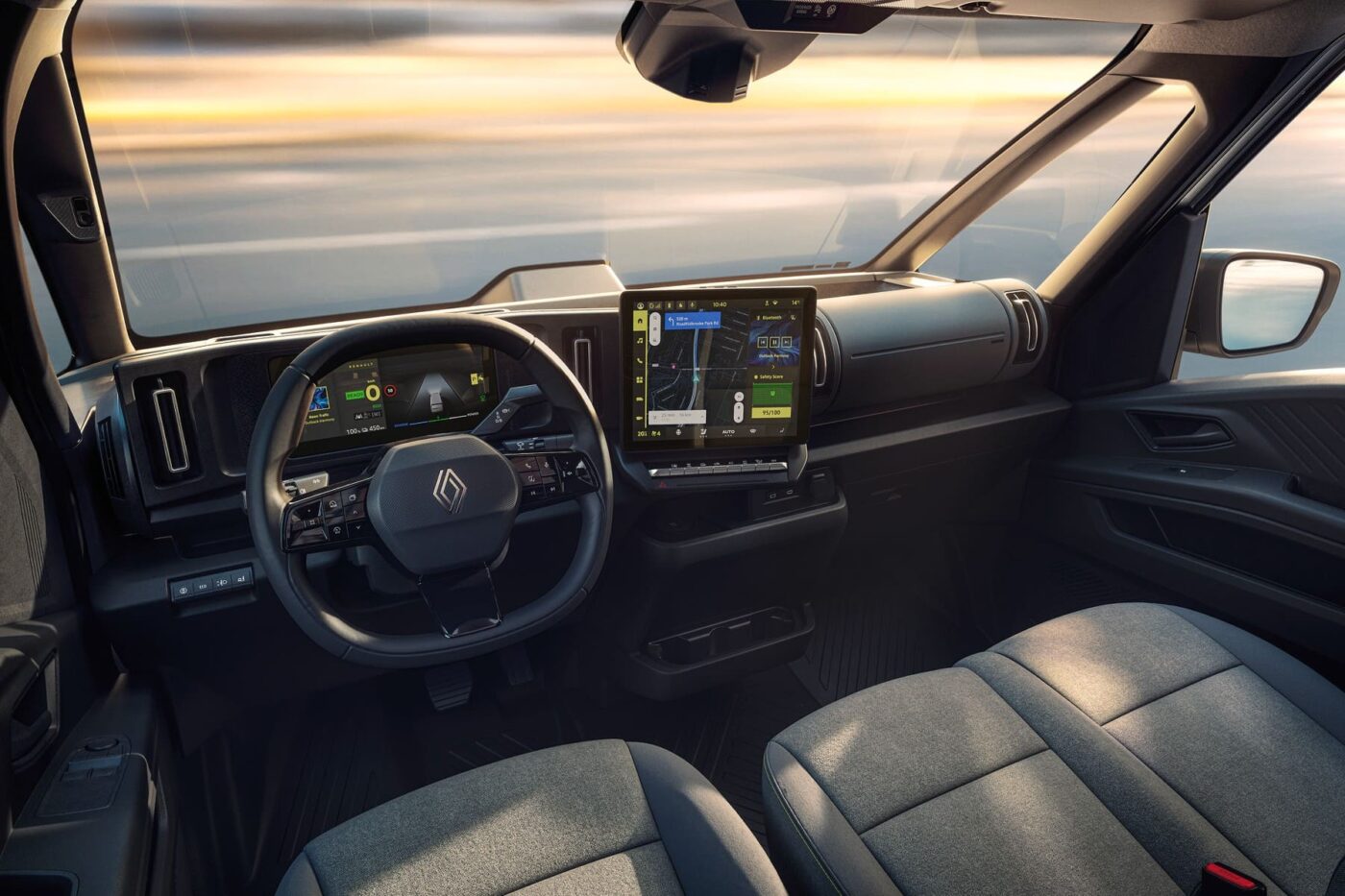
The van also features an updated OpenR infotainment interface tailored to commercial operators, including navigation that accounts for vehicle dimensions, payload and energy consumption when planning routes and charging stops. Additional applications such as EasyPark, Amazon Music, Spotify and Deezer will be available through Google Play.
Production of the Trafic E-Tech will begin next year at Renault’s Sandouville plant. Two additional models using the same 800-volt platform will be produced via the Flexis joint venture: the Goelette E-Tech, featuring reinforced axles for payloads up to 1.4 tonnes, and the Estafette E-Tech, designed for urban logistics.


