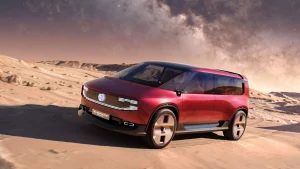


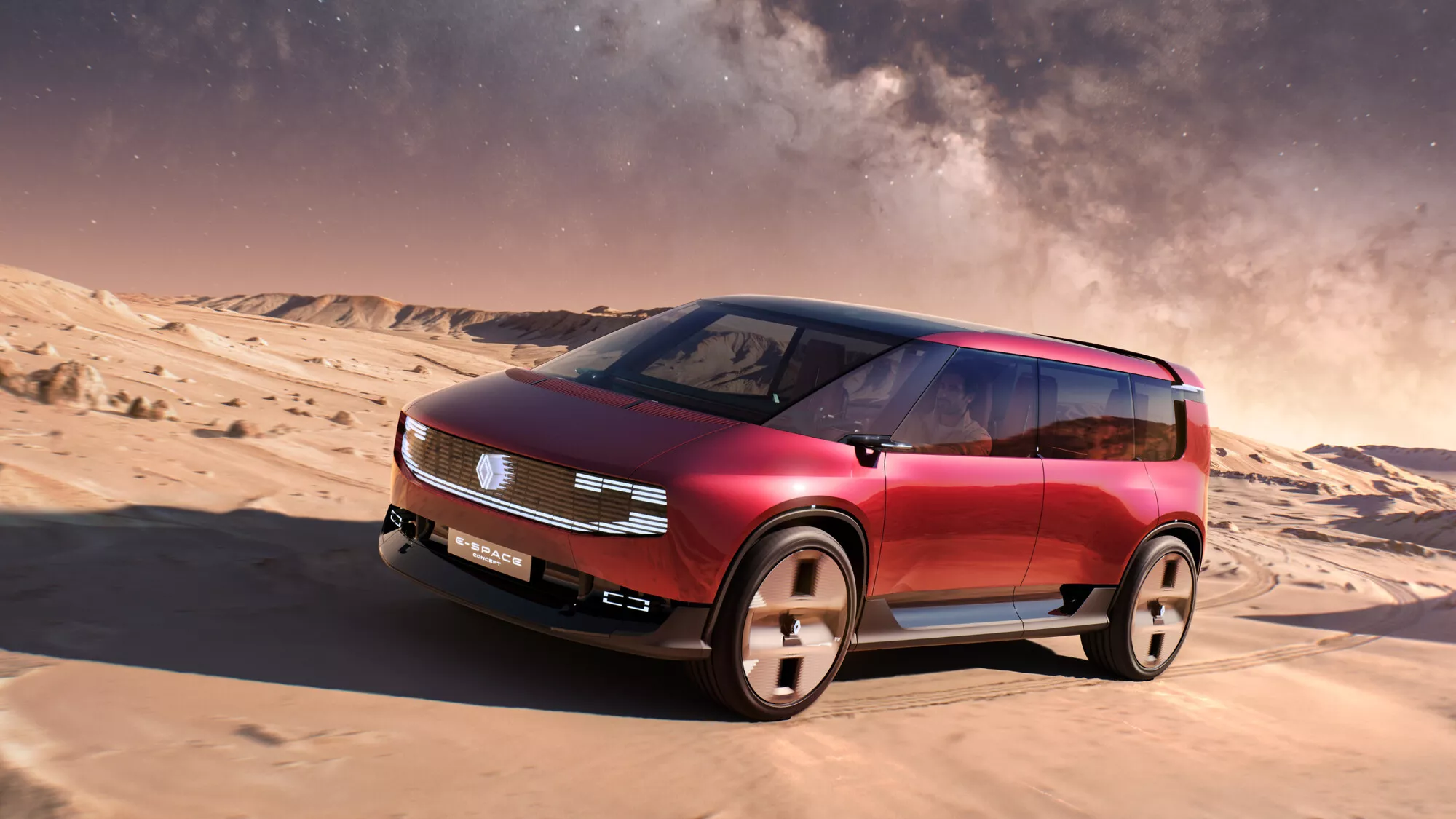
Renault has presented the E-Space Concept at the 2026 Paris Motor Show, outlining its approach to an electric multi-purpose vehicle (MPV). The six-seat concept combines a modular interior, extensive glazing and digital technologies, drawing on the design principles of the original Renault Espace introduced in 1984.
The concept is intended to explore an alternative to conventional SUVs and saloons by prioritising interior space and passenger flexibility. Renault has not announced production plans or disclosed the vehicle’s battery capacity, driving range or power output.

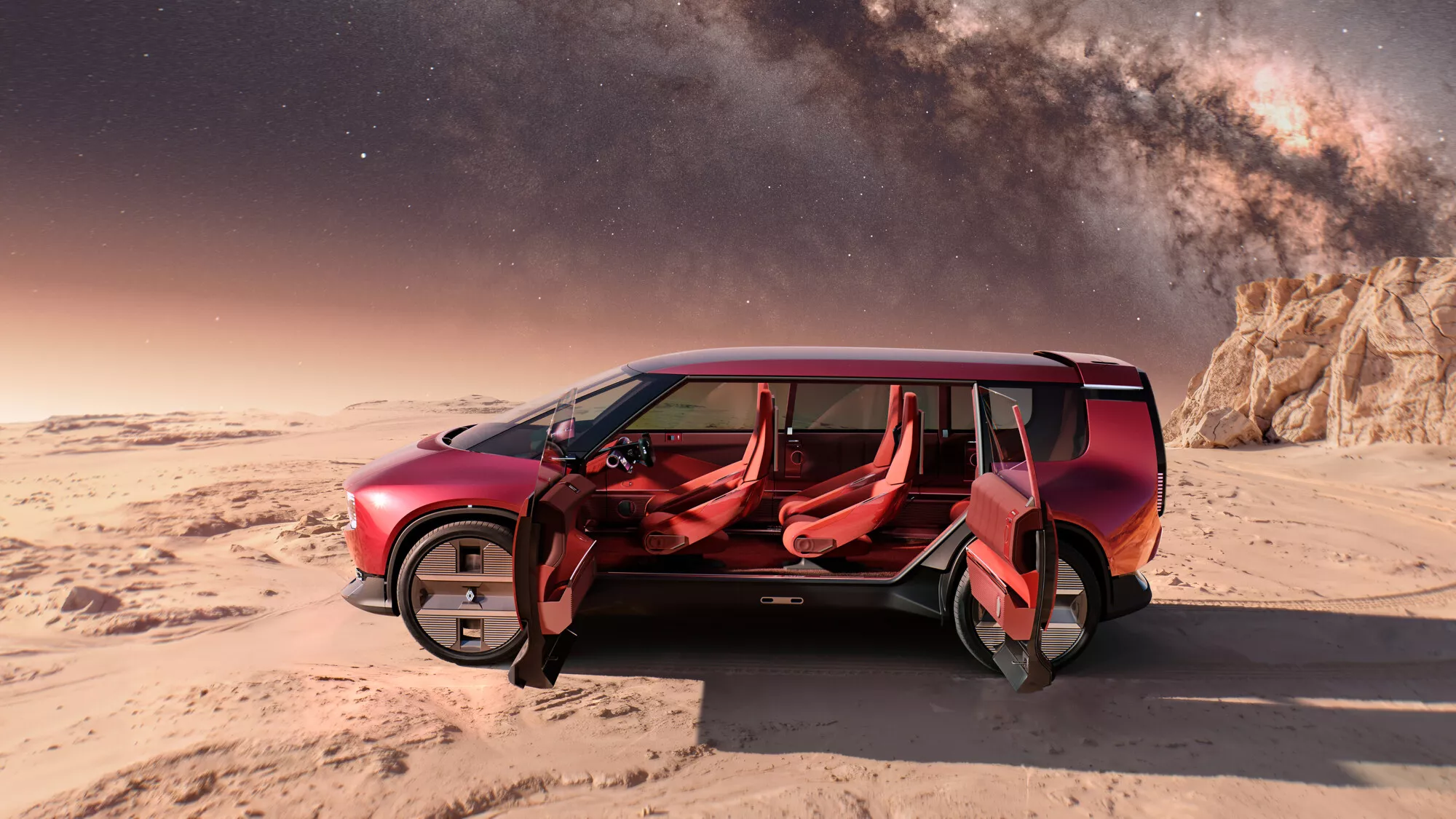
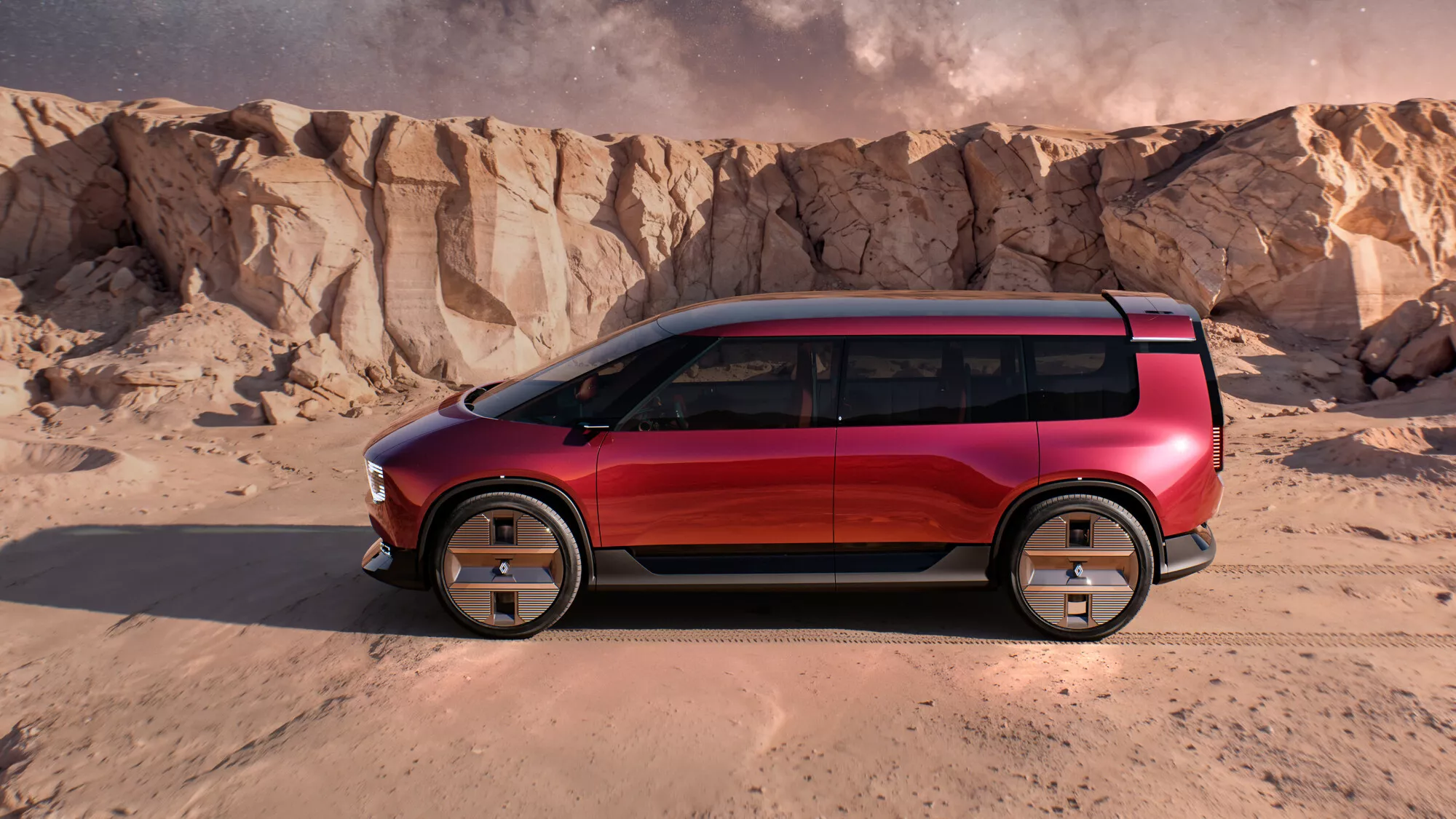
The E-Space Concept measures 4.70 metres long, 2.02 metres wide and 1.67 metres high. Its design includes short overhangs, a low waistline and a glass roof extending across much of the cabin.
Exterior Design and Proportions
The exterior features smooth body surfaces, simplified lines and a new lighting signature at the front and rear. A U-shaped light element frames the grille, with an illuminated Renault logo positioned centrally.
The windscreen extends visually towards the bonnet, referencing the profile of the first-generation Espace. At the rear, vertical lines define the bodywork, while a roof spoiler recalls design elements used on earlier Espace models.
A movable front splitter can lower closer to the road at higher speeds to improve aerodynamic performance. The dark lower section of the bodywork visually incorporates the vehicle’s technical components and aerodynamic features.
Alexandre Malval, Renault Brand Design Director, described the design approach:
A superb celebration of simplicity, the design language of Renault E-Space Concept is about lithe, clean forms, structured by subtle lines of tension. A highly legible and instantly recognisable visual language, reflecting the brand’s values.
The cabin design draws inspiration from modernist architecture, including the work of Ludwig Mies van der Rohe. Large side windows and a glass roof extend below the vehicle’s waistline, allowing natural light into the passenger compartment.
Romain Gauvin, Renault Brand Head of Advanced Design and Concept Cars, said:
Renault E-Space concept is inspired by the world of aeronautics, with smooth lines and a generous expanse of glass for allthe passengers.
Six-Seat Interior and Flexible Layout
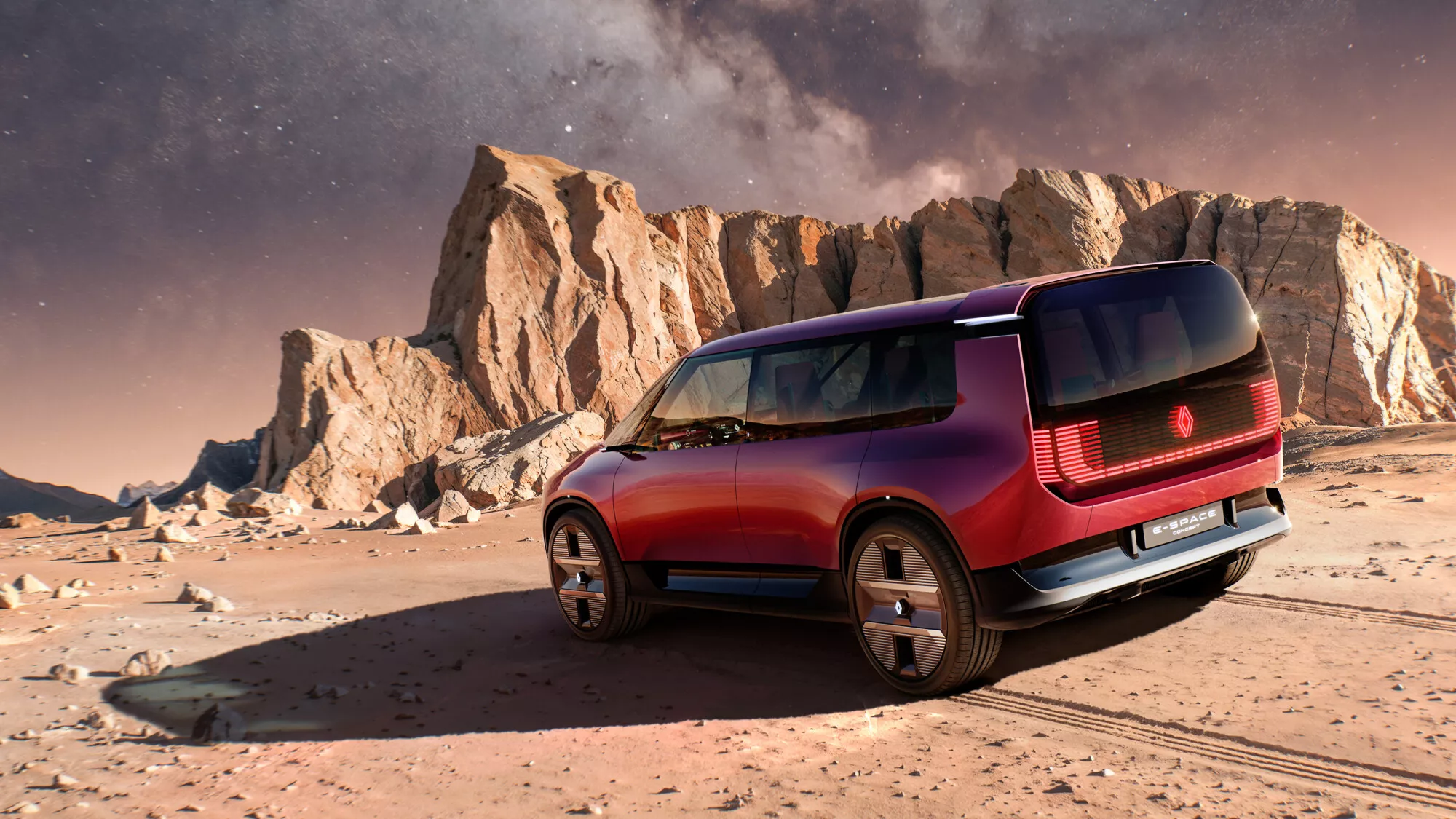
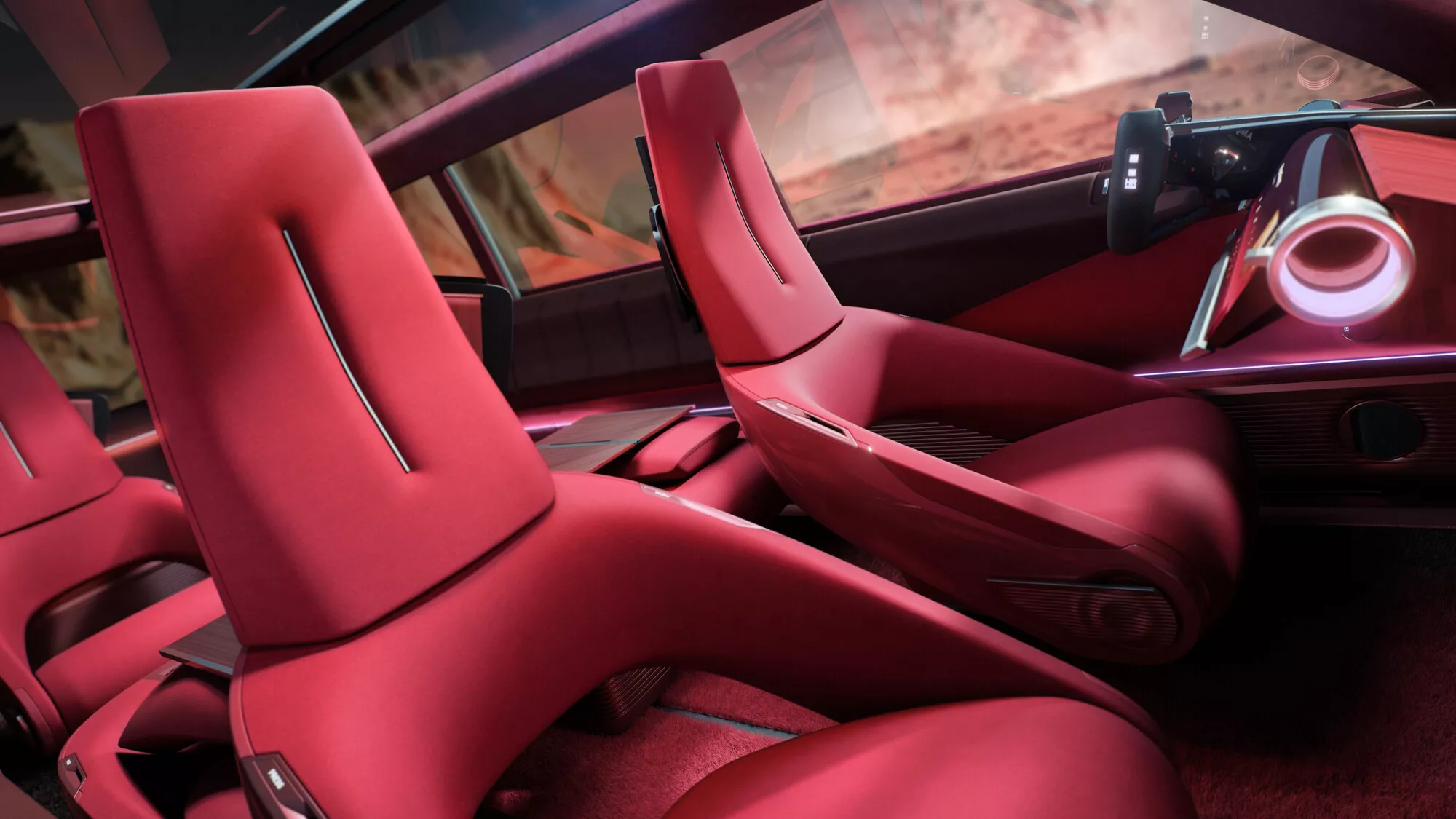
The concept features six individual seats arranged across three rows on a flat floor. Double rear-hinged doors without a central pillar provide access to the cabin.
The seats have slim profiles and sculpted shells. Their arrangement can be adjusted to accommodate different passenger needs and seating configurations.
The two seats in the second row can rotate through 180 degrees to face the third row, creating a layout Renault compares with a TGV train compartment. In the forward-facing position, second-row passengers can use folding tray tables, with 12.3-inch screens mounted on the backs of the front seats.
The second-row seats can also fold flat to create a table for passengers in the third row. A sliding console along the centre of the cabin can incorporate an air purifier, a compact refrigerator, video game controllers and a Connect 4 board game.
Additional interior features include ambient lighting along the lower cabin, reading lights mounted on a rail in the glass roof and illuminated elements integrated into the speakers.
Stéphane Maiore, Renault Brand Head of Interior Design, said:
We wanted to create an in-car ambience that is both futuristic and welcoming, with a touch of nostalgia.
Panoramic Display and Steer-by-Wire
The dashboard features OpenR Panorama, a curved display extending across the cabin. Measuring 1,130 by 110 millimetres, it is designed to present driving information and other functions without a conventional instrument-panel structure.
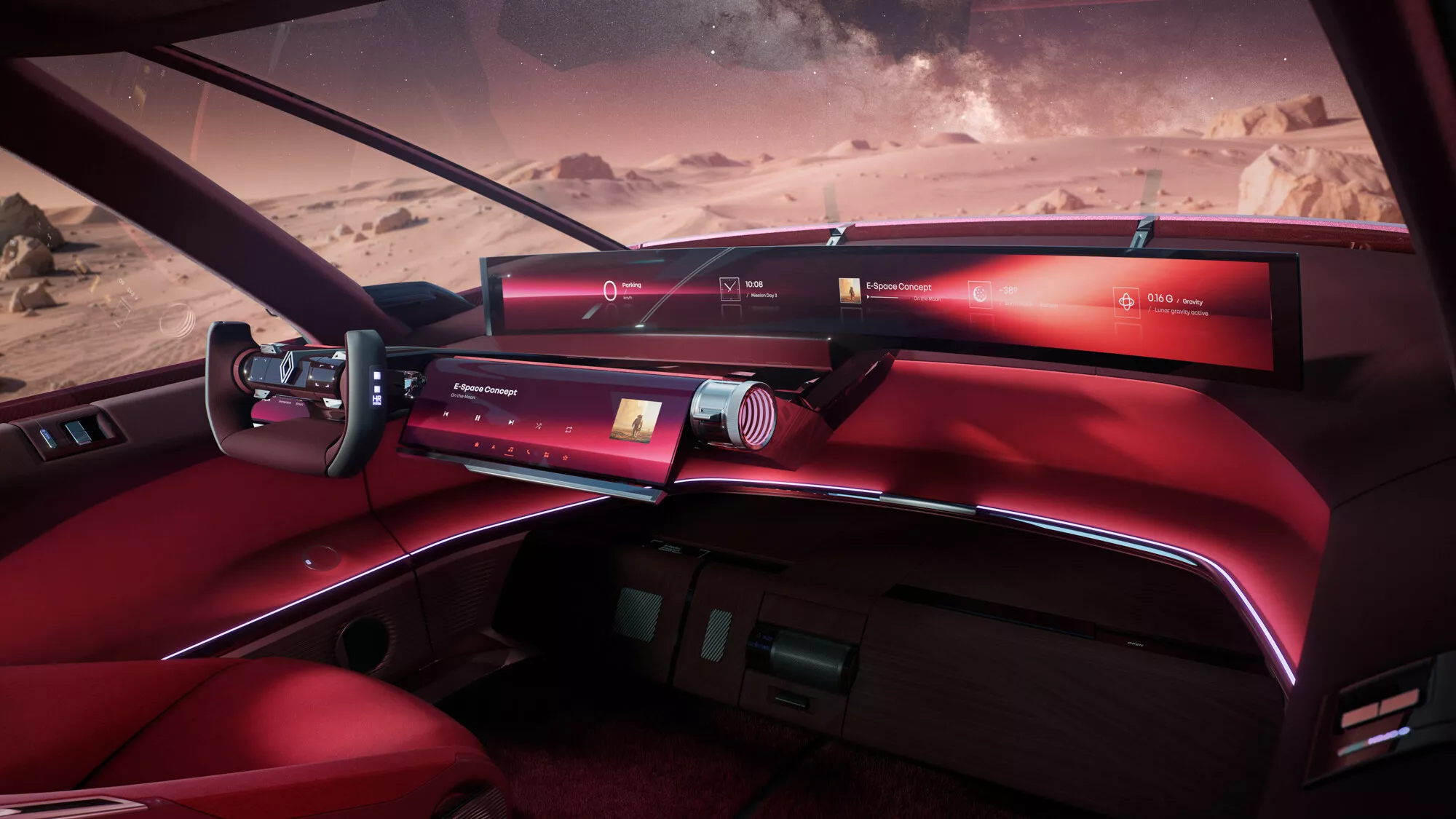
The screen is not touch-sensitive. Instead, two flexible displays mounted around a tubular base supporting the steering wheel control its functions. Renault says the arrangement is intended to provide access to information while freeing up space in front of the passenger.
The lower dashboard incorporates a curved storage unit extending across the cabin. It also accommodates the sliding console and conceals the pedal mechanism.
The concept uses steer-by-wire technology, which removes the conventional mechanical connection between the steering wheel and the road wheels. The system allows the steering arrangement to be designed without the physical constraints associated with a traditional steering column.
Maiore said:
Using steer-by-wire technology, we have been able to design a steering wheel free from all the physical constraints generally associated with steering.
Renault says the OpenR Panorama display is also planned for future models in its executive range, including the next-generation Rafale and Scenic.
Interior Colours and Material Selection
The cabin uses a predominantly red colour scheme, with shades including scarlet, purple and garnet. A thick coral-coloured carpet features a gradient that becomes darker towards the edges, while red finishes extend across the dashboard and textile-covered panels.
The concept also incorporates several bio-based materials. Interior trim elements use dyed straw applied to supporting surfaces, while the floor covering is made from 100% wool. The interior paint contains 18% bio-based resin.
The steering wheel uses a material found in other Renault models that contains 26% castor oil and 25% organic cotton. The tyres contain an average of 19% natural rubber sourced from managed plantations.
Renault says the material choices build on its wider commitment to using 30% recycled materials across its vehicle range, while the concept explores additional applications for renewable materials.
Eléonore Lebec, Renault Brand Colour and Materials Designer, said:
Step inside the cabin to immerse yourself in colour! With the dashboard and textiletrimmed panels in shades of red, and the thick coral-coloured carpet with its gradient effect, the brightly coloured cabin offers a generously lit ambience that structures the interior and brings it to life.
Electric MPV Design Study
The E-Space Concept combines an electric powertrain with a six-seat layout, configurable seating and a cabin focused on passenger space. Its exterior proportions and interior arrangement revisit the MPV format that Renault introduced with the original Espace in 1984.
The concept remains a design study, and Renault has not confirmed whether it will enter production. No detailed technical specifications for its electric drivetrain have been released.