



German deep-tech startup Pulsetrain said it is working with automotive supplier Yazaki to bring a new battery architecture based on so-called multilevel technology closer to series production, as automakers seek more efficient and compact electric vehicle systems.
The two companies are jointly developing an intelligent “MultiCellBridge,” which integrates functions such as cell management, inverters and charging units directly into the battery system. Pulsetrain said the partners aim to demonstrate industrial feasibility through a proof of concept. “As part of a proof of concept, the partners aim to demonstrate the industrial feasibility of this key technology—to significantly enhance the efficiency, safety, and lifespan of battery packs in electric mobility,” the company said.
The collaboration was first presented publicly earlier this month at the CES technology show in Las Vegas, where the companies showcased early concepts at Yazaki’s exhibition booth.
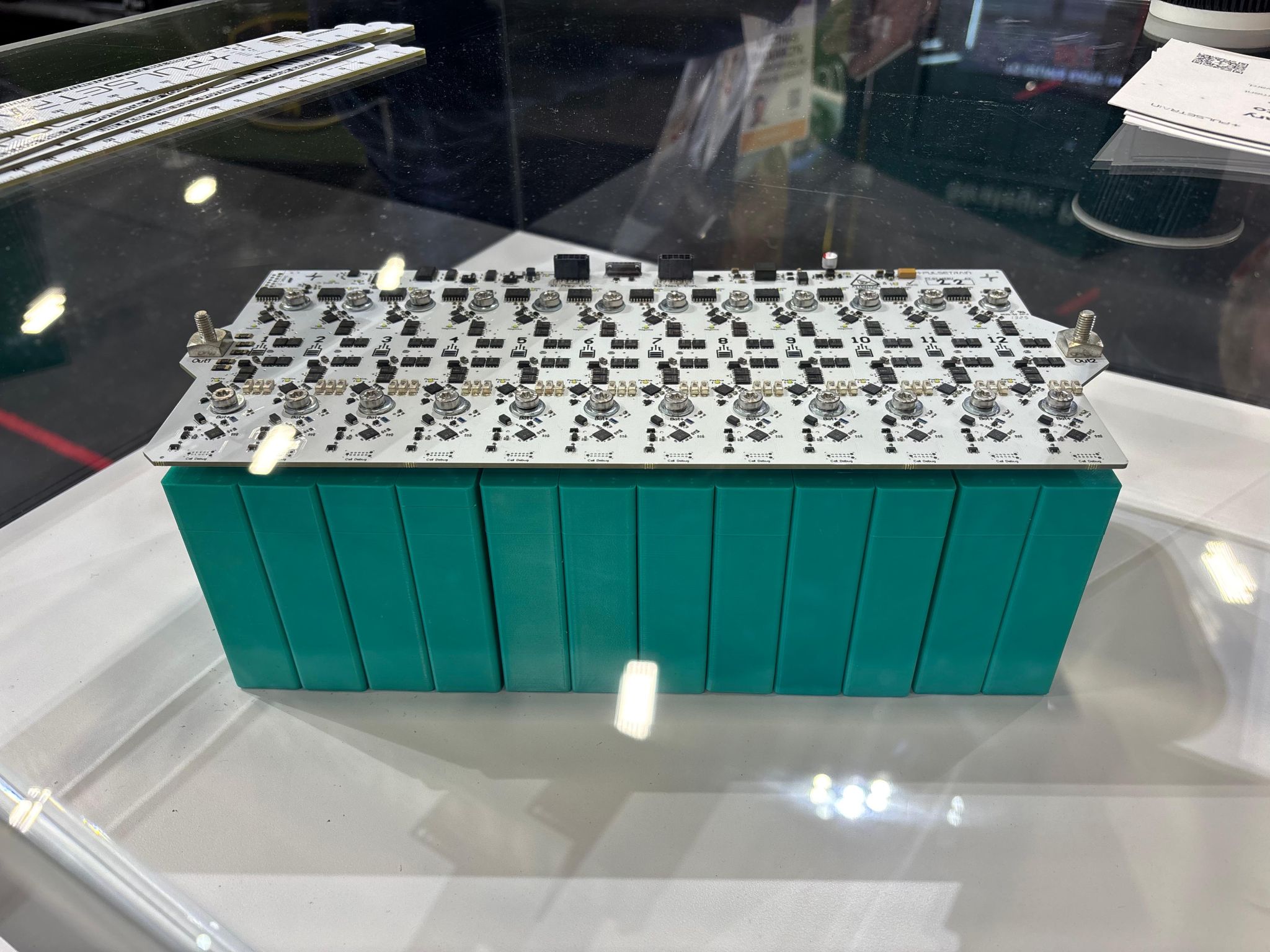
Pulsetrain said its multilevel technology combines two elements: individual cell-level control and integrated power electronics. The cell management system is designed to independently manage each battery cell, while power electronics such as the inverter and charger — typically separate components — are integrated into the battery itself. “The architecture is compatible with all battery types and applications and provides a flexible, space-saving solution that eliminates the need for separate inverters and chargers,” Pulsetrain said.
Yazaki’s European unit, Yazaki EMEA, will contribute manufacturing and hardware expertise to help industrialise the system. The company is part of Yazaki Corporation, which employs more than 230,000 people worldwide and supplies wiring harnesses, connectors and high-voltage systems to automakers.
Pulsetrain focuses on power electronics and software-defined battery management systems, promoting what it describes as an “alternating current battery,” in which direct current is stored in cells but alternating current can be delivered directly from the battery system. The company says the approach could extend battery life, improve safety, reduce weight and support faster charging.
While the partnership was only formally announced now, the companies said market feedback at CES had been positive, underlining growing interest in integrated battery and power electronics solutions as the electric vehicle industry looks to cut costs and improve efficiency.