





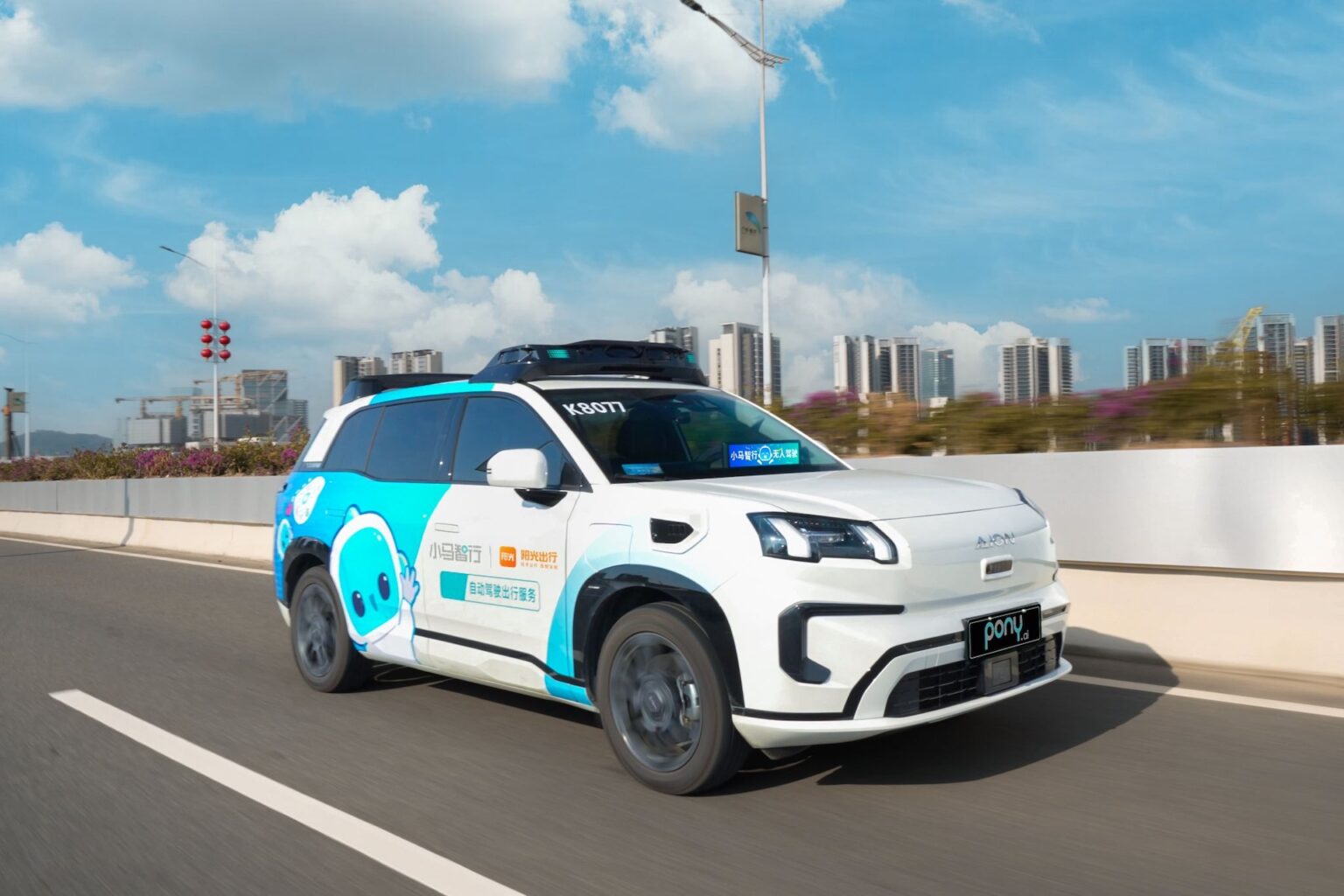
Chinese autonomous driving company Pony.ai has raised its full-year outlook for robotaxi growth after reporting strong first-quarter results, with the company now expecting 2026 robotaxi revenue to exceed 3.5 times the level recorded in 2025.
The updated forecast is higher than Pony.ai’s earlier projection of threefold annual growth.
The company also increased its target for its global robotaxi fleet to more than 3,500 vehicles by the end of 2026, compared with a previous target of 3,000 vehicles.
Pony.ai reported robotaxi service revenue of $8.6 million for the quarter ended March 31, representing a 395.4% increase from the same period a year earlier.
Total company revenue rose 145% year-on-year to $34.3 million, according to the company’s earnings report released on Tuesday.
Revenue from autonomous truck services increased 31% to $10.2 million during the quarter, while revenue from intelligent solutions businesses, including low-speed delivery and logistics applications, rose 246.5% to $15.5 million.
The company said growth in adjacent sectors reflected broader adoption of its autonomous driving technologies.
Despite higher revenue, Pony.ai reported a net loss of $53.5 million in the first quarter, compared with a net loss of $37.4 million a year earlier.
The company attributed the wider loss to lower investment income and increased operating expenses related to expansion efforts.
Leo Wang, chief financial officer of Pony.ai, said the company continues to invest in deployment of its seventh-generation robotaxi platform and ongoing technology improvements.
He added that the company’s balance sheet supports its commercialization plans for 2026.
Pony.ai also said it is working to reduce production costs for future large-scale robotaxi deployment. The company aims to lower the bill of materials cost for its seventh-generation robotaxi vehicles to below 230,000 yuan ($33,890) by mid-2027.
Internationally, Pony.ai said it is expanding its commercial operations through partnerships including a recent collaboration with Uber and Verne to launch a commercial robotaxi service in Croatia.
James Peng, chief executive officer and co-founder of Pony.ai, said the company continued to advance in both domestic and overseas markets during the first quarter.
According to Pony.ai, its robotaxi fleet exceeded 1,700 vehicles by the end of May.
The company also said average weekly paid robotaxi orders in May increased 119% compared with January levels, indicating continued growth in customer demand.


