
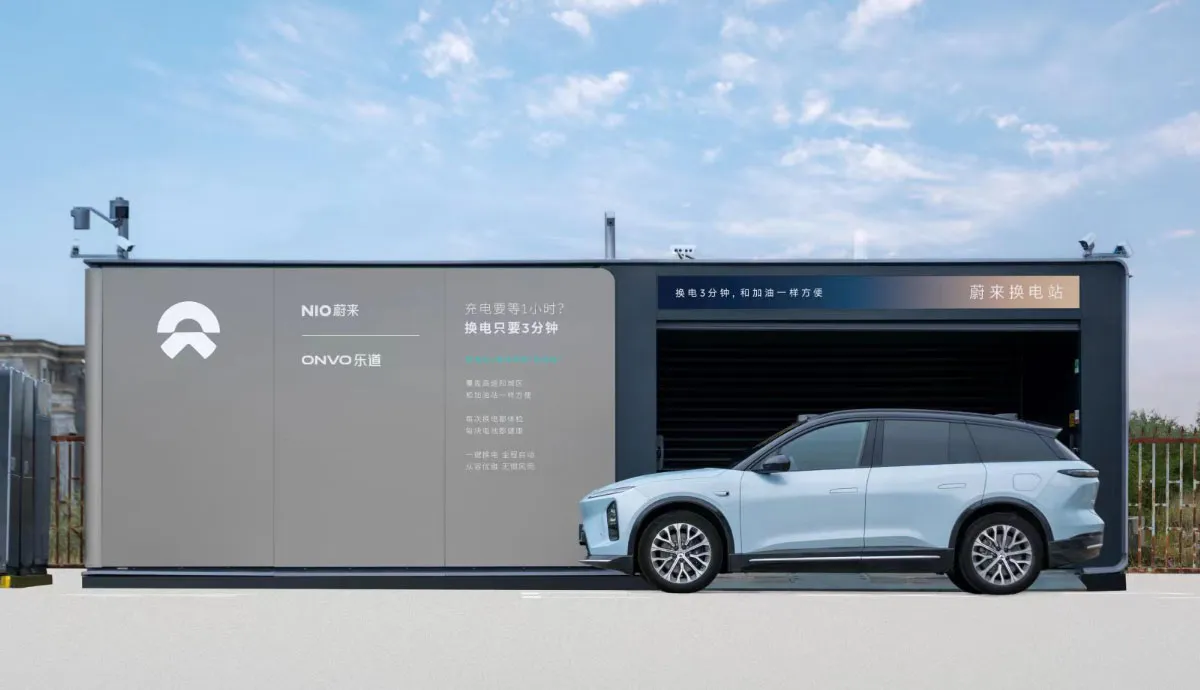
Nio said it will start trial operations of its first fifth-generation battery swap stations in China by the end of this year, before a wider deployment in 2025, as the electric vehicle maker seeks to expand its charging and swapping infrastructure while reducing capital expenditure.
The new sites will be operational by Christmas, with capacity increasing by about 20% compared with the current fourth-generation stations, Nio co-founder and president Qin Lihong told media during a roundtable in Hangzhou, Zhejiang. Qin added that the company plans to provide further details on the next-generation swap stations at a later event.
Nio currently operates 3,502 battery swap stations and 4,749 charging stations across China, according to company data. Utilization rates at its existing swap facilities stand at around 60%, Qin said, noting that surplus capacity is sufficient to support flexible battery scheduling and user demand.
The company unveiled its fourth-generation swap stations in December 2023 and began deployment in June this year. Each of those facilities contains 23 battery compartments and can perform up to 480 swaps per day, while cutting average swap time by about 22%.
Nio has increasingly leaned on partnerships to fund and build its infrastructure. Since October 2024, the company has adopted bundled construction partnerships with local partners in several Chinese cities to share both investment and revenue. The same approach will be applied to overseas markets, Qin said, with distributors in multiple countries designated to manage stations under an asset-light model.
In some markets, the companies responsible for battery swap stations may differ from those overseeing vehicle sales and service, Qin said, adding that while Nio will continue to maintain international swap sites, deployment speeds will vary by country.
Nio held its annual Nio Day in Hangzhou on Sept. 20, where it unveiled the third-generation ES8 SUV and the Horizon Edition of the ET9 sedan. The company did not address its fifth-generation swap station program during the event due to time constraints.