



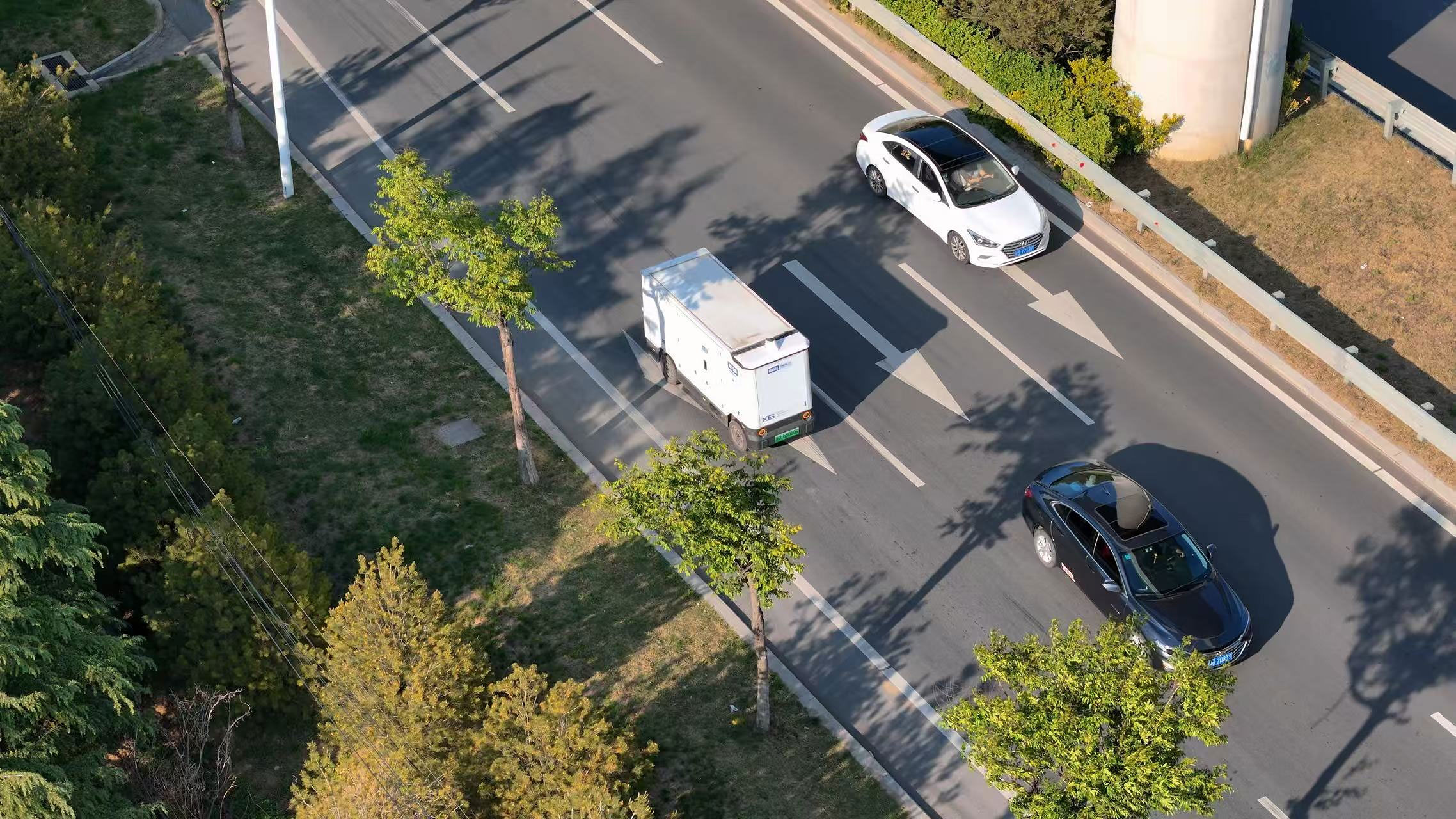
Autonomous logistics company Neolix has stepped up its expansion in Europe, highlighting its Level 4 autonomous delivery technology at the Consumer Goods Forum Global Summit 2026 in Vienna and EUROBIKE 2026 in Frankfurt.
The company is targeting retailers and logistics operators seeking autonomous last-mile delivery solutions, building on a fleet of approximately 21,000 autonomous delivery vehicles operating across more than 15 countries.
According to Neolix, its autonomous fleet has accumulated more than 170 million kilometres of driving, while its largest deployment in a single city exceeds 2,000 vehicles.
European Expansion Gains Momentum
Neolix said its vehicles have obtained TÜV Rheinland certification in Germany and comply with European E-MARK vehicle standards.
The company has also established partnerships across Germany, Portugal, Denmark, France, Sweden, Switzerland, Spain, and Belgium as it expands its presence in the European market.
Earlier this year, Neolix announced a strategic partnership with Caetano Mobility, part of Portugal’s Salvador Caetano Group, combining autonomous logistics technology with local engineering expertise to support regional deployment.
To address enterprise requirements, the company also works with global cloud infrastructure providers to ensure compliance with European data residency and governance regulations.
Mapless AI Platform Designed for Faster Deployment
Neolix’s autonomous driving system is built around its proprietary Neolix-VA visual-action foundation model, which uses a mapless architecture rather than relying on high-definition maps.
According to the company, this approach enables faster deployment in new operating environments while allowing the system to continuously improve through operational driving data.
The vehicles are designed to operate continuously under varying traffic and weather conditions, supporting commercial logistics applications throughout the day.
Focus Shifts to Commercial Value
Executive President Will Zhao said the commercial success of autonomous logistics depends on operational efficiency rather than technology alone.
“The value of autonomy ultimately comes down to economics and reliability. Retailers need solutions that can integrate into existing operations, adapt to local conditions, and generate measurable efficiency gains over time.”
Neolix’s expansion comes as the European autonomous vehicle market increasingly broadens beyond passenger transport. While much of the industry’s attention has focused on robotaxi deployments, the company is positioning autonomous logistics as a commercially mature application, emphasizing operational scale, deployment flexibility, and cost efficiency for enterprise customers.