
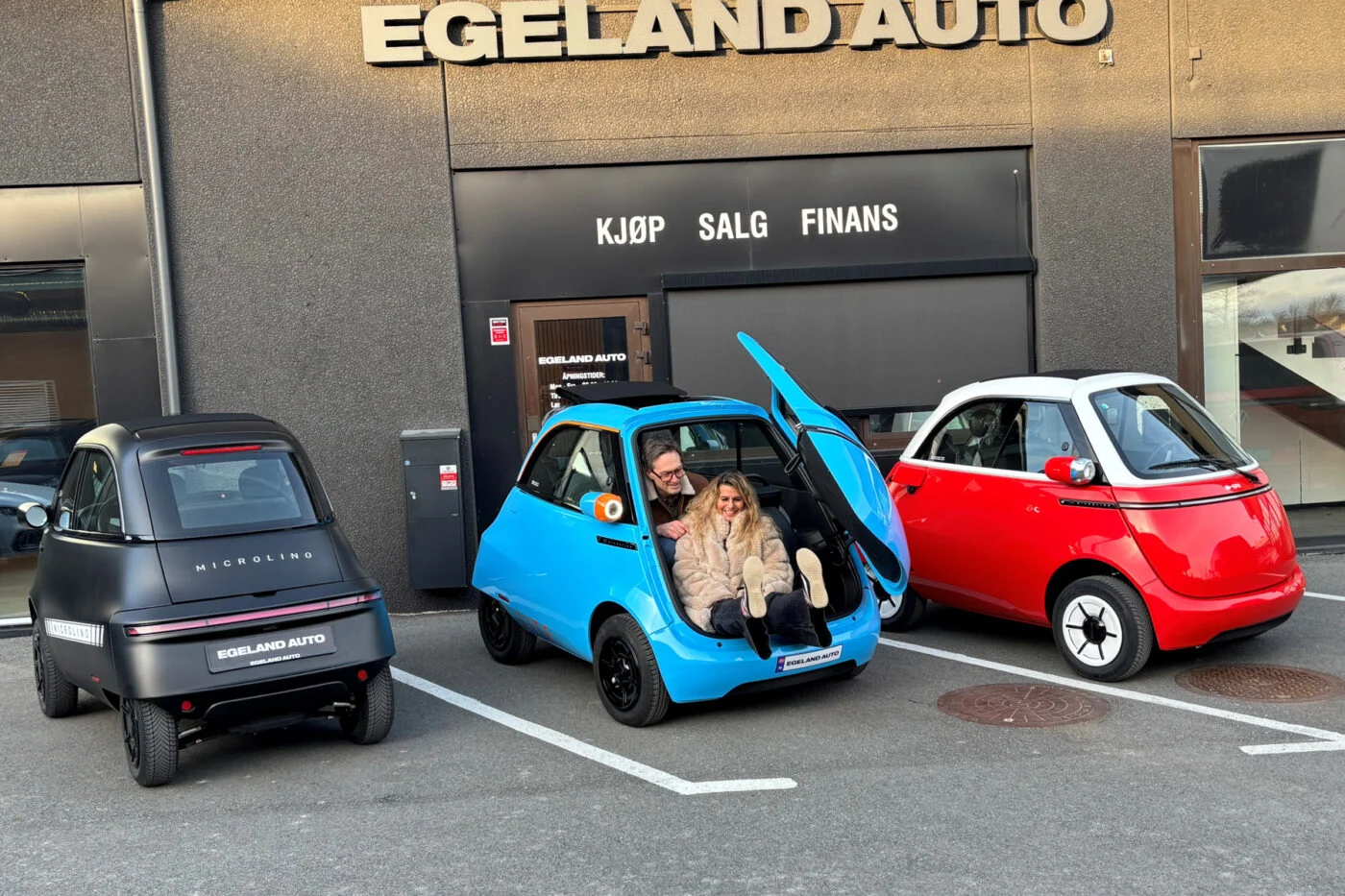
Swiss microcar manufacturer Microlino is entering the Norwegian market through the creation of Microlino Norge AS, a new local entity intended to support sales and after-sales operations for its compact electric vehicle. The subsidiary will provide customer advisory services, maintenance, servicing, and warranty handling, aiming to establish a long-term presence in one of the world’s leading electric mobility markets.
The company has partnered with a local business to coordinate its activities in Norway, with headquarters in Sandnes and operational support based in the Stavanger region. The arrangement appears to involve Egeland Auto, a dealership whose address matches that of Microlino Norge AS and which has begun listing the vehicle among its offerings. Current inventory includes several units priced between 214,900 and 299,000 Norwegian kroner (about €19,100 to €26,600).
See also: Microlino Founders Consider Moving Production to China Amid Lack of European Support
Microlino said the move reflects Norway’s strategic importance for electric mobility adoption. “Norway is widely recognized as a pioneer in electrification and a market that values innovation, design and sustainability. Through Microlino Norge AS, Microlino aims to establish a compact, stylish and sustainable form of urban mobility for the long term in Norway,” the company said.
The vehicle—developed in Switzerland and manufactured in Turin—will be offered in two variants. The Microlino Lite is limited to a top speed of 45 km/h, while the standard Microlino model can reach up to 90 km/h. Depending on battery capacity, driving range is estimated between 95 and 228 kilometres. With its compact dimensions and distinctive front-opening door, the microcar is designed for urban use and draws inspiration from the classic BMW Isetta bubble car.
See also: Europcar Switzerland Introduces Microlino EVs for Urban Rentals in Zurich and Bern
Norway’s high electric vehicle adoption rates and supportive policies make it a key testing ground for new mobility concepts, particularly in dense urban areas where small electric vehicles can offer an alternative to conventional cars.