



Mexico said on Wednesday it will raise tariffs on automobiles from China and other Asian countries to 50%, as part of a broader overhaul of import levies designed to protect domestic jobs. The Economy Ministry said the measures would affect $52 billion of imports across multiple sectors, including textiles, steel, and automotive.
Economy Minister Marcelo Ebrard told reporters that the tariffs on Chinese cars, currently at 20%, would be raised “to the maximum level allowed.” He added that “without a certain level of protection, you almost can’t compete,” and said the measures were intended to protect jobs from imports entering the market “below what we call reference prices.” The plan still requires approval from Congress, where the government holds a majority.
The tariffs would target countries without trade agreements with Mexico, including China, South Korea, India, Indonesia, Russia, Thailand, and Turkey, and are expected to cover 8.6% of all imports, safeguarding roughly 325,000 industrial and manufacturing jobs. Other proposed measures include a 35% tariff on steel, toys, and motorcycles, and levies between 10% and 50% on textiles.
Analysts said the move also responds to pressure from the United States to limit economic ties between Mexico and China. Mariana Campero of the CSIS Americas Program noted that “the U.S. is not going to allow China to use Mexico as a backdoor,” citing Mexico’s trade deficit with China, which reached $120 billion last year. Gabriela Siller, an analyst at Banco BASE, added that the tariffs serve dual purposes: generating revenue and improving Mexico’s standing with the United States.
John Price, managing director at Americas Market Intelligence, said Mexico is seeking to balance U.S. expectations with domestic economic priorities. “The Mexicans are trying to placate the Americans, but protect their industrial policy that’s worked so well for them over the last 30 years,” he said. The government also announced it is considering an additional $3.76 billion in tariff measures next year.
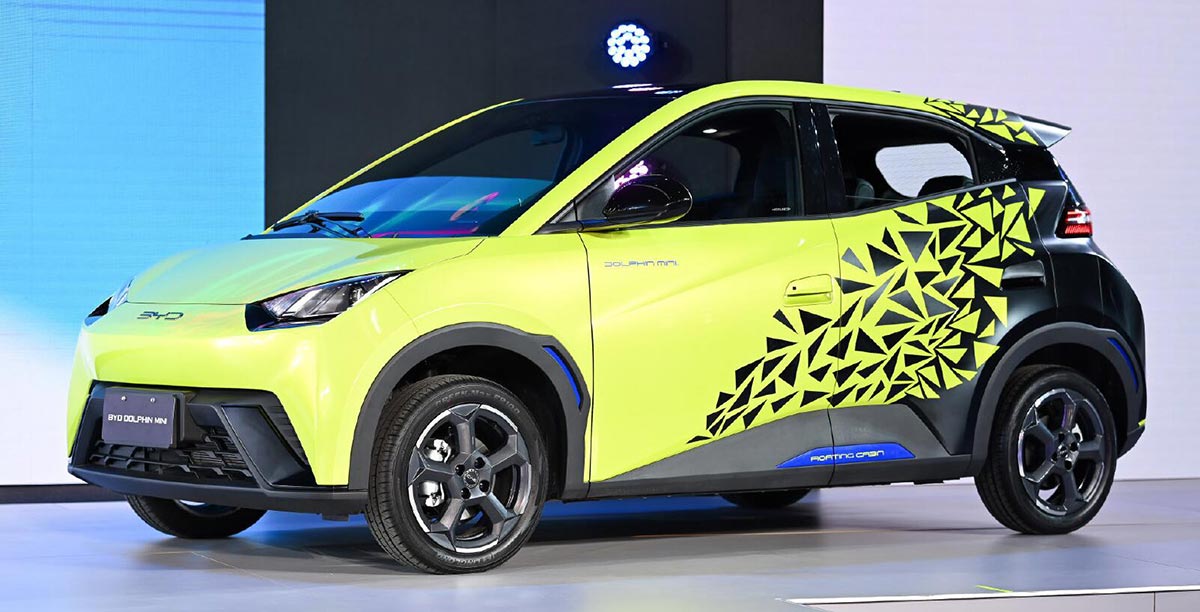
In a related development, BYD paused its plans in July to establish an electric vehicle manufacturing facility in Mexico, citing geopolitical tensions and uncertainty surrounding U.S. trade policies under former President Donald Trump, according to Bloomberg. BYD executive vice president Stella Li said the automaker remains committed to growth in the Americas but will hold off on further investment until the political environment becomes clearer, stating, “We want to wait for more clarity before making our decision.”
Source: Reuters


