
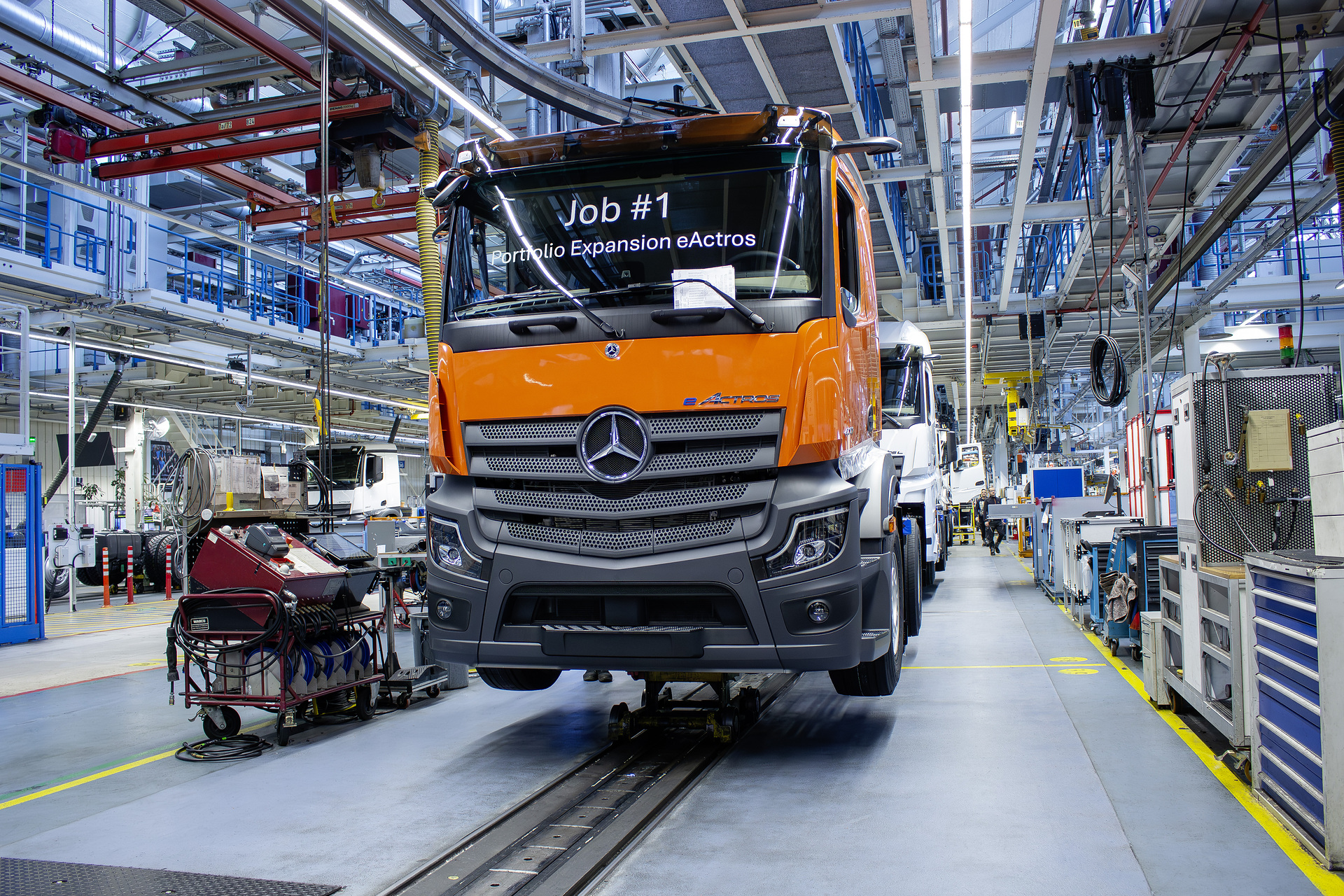
Mercedes-Benz Trucks officially began series production of the second-generation eActros 400 at its Wörth plant in Germany in early December. The new model, which is based on the technology of the eActros 600 long-haul truck that entered series production at the end of 2024, is part of a broad expansion of the manufacturer’s electric vehicle (EV) portfolio.
The new eActros 400 features two lithium iron phosphate (LFP) battery packs, totaling 414 kWh of installed capacity. This configuration is designed for heavy-duty distribution transport, offering a lower vehicle weight that yields a payload increase of over three tonnes compared to the three-battery eActros 600, bringing its payload capacity on par with comparable diesel trucks (over 25 tonnes).
The two-battery eActros 400 is capable of a range of up to approximately 480 kilometers when partially loaded in heavy-duty distribution transport at an ambient temperature of $20^{\circ}\text{C}$. The model supports standard CCS2 charging at up to 400 kW, enabling a charge from 10% to 80% in around 46 minutes.
Integrated Production Strategy
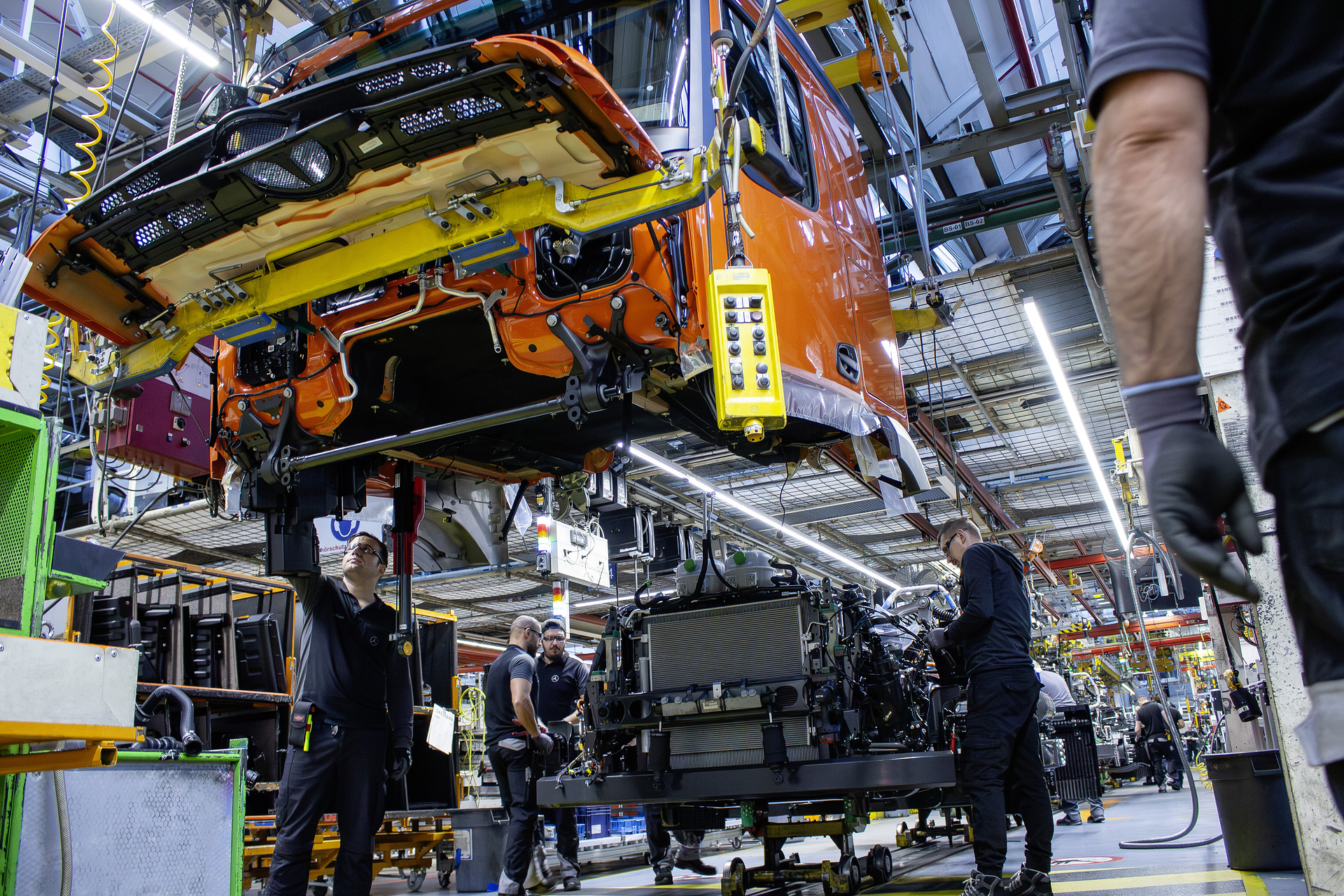
The new eActros variants are being manufactured on the existing assembly line for the Wörth A-series, allowing for the flexible, parallel production of both battery-electric and diesel-powered trucks. Unlike the first-generation eActros models, the assembly of the electric trucks is now fully integrated into the regular series production process, from frame construction to final inspection. Key electric powertrain components are supplied by Daimler Truck plants in Mannheim, Kassel, and Gaggenau.
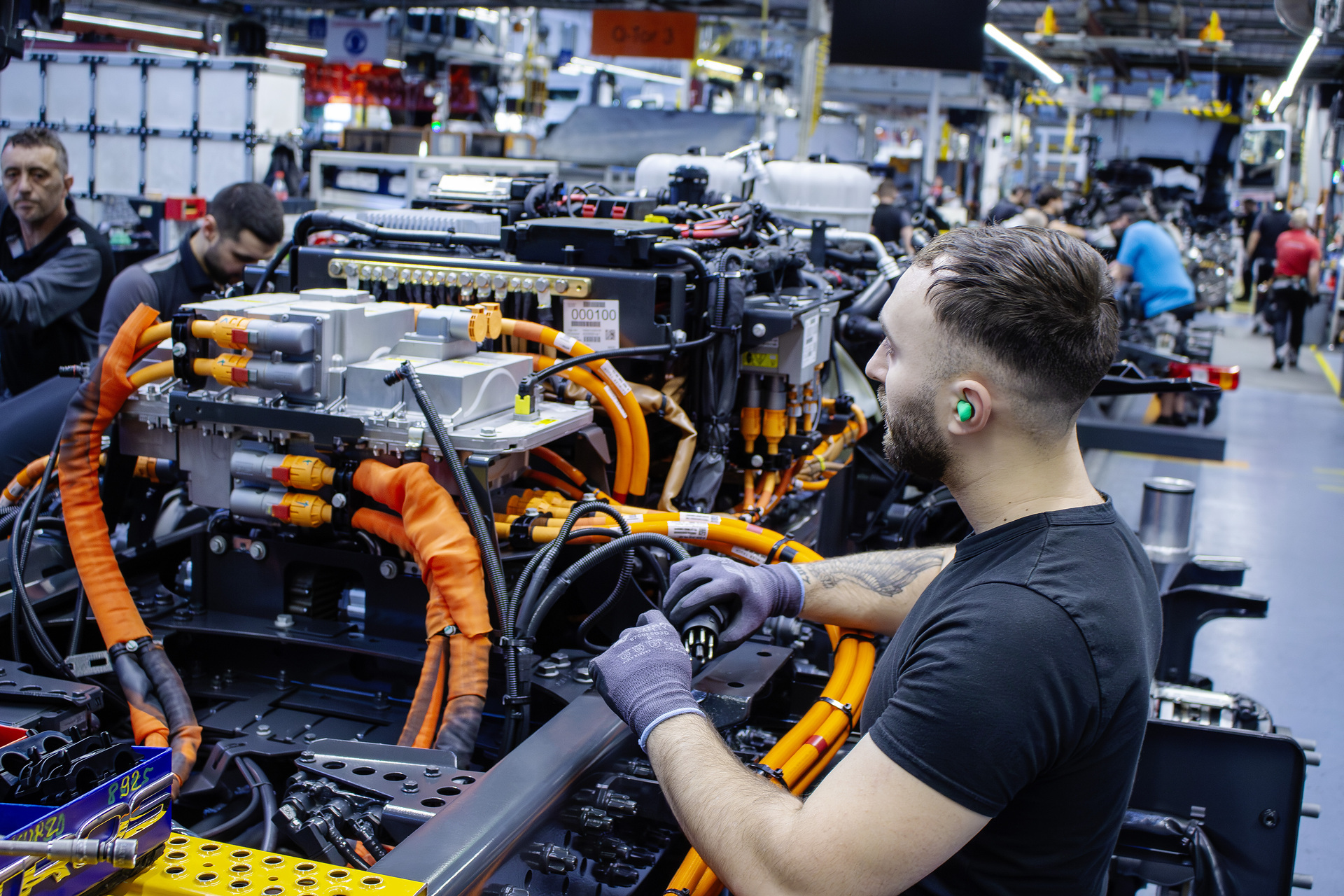
The expanded portfolio allows Mercedes-Benz Trucks to offer the eActros as the 400 with two battery packs or the 600 with three battery packs (621 kWh), with both available as tractor units or flatbed chassis. Customers will also have a choice between two different cab designs.
The new model launches as the Daimler Truck segment maintains a strong presence in the European heavy-duty electric truck market, having secured a market share of almost 50% in the third quarter of the year—the second consecutive quarter as the clear market leader.