

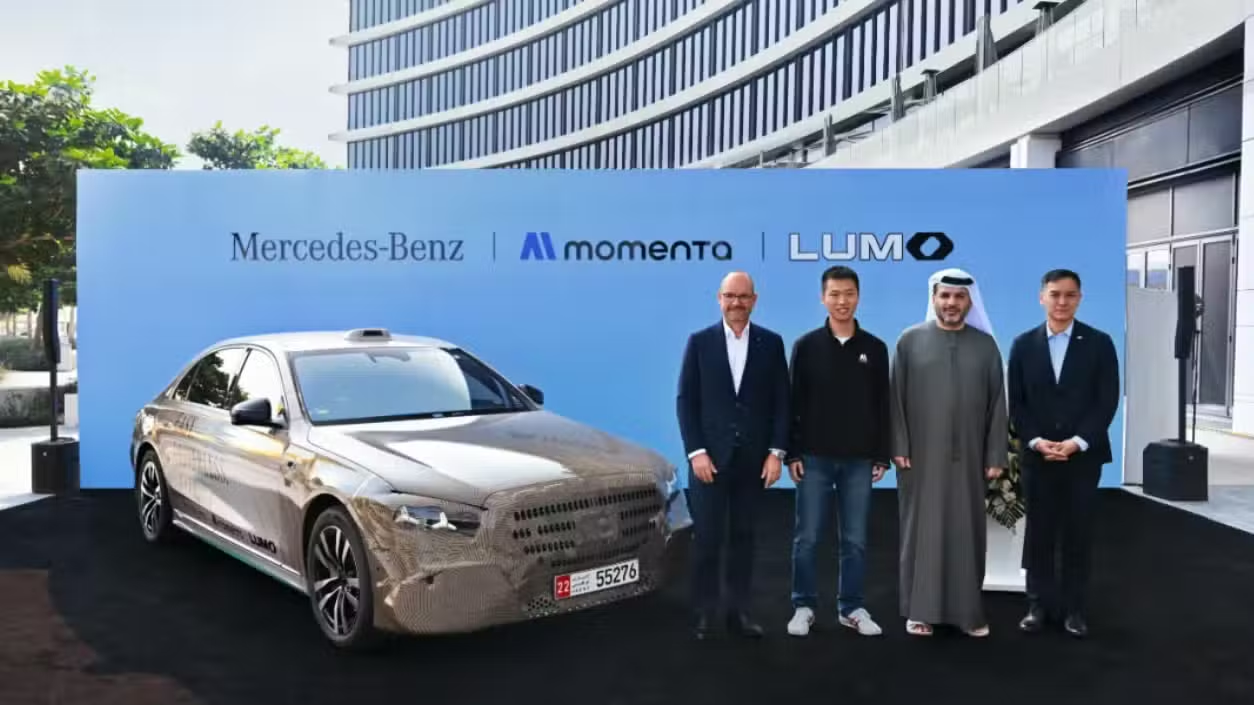
German automaker Mercedes-Benz and Chinese autonomous driving company Momenta on Tuesday announced a partnership to launch a robotaxi service in Abu Dhabi, deepening a multi-year collaboration between the two firms. The companies said the fleet will be deployed through UAE mobility platform Lumo and will be based on the next-generation Mercedes-Benz S-Class sedan.
The robotaxi service is scheduled to begin official operations in 2026, with plans to expand into additional global markets at a later stage, according to Momenta. The project combines Mercedes-Benz’s vehicle engineering, Momenta’s artificial intelligence technologies, and Lumo’s local operational capabilities.
See also: China’s Momenta Files Confidentially for Hong Kong IPO Amid U.S.-China Tensions
“The collaboration leverages Mercedes-Benz’s engineering capabilities, Momenta’s AI technologies, and Lumo’s localized operational expertise,” said Momenta Chief Executive Cao Xudong. He added that the luxury robotaxi, built on Momenta’s R6 reinforcement learning large language model, aims to deliver an autonomous driving experience focused on safety and comfort.
Headquartered in Suzhou near Shanghai, Momenta was founded in 2016 and has positioned itself as a key supplier of autonomous driving technology in China and overseas. Mercedes-Benz became the first international automaker to invest in Momenta in 2017, marking the start of their strategic relationship.
See also: BMW to Equip 2026 iX3 with New Driving Assistance System Co-Developed With Momenta
In September, the two companies announced plans to jointly develop a smart driving assistance system based on Momenta’s Flywheel large language model. That system made its production debut on Nov. 5 with the launch of the all-new electric CLA sedan in China, with wider deployment across Mercedes-Benz models planned.
Momenta has also been expanding its international testing footprint beyond China. In September, the company said it would begin testing Level 4 autonomous robotaxis with Uber Technologies in Munich, Germany, with trials expected to start next year and broader European expansion targeted for 2026.