



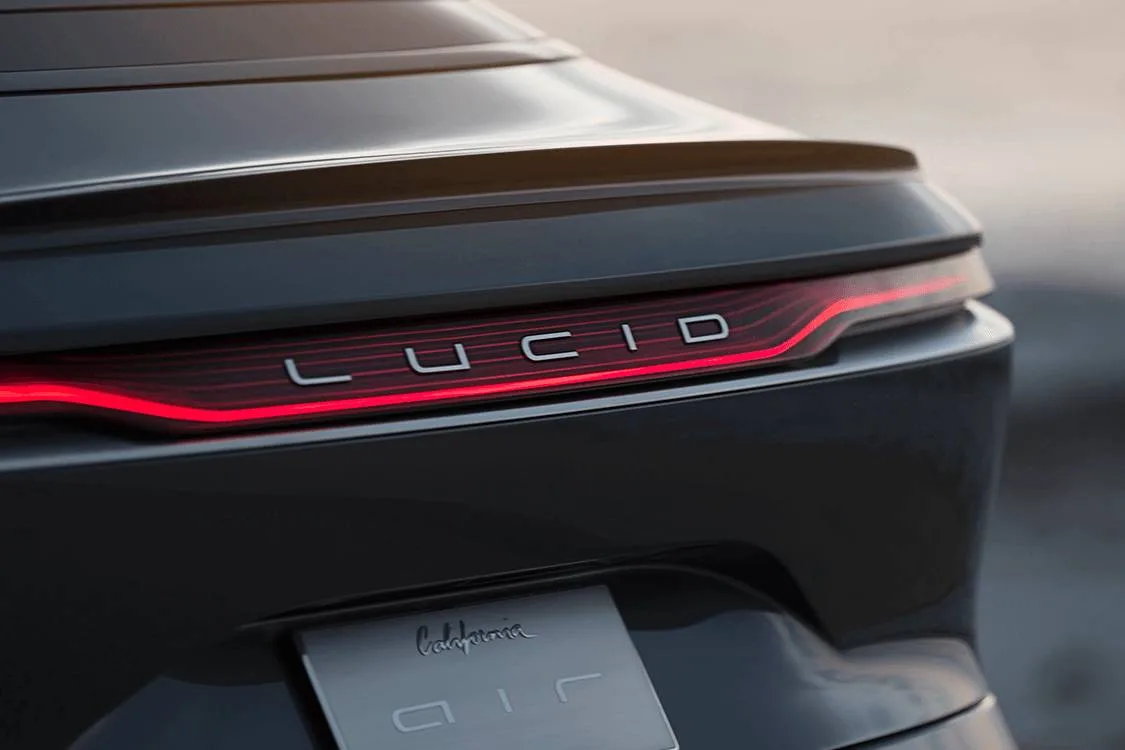
Lucid Motors has reportedly postponed its planned market launches in Austria and Spain from 2026 to 2027, marking the latest adjustment to the US electric vehicle manufacturer’s European expansion strategy.
According to reports by Eletric-vehicles citing industry sources, the company has delayed its entry into the two markets despite previously identifying them as part of a broader rollout across seven additional European countries.
The reported postponement comes as Lucid continues to refine its international growth plans while managing financial pressures and operational challenges.
European Expansion Progresses More Slowly Than Planned
During the presentation of its 2025 financial results, Lucid outlined plans to expand into seven new European markets, including Belgium, Denmark, France, Italy, Austria, Sweden and Spain.
The company currently operates in only four European countries: Germany, the Netherlands, Norway and Switzerland.
So far, Belgium has become the first of the newly announced markets to launch, following the recent opening of a Lucid test-drive centre in Brussels.
However, the reported delays in Austria and Spain suggest the company’s wider European expansion may be progressing more gradually than originally anticipated.
UK Launch Also Pushed Back
Lucid has previously acknowledged delays in other European market entries.
According to recent comments from Europe chief Lawrence Hamilton, the United Kingdom—considered one of Lucid’s key future markets—is now expected to launch in early 2028.
The UK rollout had previously been targeted for 2026 before being revised to 2027 and later pushed back again.
The repeated adjustments highlight the challenges facing the luxury EV manufacturer as it attempts to expand beyond its established markets.
Shift Toward a Hybrid Sales Model
As part of its international growth strategy, Lucid is changing the way it sells vehicles in Europe and the Middle East.
The company plans to move away from a purely direct-to-consumer approach and introduce a hybrid sales model that combines company-operated locations with independent retail partners.
Lucid will continue operating flagship stores and online sales channels while also working with authorised dealerships.
In Germany, for example, automotive retail group Wackenhut has been selected to represent the brand in Stuttgart and Baden-Baden.
The strategy is expected to help Lucid expand its market presence while reducing the costs associated with establishing a fully owned retail network across multiple countries.
Growth Ambitions Amid Financial Challenges
Lucid continues to pursue international growth despite ongoing financial losses.
The company currently offers the Lucid Air luxury electric sedan and has recently launched the Lucid Gravity electric SUV, which is expected to play a key role in expanding its customer base.
However, Lucid recently paused deliveries of the Gravity temporarily due to supplier-related issues, highlighting the operational complexities associated with scaling production.
The manufacturer remains focused on increasing vehicle sales in North America, Europe and the Middle East while broadening its retail footprint and product portfolio.
Balancing Expansion and Efficiency
The reported postponement of launches in Austria and Spain reflects a broader balancing act facing Lucid as it seeks to grow internationally while managing costs and improving operational efficiency.
Although the company has not officially confirmed revised launch dates, the reported delays suggest Lucid may prioritise strengthening its presence in existing markets and refining its sales network before accelerating expansion into additional European countries.
As competition intensifies across the premium electric vehicle segment, successful execution of Lucid’s international strategy is likely to play an important role in the company’s long-term growth plans.


