
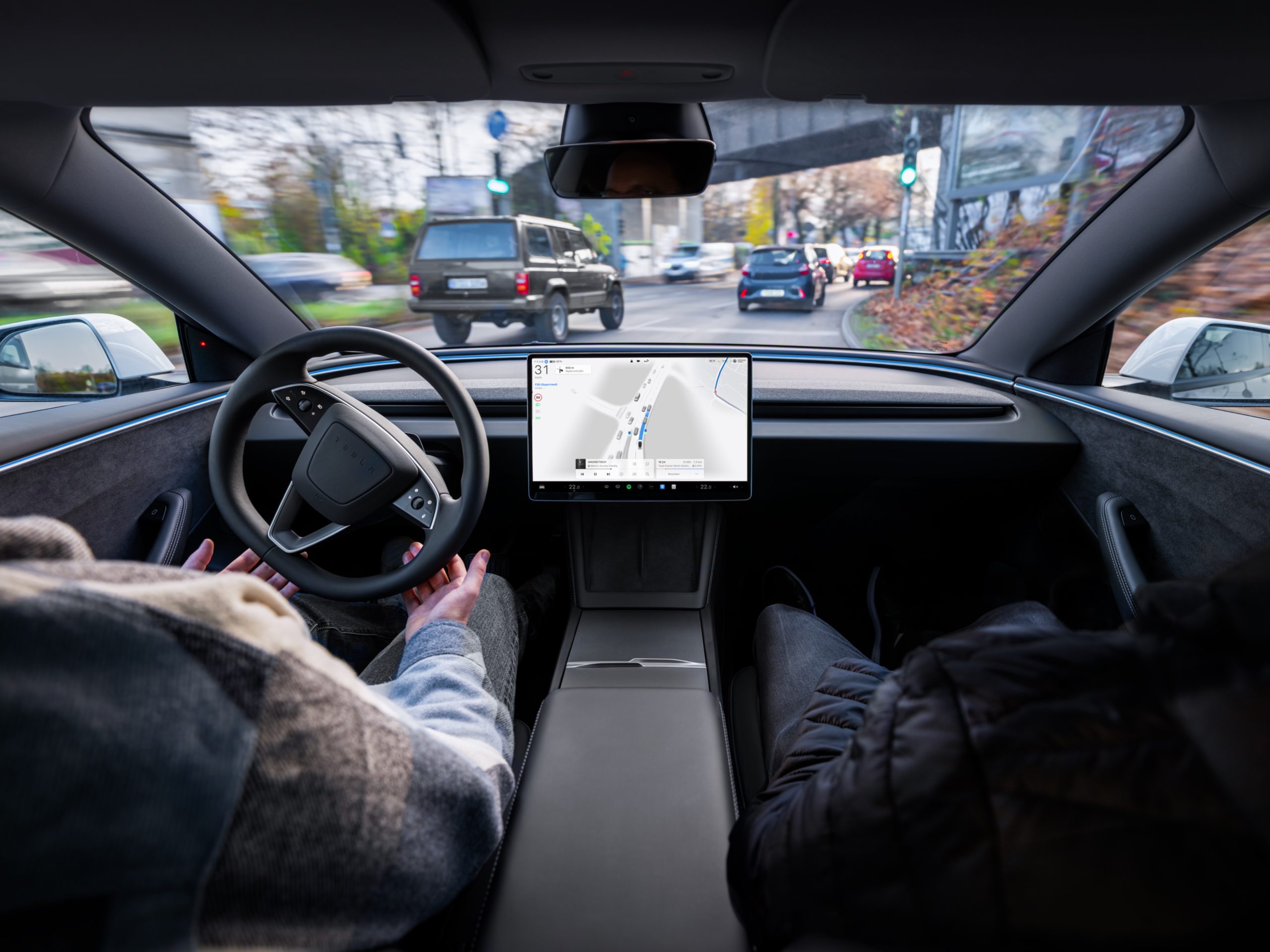
Lithuania has become the first European Union member state to recognise the provisional type approval granted in the Netherlands for Tesla’s Full Self-Driving (Supervised) driver assistance system.
The Lithuanian Ministry of Transport and Communications and the Lithuanian Road Traffic Authority said they would accept the approval issued by the Dutch vehicle authority RDW under existing European Union regulatory rules.
Authorities emphasized that Tesla’s Full Self-Driving (Supervised), commonly referred to as FSD (Supervised), remains classified as an SAE Level 2 driver assistance system rather than a fully autonomous driving technology.
Under the classification, drivers must continuously monitor the road and remain prepared to take control of the vehicle at any time.
Lithuanian Transport Minister Juras Taminskas said the technology could contribute to safer and more comfortable driving experiences, particularly during long-distance travel or repetitive traffic conditions.
“Lithuania is among the first countries in Europe where cars can drive autonomously,” Taminskas said.
“These technologies can already make a real contribution to safer and more comfortable driving, especially on long journeys or in monotonous traffic.”
The decision was made under Regulation (EU) 2018/858, which allows EU member states to recognize provisional type approvals issued by authorities in other member countries for new vehicle technologies.
Lithuania’s recognition means Tesla can now offer FSD (Supervised) in a second EU country shortly after receiving initial approval in the Netherlands.
Tesla has been seeking broader European approval for the system based on the Dutch certification and previously aimed to secure EU-wide authorization through a coordinated process involving the European Commission.
However, reports following a meeting of the European Commission’s Technical Committee on Motor Vehicles in Brussels earlier this month suggested several member states, including some Nordic countries, expressed reservations about wider deployment of the system.
The development could leave Tesla pursuing a two-track strategy in Europe by seeking approvals from individual member states while continuing efforts toward a unified EU-wide authorization.
Without a bloc-wide framework, differing national rules could emerge across Europe, potentially allowing Tesla’s FSD system in some countries while restricting it in others.