



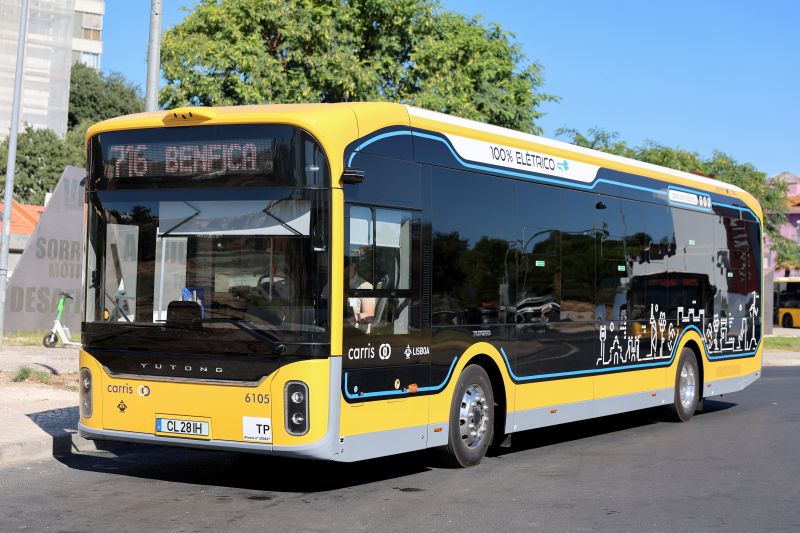
Lisbon public transport operator Carris is adding 29 electric buses to its fleet, bringing the total number of battery-electric vehicles to 103 as the company works toward eliminating fossil-fuel-powered buses by 2030.
The latest procurement forms part of an investment programme worth more than €31 million, with €17.05 million financed through Portugal’s Recovery and Resilience Plan (PRR), according to Portugal News.
Electric Fleet Passes 100 Vehicles
The new buses are Yutong U12 models and are being introduced alongside other electric vehicles already deployed by Carris. The operator has put 15 electric minibuses into service during 2026, taking the number of electric buses in its fleet to 103 once the latest vehicles are included.
Portuguese Secretary of State for Energy Jean Barroca said 78 of Carris’ 103 electric buses were funded through the PRR.
The transition is already reducing Carris’ reliance on diesel. The number of diesel buses in the fleet has fallen from 524 to 379.
Once the latest electric buses are fully operational, more than half of the kilometres travelled by Carris will be covered by buses without combustion engines.
Carris has set a target of eliminating fossil-fuel-powered vehicles from its fleet entirely by 2030.
Carris Invests In Charging Infrastructure
The fleet expansion is being accompanied by investments in charging infrastructure. Carris plans to allocate about €2 million to charging projects at bus stops by the end of 2026.
The company also plans to invest more than €10 million in 2027 to expand charging infrastructure and develop information systems for energy management.
Under the PRR programme, Carris said it has procured 25 charging stations since 2022, together with 29 electric minibuses and 49 standard electric buses.
The combined investment associated with these purchases is nearly €32 million, of which around €15 million has been provided through Carris’ own funds.
Bus Supply Capacity Remains A Challenge
Carris CEO Rui Lopo has identified the delivery capacity of Europe’s bus manufacturing industry as a potential constraint on the pace of fleet electrification.
In the longer term, the operator plans to procure and introduce as many as 150 new buses each year.
The national transition is also expected to accelerate. The Portuguese government and the European Commission plan to support the procurement of 1,006 zero-emission buses for more than 70 municipalities.
Porto Also Expands Electric Fleet
Electric bus deployment is also increasing elsewhere in Portugal. Porto public transport operator STCP ordered an additional 30 electric buses from Portuguese manufacturer CaetanoBus in 2025.
CaetanoBus vehicles have also been operating in Lisbon. Carris introduced its first 15 electric buses from the manufacturer in 2019 and followed that with an additional order for 30 vehicles in 2023.
The expansion of electric fleets in Lisbon and Porto reflects Portugal’s broader effort to shift urban public transport away from fossil fuels while expanding the charging infrastructure required to support larger zero-emission fleets.


