




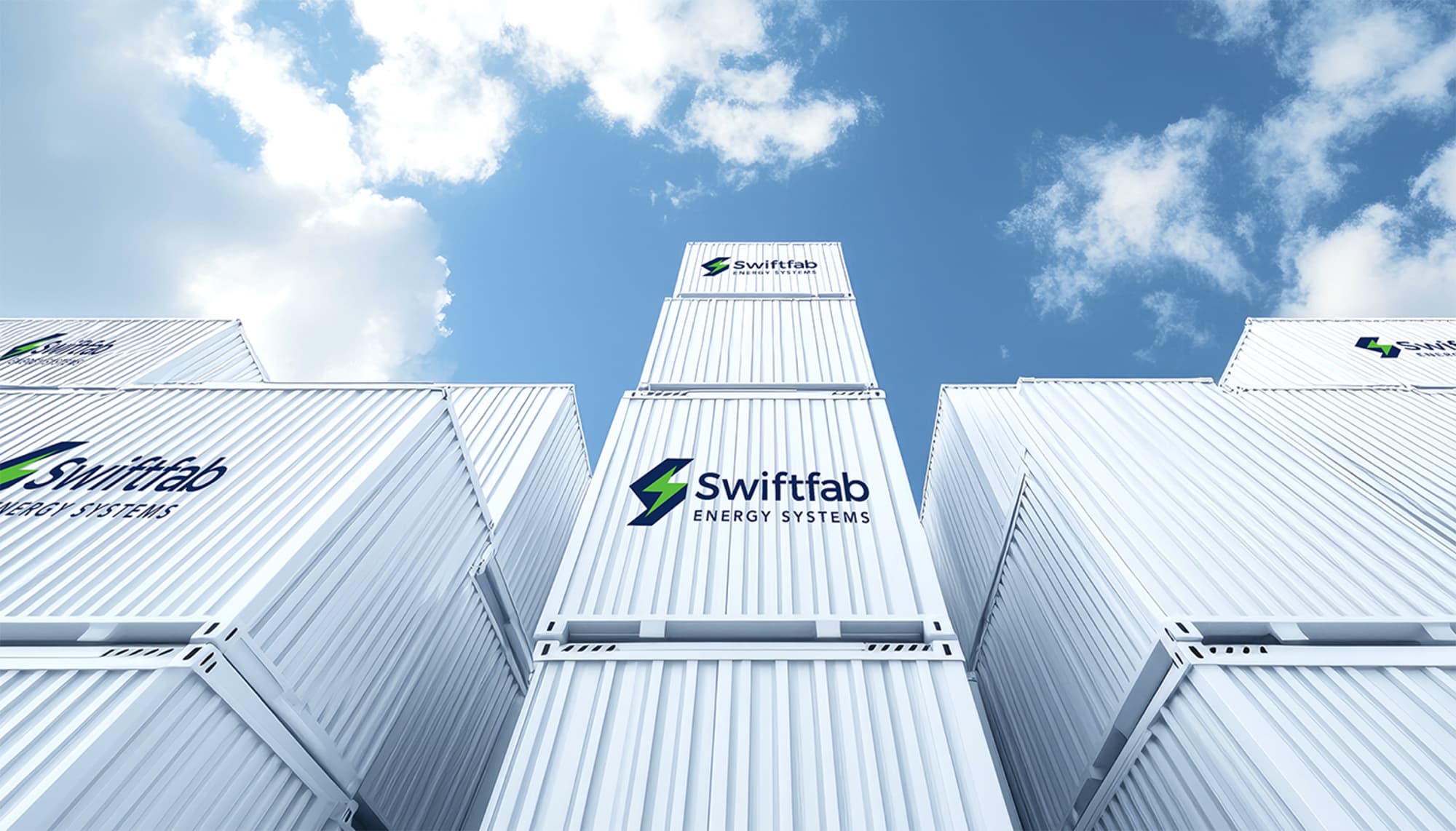
Japanese battery equipment manufacturers have established a new venture focused on developing modular electric vehicle (EV) battery factories, an approach designed to reduce construction timelines and lower manufacturing costs.
The initiative is being led by Swiftfab Energy Systems, a company formed in April by nine battery equipment suppliers, according to a report by Nikkei Asia.
Industry Consortium Targets Battery Manufacturing Efficiency
Swiftfab’s founding members include Hitachi, Ricoh, Toyota Motor-affiliated Jtekt, Komatsu subsidiary Komatsu NTC, and industrial air-conditioning specialist Seibu Giken.
The participating companies are members of the Battery Association for Supply Chain, a Japanese industry group supporting battery manufacturing development.
The venture plans to offer battery production equipment in modular, container-sized units that can be combined to create complete manufacturing facilities.
Modular Factory Concept
Under the proposed model, battery production processes including material processing, electrode manufacturing, cell assembly, and electrolyte filling will be divided into smaller stages and integrated into modular production units.
Swiftfab said the equipment will be manufactured by its member companies, while the venture itself will be responsible for assembling, packaging, and integrating the modules into complete production systems.
According to the report, approximately 1,000 modules would be required to build a battery factory capable of producing cells for around 50,000 electric vehicles annually.
Reducing Construction Complexity
The modular approach is intended to address challenges commonly associated with conventional battery factory construction.
Large-scale battery plants often require coordination among dozens of equipment suppliers, creating scheduling and integration complexities that can delay project completion.
Japanese battery manufacturers frequently work with more than 50 suppliers when building production facilities, according to the report.
Swiftfab also plans to centralize the procurement of common components such as sensors and motors, which could help streamline manufacturing and reduce costs.
Commercialization Targeted by 2030
The venture expects to receive support through government subsidy programs and aims to bring its first modular battery factory into operation by the end of 2030.
According to the report, the modular factory model could shorten construction periods from the current industry norm of four to six years to approximately two to three years.
The use of smaller and standardized production equipment is also expected to lower operating expenses once facilities enter commercial production.
The initiative comes as battery manufacturers worldwide seek faster and more cost-effective ways to expand production capacity amid growing demand for electric vehicles and energy storage systems.


