
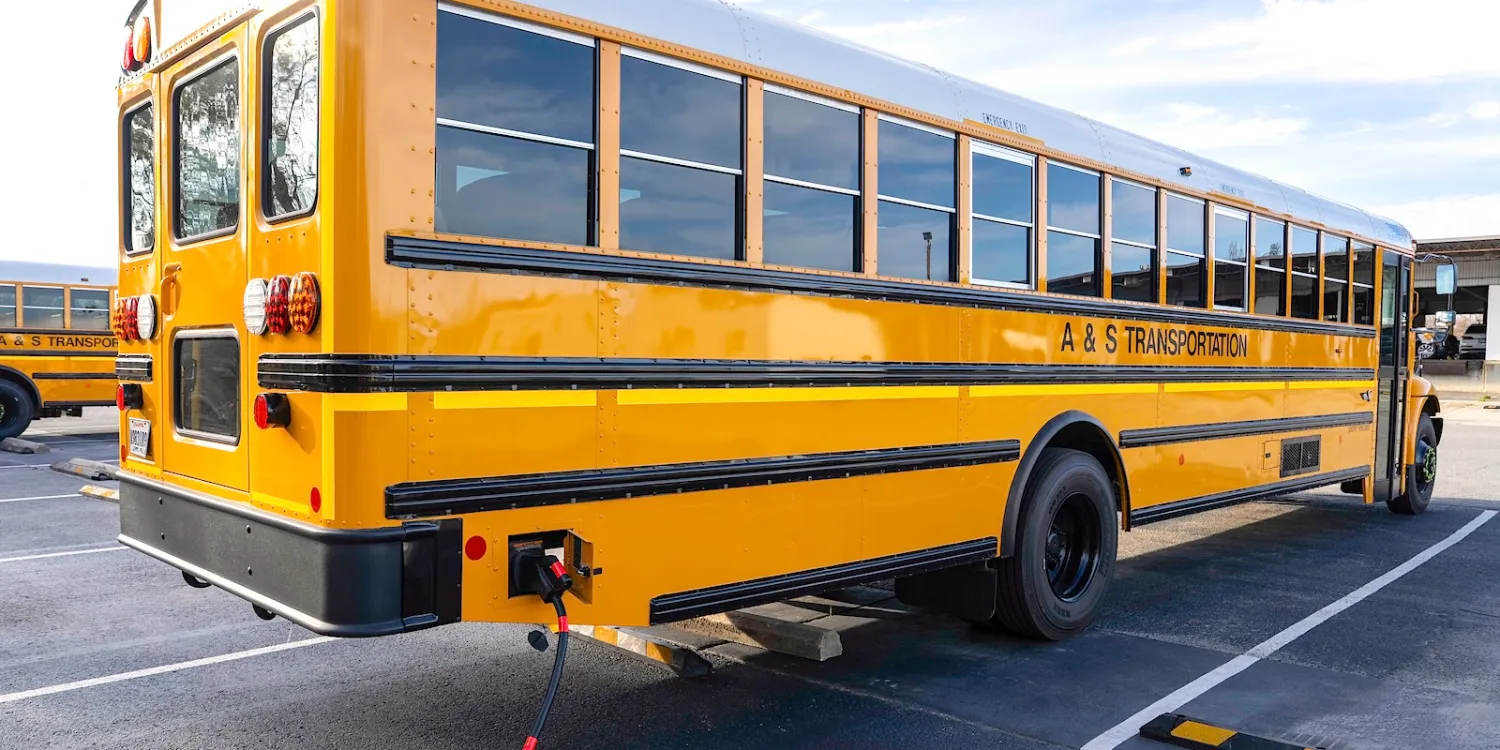
InspireNOLA Charter Schools has deployed 42 battery-electric school buses to serve students in and around New Orleans, replacing an equal number of diesel buses and shifting daily operations to zero-emission transport, the organisation said.
The electric buses are operated by Louisiana-based A&S Transportation in partnership with Highland Electric Fleets. They run across 58 routes, covering more than 3,400 miles per day, providing transport for thousands of students while maintaining existing service levels.
See also: New Jersey Awards Nearly $32 Million for Electric School Buses and Public Charging Projects
According to InspireNOLA and its partners, the transition is expected to reduce carbon dioxide emissions by an estimated 5,790 tons per school year, based on average savings of around 181 metric tons of CO₂ per bus annually. Studies cited by the school network point to additional public health benefits linked to reduced air pollution, including lower exposure to pollutants associated with respiratory illness.
Research referenced from Harvard University estimates that replacing a diesel school bus with an electric one can generate total lifetime benefits of about $84,200 per bus, including $40,400 in climate-related benefits from reduced emissions and $43,800 in health-related savings from improved air quality and lower rates of childhood asthma.
See also: Thomas Built Buses to Launch First All-Electric Type D School Bus by 2026
“This significant milestone is about leading with intention and putting students first,” said Jamar McKneely, chief executive of InspireNOLA Charter Schools. “Deploying 42 electric buses allows us to reduce emissions, improve our students’ daily travel experience through air-conditioned transportation, and set a new standard for sustainability and innovation in public education in Louisiana.”
The electric buses are powered by a 210 kilowatt-hour lithium-ion battery paired with a 255 kilowatt electric motor, delivering a range of about 135 miles. An optional larger battery pack extends the range beyond 200 miles, according to specifications provided by the operators.
See also: Michigan Expands Clean School Bus Fleet with $35.9 Million in New Grants
Charging infrastructure for the fleet includes seven Kempower C800 power cabinets supporting a total of 52 DC fast-charging ports. The setup is designed to support overnight charging and provide operational flexibility during daily service.
School districts across the United States have increasingly turned to electric buses as a way to cut emissions, reduce fuel and maintenance costs, and improve air quality around schools. InspireNOLA said the deployment demonstrates how electrification can be integrated into large-scale student transport operations without disrupting service.