
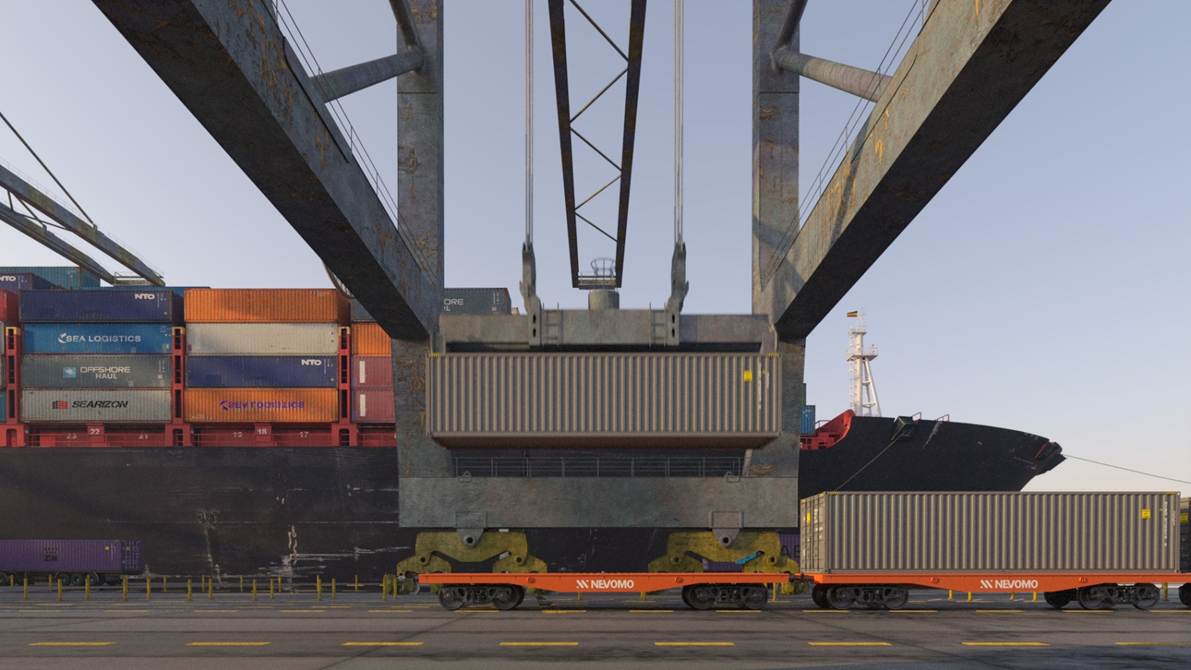
India will become the first country to test Nevomo’s magnetic levitation-based propulsion system on a conventional freight train, following a partnership between the Polish technology firm, DP World, and the Deendayal Port Authority (DPA).
Under a memorandum of understanding, Nevomo will install its Magrail Booster system in the bogies of freight cars, marking the company’s first deployment of the technology. The pilot project will take place on a 750-meter track segment and is designed to demonstrate how magnetic propulsion could improve cargo operations by enabling individual wagons to move and connect autonomously.
See also: Mobileye and VVDN to Localize ADAS Production in India, Supporting Export-Ready Vehicle Platforms
Unlike traditional maglev systems, the Magrail Booster does not make trains float. Instead, it equips each freight car with its own propulsion unit, allowing for faster acceleration and more efficient formation of trains without manual shunting. Initial tests have shown that the system can achieve acceleration rates of up to 1.5 m/s².
The collaboration grants DP World and DPA early access to the technology once it is commercially ready. DP World, which has a history of exploring advanced freight solutions such as Hyperloop, is returning to magnetic systems with a more practical and scalable approach.
See also: India’s Electric Vehicle Sales Surge as Market Expands
Although the first Indian installation will cover only a short section of track, it represents a significant step toward integrating distributed propulsion systems into the freight industry. The technology is expected to improve operational flexibility, reduce handling times, and potentially assist locomotives during acceleration.
Nevomo continues to expand its portfolio of hybrid magnetic rail solutions, including a separate collaboration with Captrain in Germany on the “Bremen Magnetic Shuttle” project. The company has already conducted extensive testing of levitating bogies and retrofitted freight cars, positioning itself as a pioneer in adapting magnetic systems for existing railway infrastructure.