



Legacy automakers in the United States, Japan and Europe are at risk of falling further behind competitors that are accelerating their electric vehicle strategies, according to the latest Global Automaker Rating published by the International Council on Clean Transportation (ICCT).
The report found that global electric vehicle (EV) sales continued to grow in 2025, accounting for one in four new vehicles sold worldwide, compared with one in five in 2024. While most manufacturers increased the share of EVs in their sales mix, the ranking points to an increasing divide between companies expanding their electric portfolios and those slowing their transition.
BYD and Tesla Remain Industry Leaders
The ICCT ranked BYD and Tesla as the top-performing automakers for the fourth consecutive annual assessment.
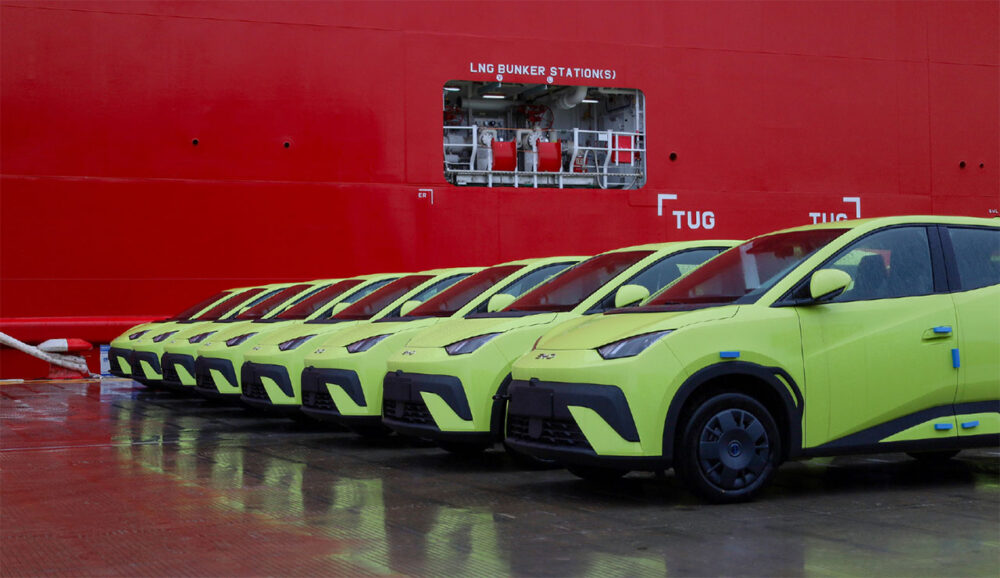
BYD maintained its lead in battery electric vehicle (BEV) sales for the second straight year, narrowing the gap with Tesla while continuing to expand its global presence.
Chinese manufacturers also dominated much of the ranking. SAIC and Geely each achieved electric vehicle sales shares of at least 50%, with ChangAn also recording strong growth.
The report noted that plug-in hybrid electric vehicles accounted for the majority of EV sales among many Chinese automakers, while manufacturers in other regions relied more heavily on battery electric vehicles.
Legacy Automakers Face Growing Pressure
Several established automakers experienced lower rankings after revising their long-term electrification plans.
Stellantis, Honda and General Motors recorded some of the largest declines, largely due to reductions in their 2030 electric vehicle sales targets.
According to the report, many legacy manufacturers—particularly those based in the United States and Japan—have shifted greater emphasis toward plug-in hybrid vehicles, flexible vehicle platforms and calls for more gradual regulatory timelines.
Meanwhile, Geely and SAIC exceeded their own electrification targets ahead of schedule. Great Wall Motor was the only Chinese automaker to fall from the report’s “transitioner” category to “laggard” after increasing its focus on plug-in hybrid vehicles.
Market Gap Continues to Widen
Irem Kok, senior researcher at the ICCT and co-author of the report, said the results show an increasing separation between leading and slower-moving manufacturers.
“The rating shows a growing gap between the frontrunners who are expanding their global EV offerings to reach new markets and those still wavering on their electric commitments.”
She added:
“The window for some legacy automakers to catch up is narrowing, particularly as their long-term investments for electrification are shrinking.”
Product Expansion Shapes Rankings
Hyundai-Kia was the only manufacturer to move into a higher performance category this year, advancing from “laggard” to “transitioner” after broadening its electric vehicle offerings across more market segments.
Stellantis also improved its product coverage despite its lower overall ranking, becoming the only non-Chinese manufacturer to enter the top five for vehicle segment availability.
Rachel Muncrief, Acting Executive Director and Chief Executive Officer of the ICCT, said many established manufacturers continue to offer electric models in a limited number of vehicle categories.
“We see from the data that most US- and Japan-based automakers continued to offer electric models in fewer than a third of the vehicle segments analyzed.”
She added:
“Legacy automakers risk ceding their leadership in major markets where they historically dominate if they fail to adapt.”
The report also noted that slower progress by some established manufacturers could create additional opportunities for newer electric vehicle companies, including VinFast, Togg and Rivian, as global demand for zero-emission vehicles continues to expand.
The ICCT’s Global Automaker Rating evaluates 22 automakers based on 2025 sales performance, vehicle technology and long-term electrification strategies to assess progress toward zero-emission transportation.


