



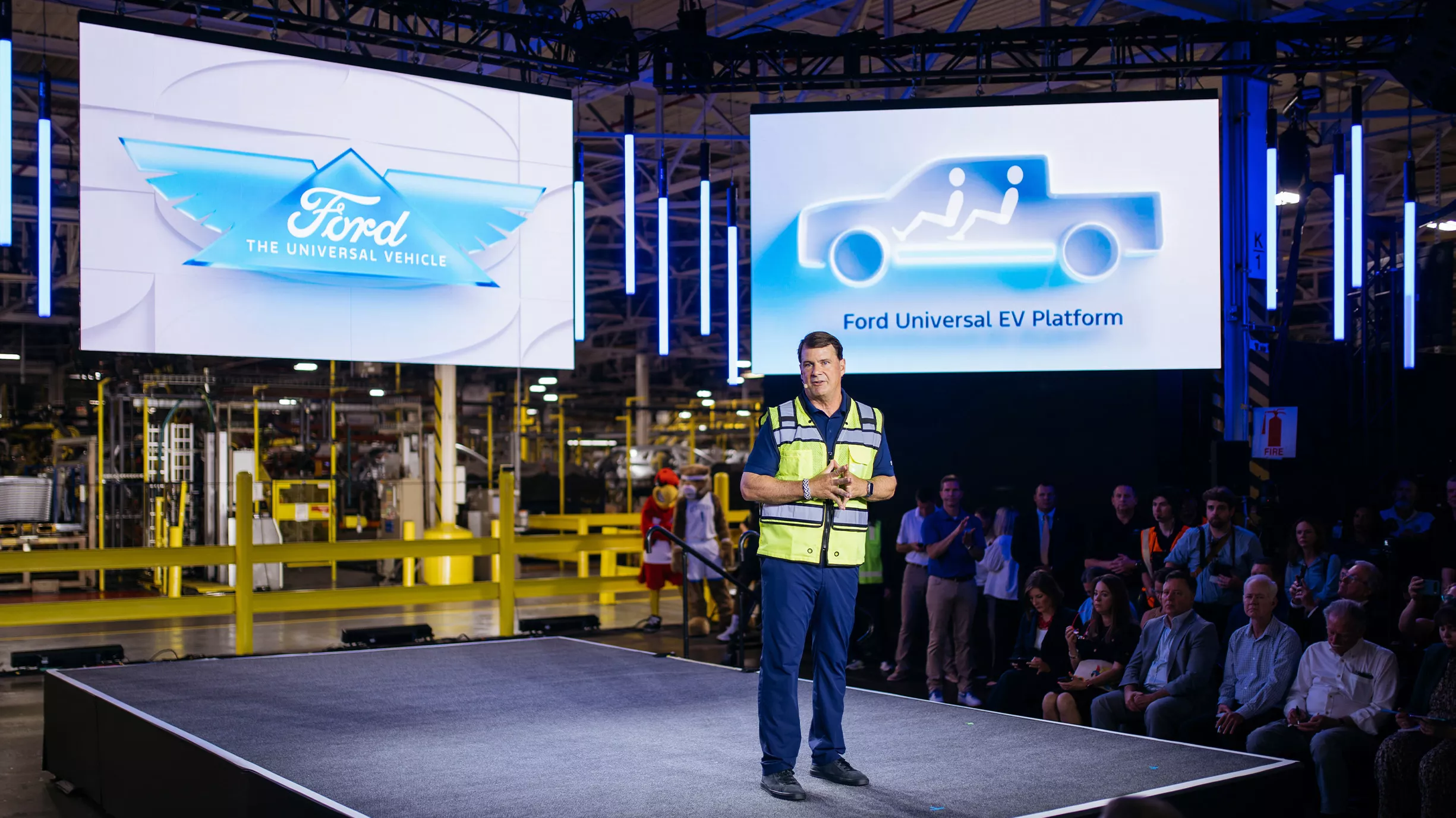
Ford Motor said it will introduce a $30,000 mid-size electric pickup in 2027, the first vehicle to use its new Universal Electric Vehicle Platform and a redesigned manufacturing process aimed at reducing costs and increasing efficiency.
The architecture, created by a small skunkworks team led by former Tesla engineer Alan Clarke, incorporates large aluminum castings that replace welded panels, cutting three-quarters of the parts, two-thirds of the welds, and half of the fasteners compared with a traditional pickup. It also eliminates nearly 1.6 km of wiring.
See also: What We Know So Far About Ford Universal EV Platform


Doug Field, Ford’s Chief EV, Digital and Design Officer, said the initiative reflects a fundamental shift in how the automaker builds EVs. “I don’t think many legacy car manufacturers could pull off a project like this. And I don’t believe new electric vehicle startups will be able to keep up with our Ford engineers and manufacturing teams making this a reality,” he said.
Ford is also replacing the conventional single production line with what it calls a “production tree,” where three parallel lines separately assemble the front, rear and structural battery core before final assembly. “The Model T was affordable not because it was a thrifted version of other cars, but because brilliant minds took fundamentally new approaches to old problems,” Field said. “That’s exactly what we set out to do in creating the Ford Universal Electric Vehicle Platform.”
See also: Ford Commits $5 Billion to Build LFP-Powered Midsize EV and Universal EV Platform in the U.S.


Ford said the 2027 pickup will accelerate as quickly as an EcoBoost Mustang and offer cabin space similar to a Toyota RAV4. The company also projects its five-year cost of ownership will be “lower than buying a three-year-old Tesla Model Y.”