


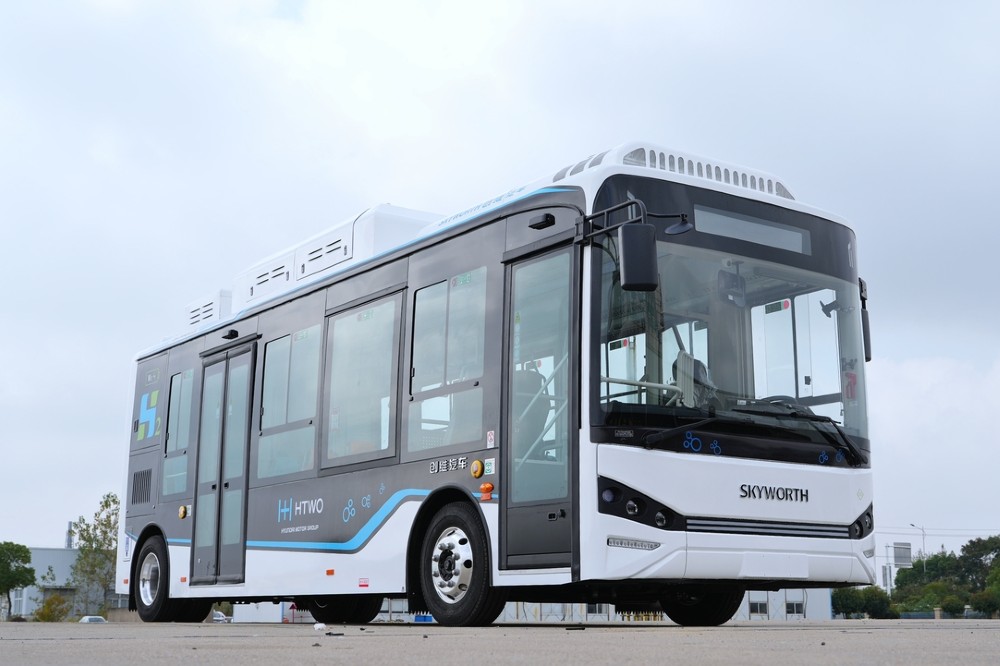
Hyundai Motor Group said it has secured an order for 224 hydrogen fuel-cell buses from the state-owned Guangzhou Public Transport Group, describing it as the largest single order for hydrogen buses in China to date.
The buses will be supplied by HTWO Guangzhou, Hyundai’s China-based hydrogen unit, in partnership with local commercial vehicle maker Kaiwo Group. The two companies will jointly deliver the vehicles, which will form about half of Guangzhou Public Transport Group’s broader procurement of roughly 450 hydrogen buses under the tender. Financial terms were not disclosed.
See also: Hyundai Ramps Up Hydrogen Bus Production in South Korea Amid Rising Competition from China
The vehicles are 8.5-metre midibuses developed by HTWO Guangzhou and Kaiwo. Hyundai said they are equipped with a 90-kilowatt fuel-cell system operating at 64% efficiency, offer a driving range of up to 576 kilometres and can be refuelled in about five minutes. The buses also feature a low-floor layout and a short rear overhang of less than 1.1 metres, aimed at urban operations.
The fuel-cell powertrain is produced locally at HTWO Guangzhou’s plant, completed in 2023, which is Hyundai’s first overseas manufacturing facility for hydrogen fuel cells. “We will continue to work with our local partners to showcase hydrogen fuel cell technology and position hydrogen as a leading clean transportation,” HTWO said in a statement.
See also: Hyundai Motor Group Launches Energy Hydrogen Business Division to Strengthen Hydrogen Ecosystem
Hyundai said the latest order builds on momentum from a separate tender last month in which HTWO and Kaiwo secured 25 additional hydrogen buses, bringing their total deliveries to Guangzhou Public Transport Group to 249 units.


