



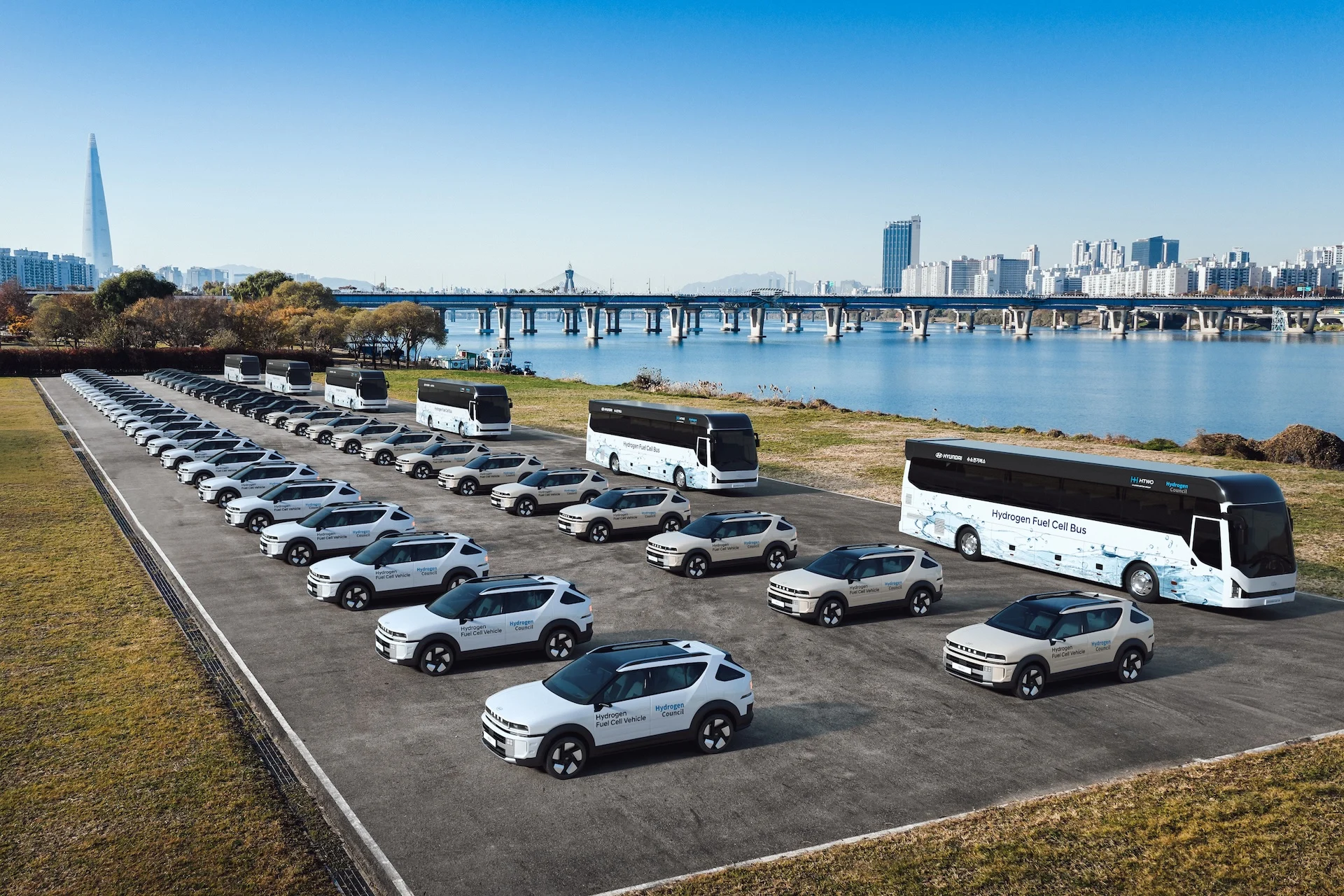
Hyundai Motor Group will co-host the Hydrogen Council Global CEO Summit in Seoul from Dec. 2 to 4, deploying a fleet of fuel cell electric vehicles (FCEVs) to handle all official transportation in what organizers say will be the first major business event to rely entirely on hydrogen-powered logistics.
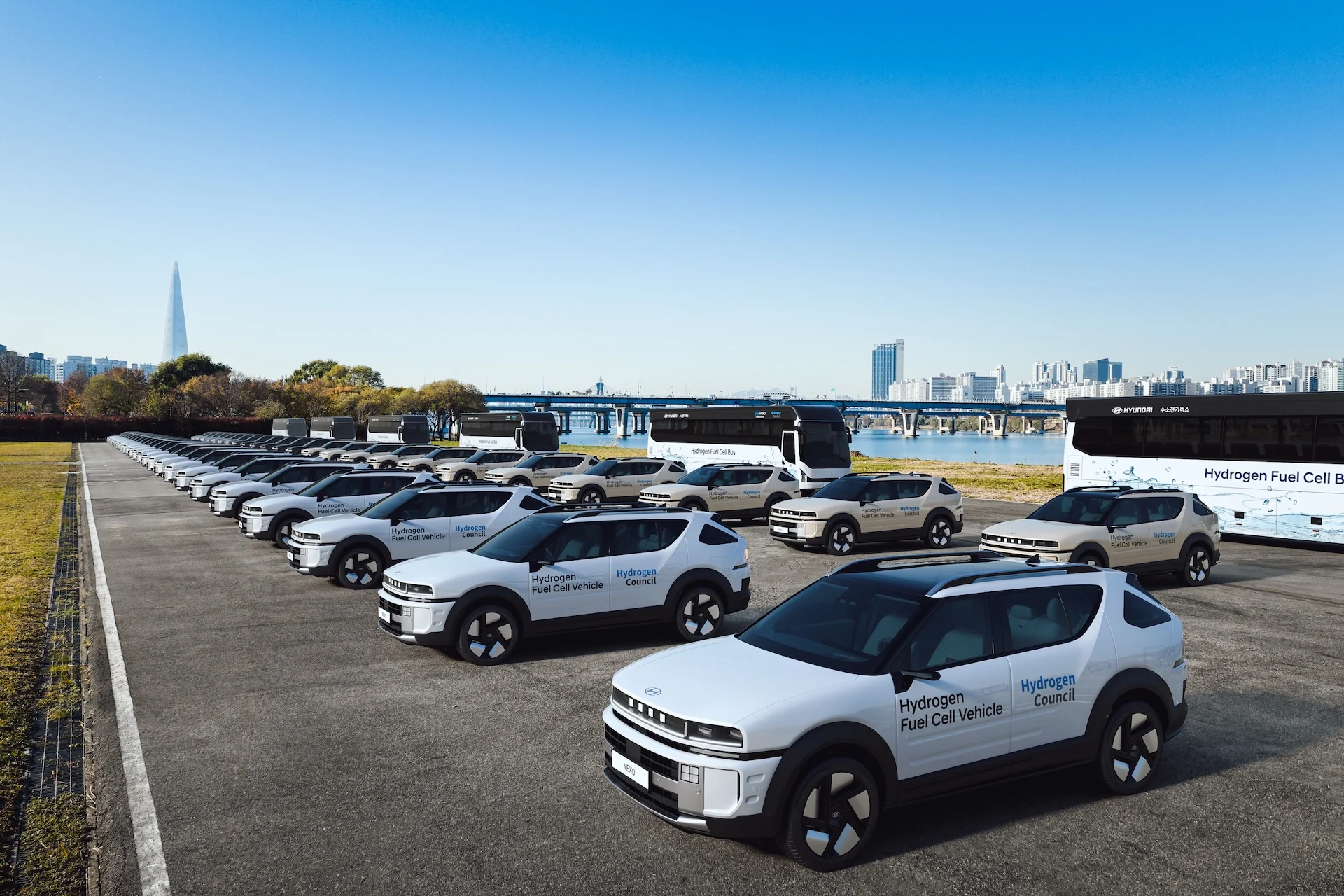
The summit is expected to draw about 200 executives from nearly 100 global hydrogen-related companies to discuss hydrogen’s role in the global energy transition. Hyundai will operate 50 NEXO fuel cell SUVs and six UNIVERSE hydrogen buses to transport participants during the event, highlighting South Korea’s hydrogen mobility infrastructure.
See also: Hyundai Motor Group and Pyeongtaek City Partner to Develop Korea’s First Green Hydrogen Port
The Hydrogen Council, a CEO-led initiative launched in 2017, brings together major companies involved in hydrogen production, storage, distribution and application. Hyundai Motor Group serves as a co-chair of the council and has positioned hydrogen as a core pillar of its long-term strategy under its dedicated hydrogen brand, HTWO.

Hyundai said delegates will also take part in ride-and-drive sessions and visit hydrogen refuelling facilities, including the National Assembly hydrogen station in Seoul, offering hands-on exposure to the country’s fuel-cell ecosystem.
Jaehoon Chang, Vice Chair of Hyundai Motor Group, said the summit underlines the importance of coordination between industry and policymakers as hydrogen adoption expands.
See also: Hyundai Motor and PlusAI Named to TIME’s ‘Best Inventions of 2025’ for Autonomous Hydrogen Truck
“Public-private collaboration is essential to realize hydrogen’s potential as demand scales,” Chang said.
Discussions at the summit are expected to focus on scaling hydrogen projects globally, including demand creation, infrastructure development, regulatory alignment and standard-setting. The agenda also includes demonstrations of hydrogen-powered technologies and sessions highlighting South Korea’s hydrogen market development.
Hyundai Motor Group has invested heavily in fuel-cell development alongside its battery-electric vehicle strategy, viewing hydrogen as a key solution for heavy transport, logistics and long-distance mobility as governments push toward lower-emission energy systems.


