



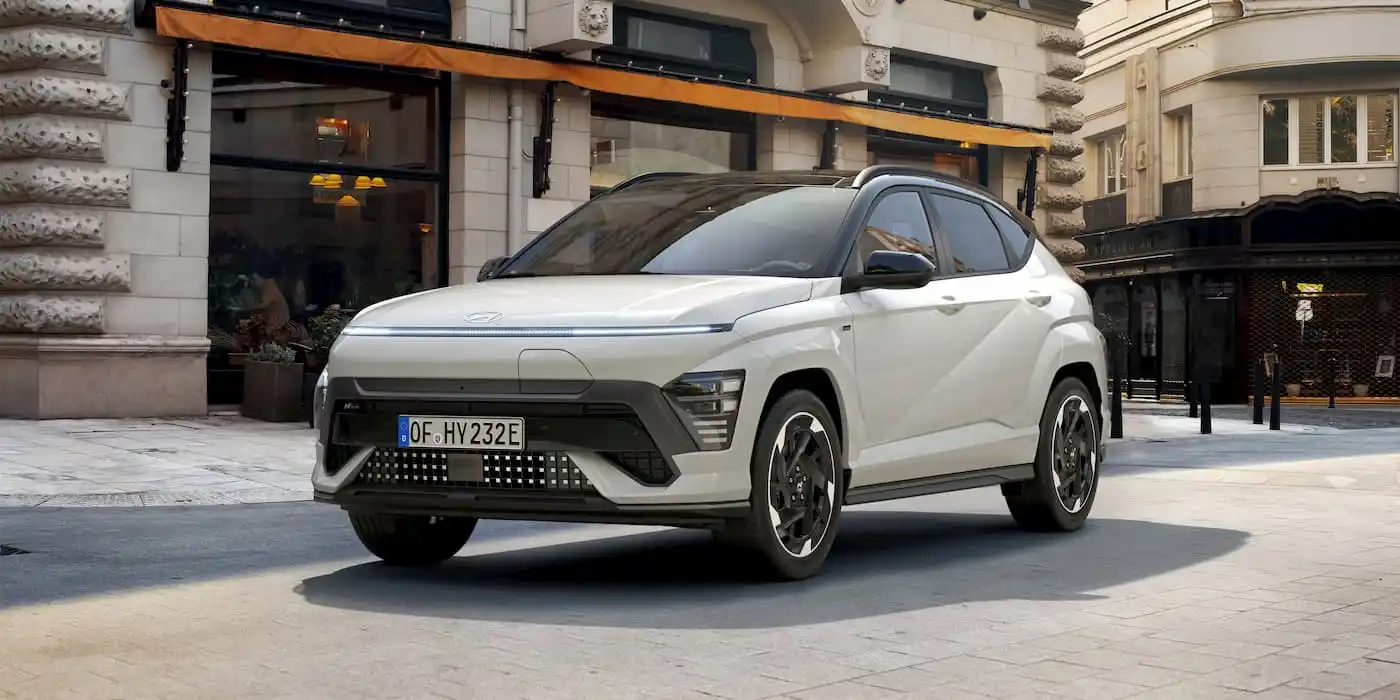
South Korean automaker Hyundai Motor is recalling more than 100,000 units of its Hyundai Kona Electric worldwide to update battery management software, after authorities warned of a potential fire risk linked to insufficient detection of thermal instability.
According to the recall database of Germany’s federal motor authority, the Kraftfahrt-Bundesamt (KBA), a total of 104,011 vehicles produced between Jan. 24, 2018, and July 15, 2023, are affected globally, including 13,523 units registered in Germany.
The KBA said faulty battery monitoring software may fail to detect thermal instability in the high-voltage battery in time, “increasing the risk of fire.” To address the issue, affected vehicles will receive an updated battery management system (BMS) software designed to improve early detection of potential faults.
At service centres, the upgrade will enhance monitoring functions within the battery system. According to German trade publication kfz-betrieb, the software will be adjusted “to detect voltage differences between the individual cells of the high-voltage battery sooner.” In some cases, the battery pack may also be replaced as a precaution, though the software update is expected to resolve the issue for most vehicles.
The recall applies to first-generation Kona Electric models produced before mid-2023. A newer generation of the vehicle, introduced later that year with updated battery technology, is not affected.
This marks another battery-related recall for the model. In 2020, Hyundai recalled more than 25,000 Kona Electric vehicles in South Korea due to a potential defect in battery cells supplied by LG Energy Solution, then known as LG Chem. That campaign included both software updates and battery replacements in selected cases.
The Kona Electric has been one of Hyundai’s most widely adopted electric models, particularly in Europe. However, it remains unclear which specific variants are affected in the current recall. The model has been offered with battery capacities of 39.2 kWh and 64 kWh.
According to kfz-betrieb, some customers in online forums have suggested that only vehicles built in South Korea—identified by VINs starting with “KMHK”—may be impacted. The publication reported that Hyundai had not confirmed this detail when asked, leaving the scope of affected units by production origin uncertain.