


Holyvolt raised $45 million in funding on October 15, 2026, from Zone II, CC.VC and angel investors from the finance sector. Existing investor Fifth Wall also backs the company.
The Stockholm-headquartered battery materials developer said the funding will support the expansion of its artificial intelligence capabilities, laboratory capacity and scientific team. The investment will also support the commercial development of its disordered rocksalt (DRX) cathode materials.
AI Platform Combines Materials Research and Automated Testing
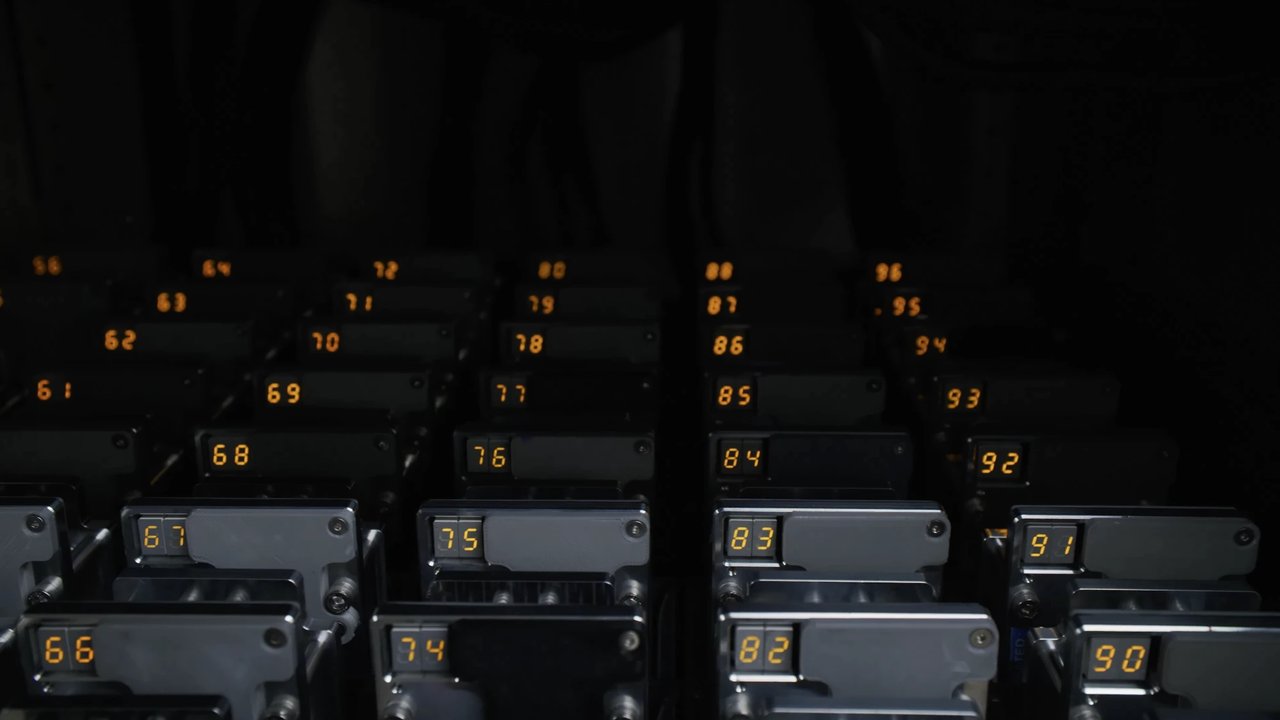
Holyvolt’s Discovery Engine combines AI models with an automated laboratory platform developed by Wildcat Discovery Technologies, which merged with Holyvolt in 2026.
The platform is designed to build and test thousands of battery materials in parallel. According to Holyvolt, it has completed more than 225 projects for over 85 customers across the battery value chain during 18 years of operation and has contributed to more than 100 battery patents.
The company’s research has generated a dataset covering more than 500,000 physical cells tested over more than 165 million cycles. Holyvolt said it has used this dataset to train AI models that work alongside its automated laboratories.
The system follows a repeated testing process: AI models identify materials for evaluation, automated laboratory equipment produces and cycles physical cells, and the resulting experimental data is fed back into the models to inform subsequent predictions.
Holyvolt said its automated laboratory produces results 10 times faster than conventional research and development processes. It estimates that integrating AI with the laboratory could increase the pace of development by a factor of 100, although the company did not specify the baseline or measurement methodology behind these comparisons.
DRX Cathodes Target Nickel- and Cobalt-Free Batteries
Holyvolt plans to use the expanded Discovery Engine to advance its DRX cathode materials, the first material family from the platform that the company is moving toward commercialisation.
The cathodes are designed to deliver high energy density without nickel or cobalt. Holyvolt also says their raw materials can be sourced outside China, potentially offering manufacturers an alternative sourcing route for battery materials.
The company plans to begin commercialising DRX materials in 2027, initially targeting defence applications before pursuing larger mobility markets.
The announcement did not disclose production capacity targets, customer agreements, pricing or detailed performance specifications for the planned commercial materials.
Research and Pilot Production Facilities
Holyvolt is headquartered in Stockholm and operates facilities in San Diego, California, and Munich, Germany.
Its San Diego facility combines battery research, materials development and pilot production, and houses all of the company’s DRX development activities.
The new funding is intended to expand the scientific and technical resources supporting the Discovery Engine and the transition of DRX materials toward commercial applications. The company has not disclosed how the $45 million will be allocated among its research, laboratory and commercialisation programmes.