


Chinese battery manufacturer Hina Battery has introduced a new sodium-ion battery solution aimed at commercial vehicles, highlighting faster charging capabilities and extended durability, the company announced on Friday.
The battery solution, branded “Hina Battery · Haixing,” was unveiled at an event in Fuyang, Anhui province, on March 28. It features battery cells with an energy density exceeding 165 Wh/kg and can achieve a full charge within 20 to 25 minutes, Hina said.
“Even if fast charging is used all the time, the battery’s cycle life can still exceed 8,000,” the company stated. The battery also maintains stable discharge performance across a temperature range from -40°C to 45°C.
Hina has launched four battery models—K150, K210, K280, and K350—targeting different commercial transport applications. The first two are designed for short-distance transportation, while the latter two cater to logistics operations.
See also: GAC Chairman Calls for Greater Policy Support for Battery Swapping Ahead of China’s Two Sessions
Compared to conventional commercial vehicle batteries, Hina’s sodium-ion solution delivers higher power output at significantly lower costs, said Li Shujun, the company’s general manager.
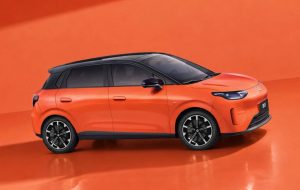
Founded in 2017, Hina has deployed its sodium-ion technology across electric two-wheelers, electric vehicles, and energy storage stations. In early 2023, it collaborated with Sehol, a JAC and Volkswagen Anhui brand, to develop a sodium-ion-powered test vehicle. More recently, in January 2024, Hina began deliveries of the Yiwei 3 compact EV, jointly developed with JAC.