
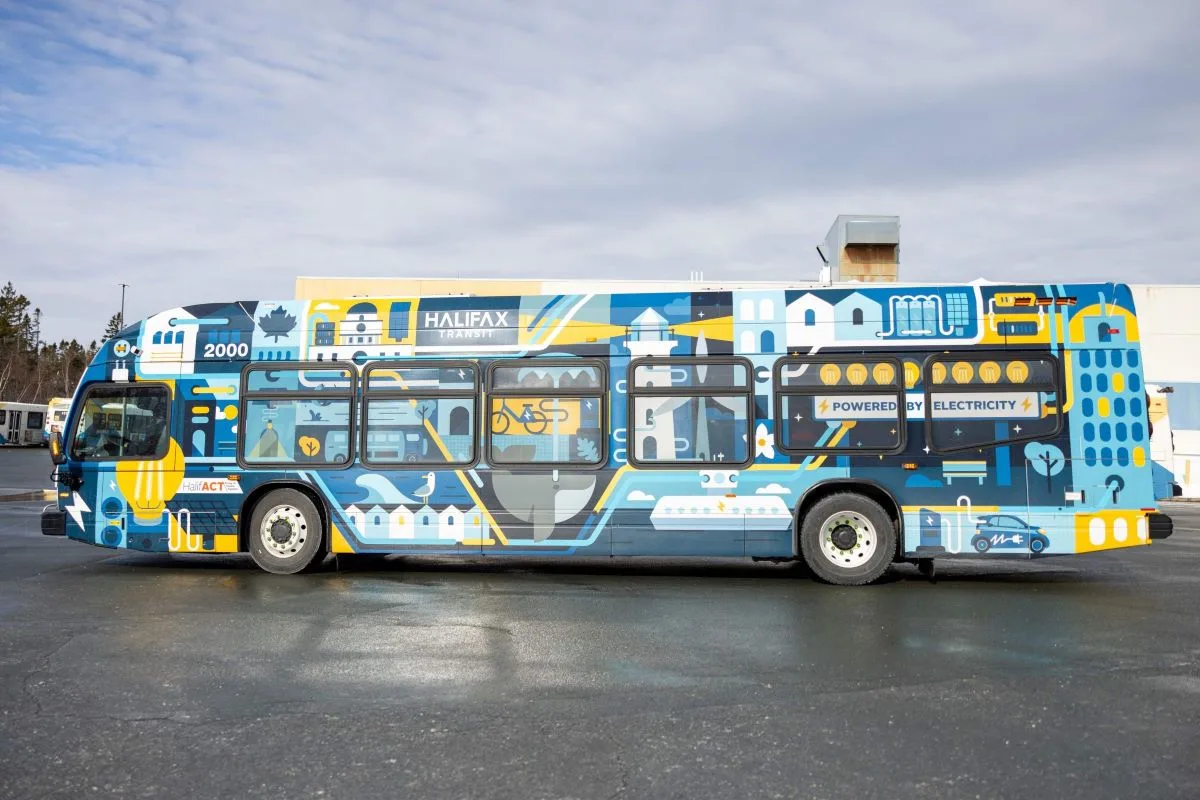
Halifax Transit has deployed 60 battery-electric buses from Nova Bus, fulfilling a 2022 order with the Volvo subsidiary as the Canadian transit agency pushes ahead with its fleet electrification strategy.
The Nova LFSe+ buses, which began arriving in December 2023 for testing and training, are now fully commissioned and operating on public routes. The vehicles replace aging diesel models and mark Halifax Transit’s most significant move yet toward decarbonising its operations.
“This is a big milestone for Halifax Transit,” said Anthony Edmonds, project manager of fleet electrification, in an interview with CBC. “We’ve been working towards this for a long time… it’s a sign of more things to come and the start of a really bright, green future.”
The project, supported by C$112 million (approximately €71 million) in joint funding from the federal government, the province of Nova Scotia, and the city of Halifax, included a major expansion of the Ragged Lake Transit Centre. The site now houses 67 charging stations capable of delivering up to 5,250 kW, along with 40 additional parking spots and rooftop solar panels to offset energy use.
The LFSe+ buses offer the same capacity as Halifax’s diesel models but run more quietly and include warning systems that emit low-volume sounds at reduced speeds. Each unit also incorporates regenerative braking to improve energy efficiency.
Halifax Transit plans to expand its zero-emission fleet by up to 200 buses in the coming years, though no final decision has been made on whether those units will be battery-electric, hydrogen-powered, or natural gas vehicles. Mayor Andy Fillmore has indicated that alternative drivetrains are being considered for colder regions where battery electric vehicles may not be suitable year-round.