
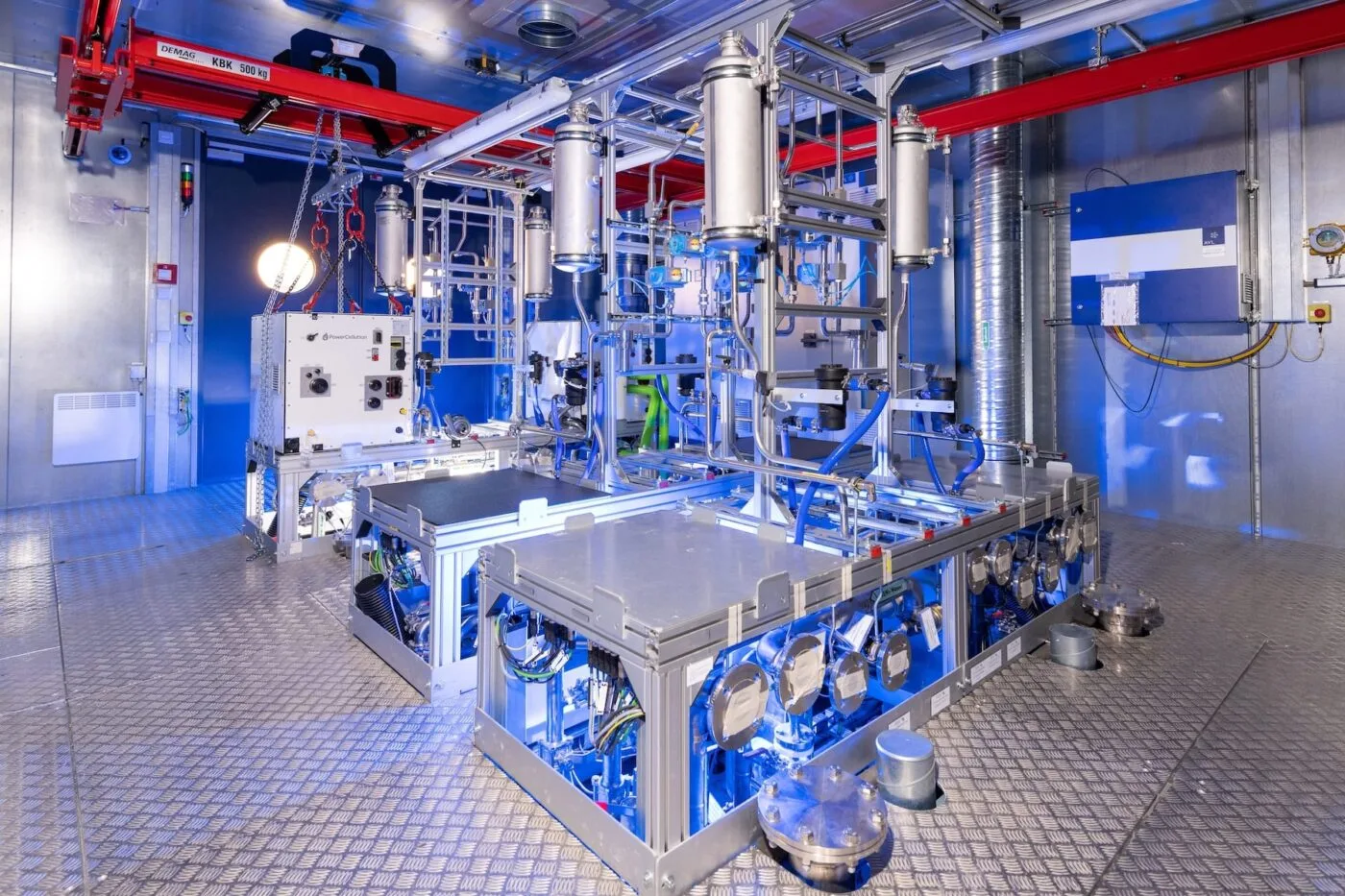
The German Aerospace Centre (DLR) has reported a breakthrough in its BALIS project, reaching more than one megawatt of output from both fuel cells and an electric motor for the first time. The milestone marks a step forward in developing hydrogen-powered electric drives for aviation, shipping, and heavy transport.
The BALIS initiative, based in Mengen in Germany’s Black Forest, is establishing a modular test field for fuel cell systems capable of delivering up to 1.5 megawatts. Researchers said the achievement demonstrates the progress of large-scale hydrogen fuel cell systems that are not yet commercially available.
“This is an important milestone in the set-up and commissioning of the test facility and the first generation of the fuel cell test system,” said project manager Dr Cornelie Bänsch from the DLR Institute of Technical Thermodynamics.
To reach megawatt-scale output, DLR engineers coupled twelve fuel cell modules, each containing more than 400 individual cells. The system runs on green hydrogen, which the centre said could enable climate-neutral mobility across multiple industries.
According to DLR, the applications extend beyond aircraft to include shipping, mining, and heavy goods transport. The project also involves H2FLY, a DLR spin-off working on a hydrogen-powered aircraft.
The test field, commissioned last year, enables full-scale evaluation of components and complete powertrains. Trials are being carried out under the BALIS 2.0 project, which is backed with 9.3 million euros ($10.1 million) in funding from Germany’s Federal Ministry of Transport under the National Innovation Programme for Hydrogen and Fuel Cell Technology.