



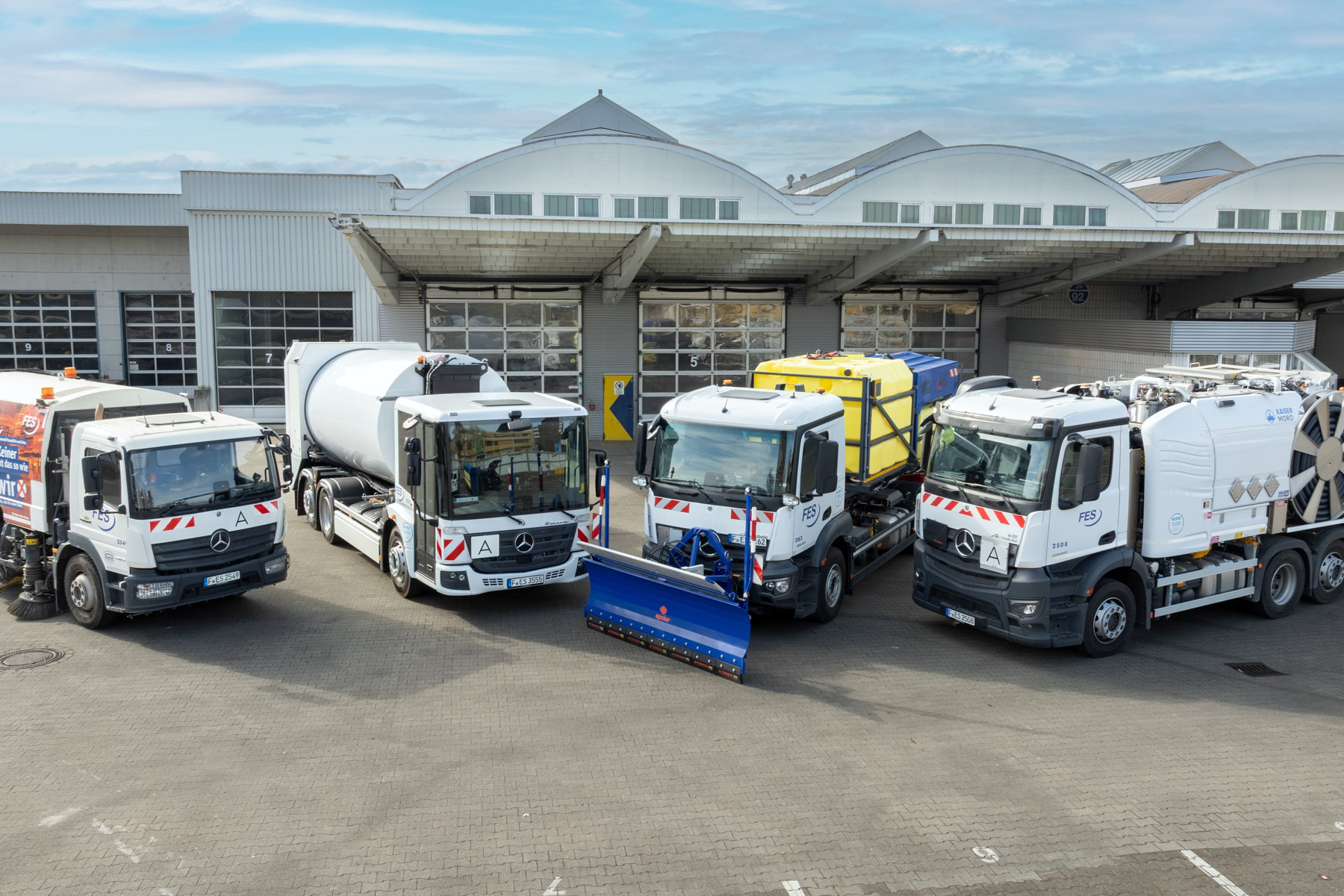
FES Frankfurter Entsorgungs- und Service GmbH has ordered ten additional Mercedes-Benz eEconic vehicles for municipal operations in Frankfurt, expanding its battery-electric truck fleet to a total of 34 units.
According to Daimler Truck, the newly ordered vehicles will be deployed across multiple waste management applications, including street cleaning and winter maintenance.
The trucks are equipped with different body configurations but share the same electric drivetrain setup. Each eEconic uses three battery packs with a combined gross energy capacity of 336 kWh and a net usable capacity of 291 kWh.
Daimler Truck said the vehicles are designed to complete FES’s typical daily collection routes without requiring intermediate charging.
The trucks mainly operate in stop-and-go urban traffic between Frankfurt’s city centre, residential districts and the River Main, allowing regenerative braking systems to recover energy during frequent braking manoeuvres.
The vehicles are typically charged overnight at depot facilities. FES first tested the eEconic in 2022 as part of a customer field trial programme conducted by Daimler Truck before the model’s wider market introduction.
“The positive experience in daily operation has led the company to continuously order additional vehicles from the battery-electric range ever since,” Daimler Truck said in a statement.
The company previously received eight eEconic trucks in 2023. The eEconic is based on the conventional Econic low-floor truck platform and was specifically developed for urban municipal applications.
The low-entry cabin design is intended to improve driver accessibility during frequent stops, while the large panoramic windscreen enhances visibility of pedestrians, cyclists and surrounding traffic.
The model currently uses Daimler Truck’s first-generation electric truck drivetrain technology derived from the earlier Mercedes-Benz eActros 300 and Mercedes-Benz eActros 400 platforms.
Unlike Daimler Truck’s newer long-haul electric trucks, the eEconic does not yet use lithium iron phosphate battery technology.
Christian Wilz, CEO of Mercedes-Benz Trucks Germany, said the vehicle had proven effective in municipal waste collection operations.
“I personally spent a day with FES in waste collection operations to gain insight into the daily demands placed on our vehicles – and I have to say: our eEconic performed significantly better than I did,” Wilz said.
“Quiet, zero-emission in operation, and technically perfectly equipped with the bodies of our partners,” he added.
Pascal Scheffler, head of the technical department at FES, said the electric trucks are well suited to Frankfurt’s urban operating conditions.
“Frankfurt, as a dynamic major city, places special demands on our waste collection vehicles: narrow streets, high traffic density and early morning operations in residential areas alongside cyclists and pedestrians,” Scheffler said.
“For us, the eEconic combines safety, driving comfort and a locally emission-free drive system during operation,” he added.


