
France has indicated it is open to discussions on including the United Kingdom in the European Union’s proposed “Made in EU” industrial rules, marking a notable shift from its previous support for stricter local-content requirements under the bloc’s Industrial Accelerator Act (IAA).
The comments come as the European Union continues to debate legislation aimed at strengthening domestic manufacturing and reducing dependence on foreign suppliers in strategic sectors such as electric vehicles, batteries and clean technologies.
Nicolas Forissier, France’s Minister for Trade, said Britain’s exclusion from the proposed framework should be reconsidered because of the close economic ties between the UK and the EU.
“We need to clarify this problem. They are not part of the EU, but they are very close neighbours. Naturally, they are highly integrated – so how do we resolve this?” Nicolas Forissier, France’s Minister for Trade, told the Financial Times.
Forissier suggested the issue should be part of ongoing negotiations over the legislation.
“It should be discussed. I think it’s an important issue,” Forissier added.
The remarks represent a change in tone from France, which had previously been among the strongest supporters of strict European content requirements within the Industrial Accelerator Act.
The European Commission introduced the Industrial Accelerator Act in March 2026 as part of a broader strategy to strengthen European industrial competitiveness and reduce reliance on supply chains linked to the United States and China.
Under the proposal, battery-electric vehicles and other strategic products would need to demonstrate a substantial share of value creation within the European Union to qualify for government support measures, including subsidies and public procurement opportunities.
The Commission has also proposed allowing products from partner countries with close economic relationships or free-trade agreements with the EU to qualify under certain circumstances. However, eligibility would depend on reciprocal market access for European products.
Rather than establishing a blanket policy, Brussels plans to assess reciprocity on a sector-by-sector basis, creating uncertainty for industries that rely on integrated supply chains between the EU and the UK.
The legislation has been approved by the European Commission but must still be negotiated and adopted by both EU member states and the European Parliament before entering into force. The process leaves room for amendments, including possible provisions covering the United Kingdom.
The debate is particularly important for Britain’s automotive industry, which exports large volumes of vehicles to European markets.
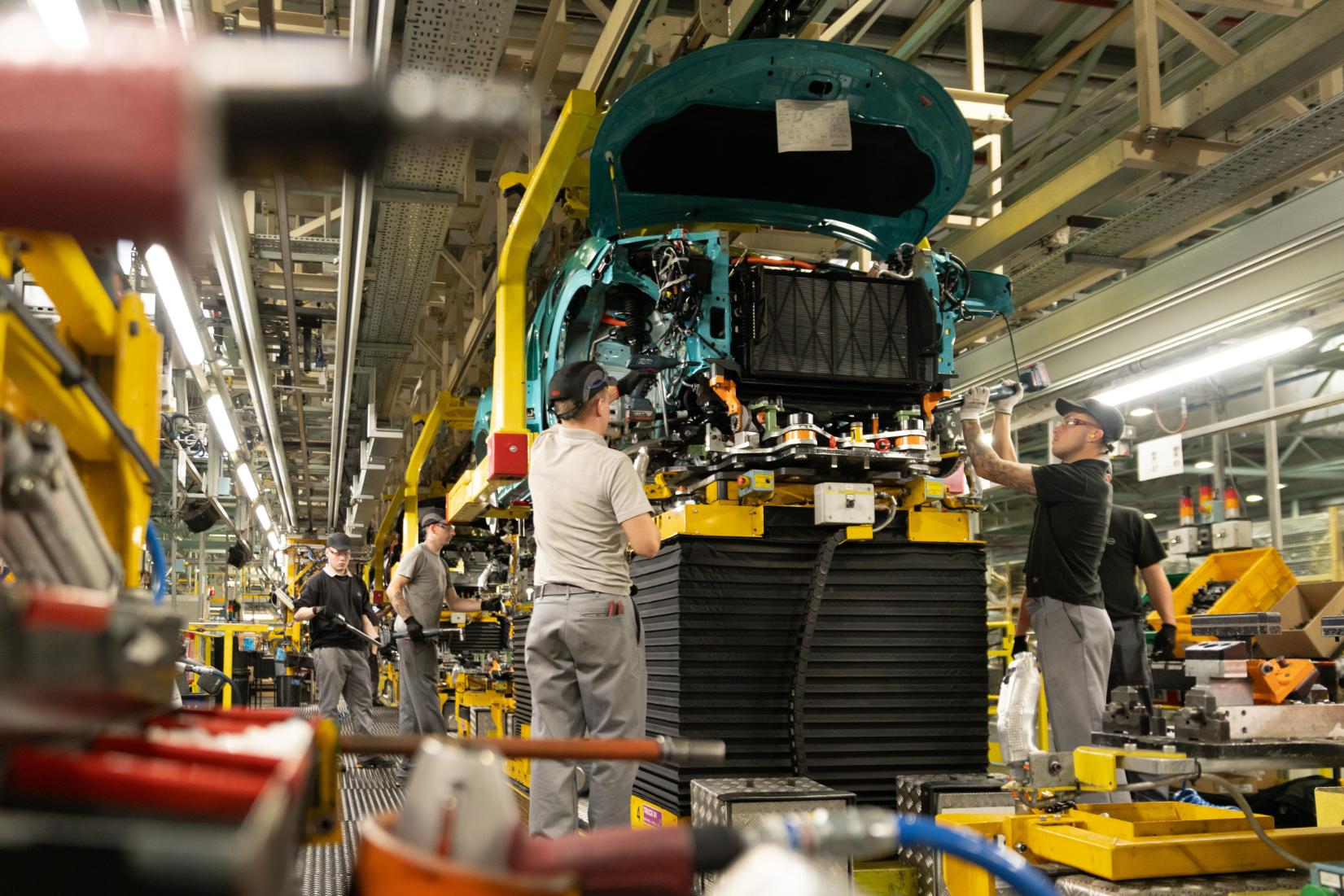
In March, Nissan warned that exclusion from the proposed rules could have significant consequences for its manufacturing operations in Sunderland, one of the UK’s largest automotive production facilities.
The Sunderland plant directly employs approximately 6,000 workers, while the broader supply chain supports around 30,000 additional jobs, according to figures cited by the Financial Times.
Ahead of the European Commission’s proposal, the British government urged Brussels to avoid implementing restrictive local-content requirements and emphasized the close economic relationship between the two sides.
“The UK is a close and trusted European partner, committed to our shared security and economic co-operation,” a spokesperson for the British government said in March.
“Now is the time to work together as like-minded partners to boost growth, resilience and economic security,” the spokesperson added.
The outcome of the EU’s sector-by-sector assessment is expected to be closely watched by manufacturers operating in the UK, including Nissan, Jaguar Land Rover and Toyota, all of which rely heavily on exports to the European market.
Industry representatives have warned that exclusion from the proposed framework could significantly affect the competitiveness of UK-built vehicles in Europe, making the ongoing negotiations over the Industrial Accelerator Act a key issue for the future of the British automotive sector.