





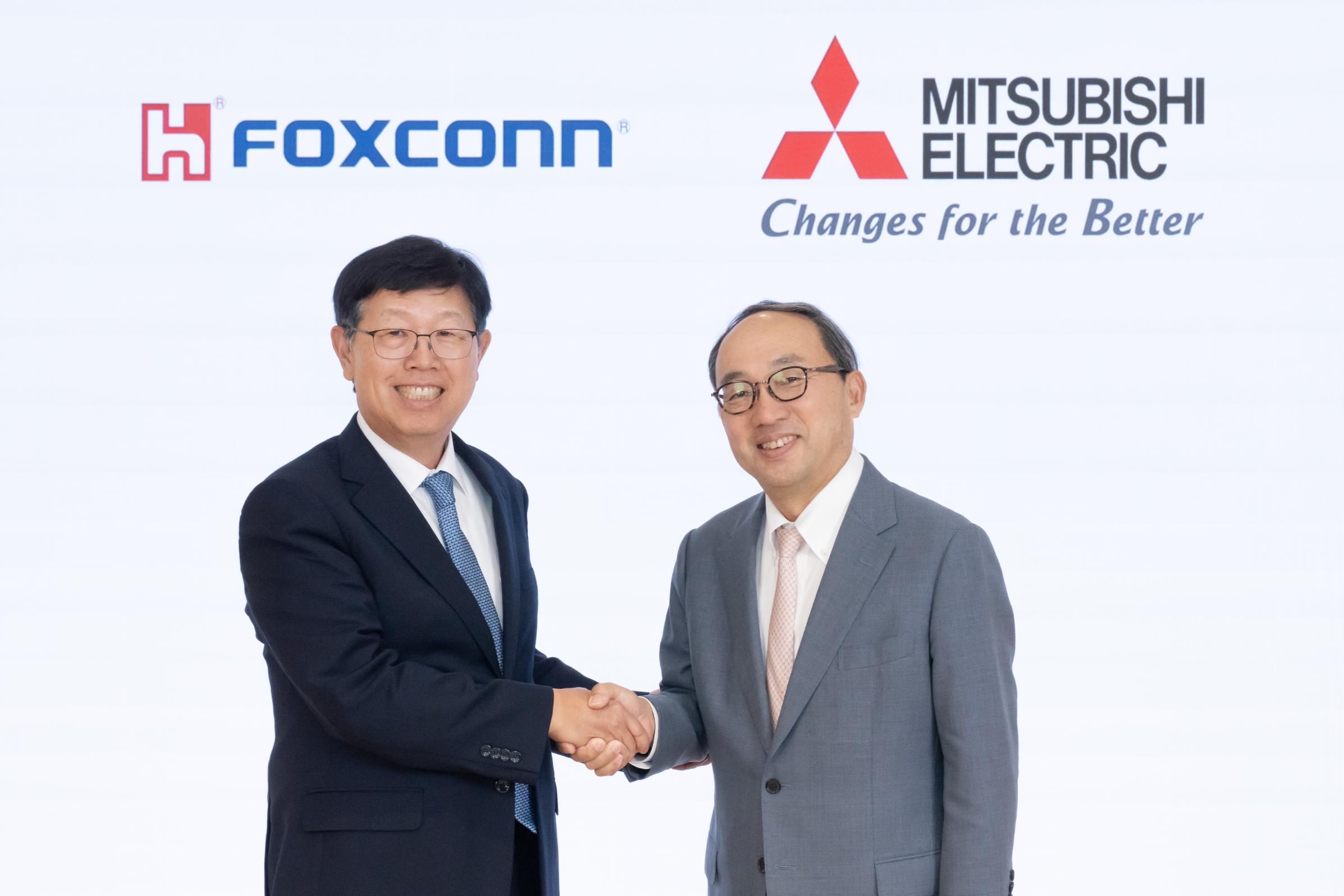
Foxconn will invest ¥115 billion (approximately US$727 million) to acquire a 50% stake in Mitsubishi Electric Mobility (MEM), establishing a joint venture focused on automotive electronics, electric vehicle platforms and autonomous driving technologies. The transaction is expected to close in October 2027, subject to regulatory approval.
The deal values Mitsubishi Electric Mobility at approximately ¥320 billion on an enterprise value basis. Following completion, the business will no longer be consolidated as a wholly owned subsidiary of Mitsubishi Electric, which expects to record an impairment charge of around ¥100 billion in the current fiscal year.
The agreement builds on a data centre partnership announced by the companies in November 2025. Reports of a potential automotive transaction first emerged in March 2026.
Combining Automotive Electronics and EV Manufacturing
Mitsubishi Electric Mobility supplies components including inverters, electronic control units and alternators. Under the planned arrangement, it will contribute powertrain electronics, autonomous driving technology and in-vehicle intelligence capabilities to support Foxconn’s electric vehicle platforms.
For Foxconn, the investment provides access to automotive control systems and software resources that complement its contract manufacturing and EV development activities.
“What attracted us most was the electronic-control technology, and the substantial software resources behind them,” said Jun Seki, Foxconn’s chief strategy officer for electric vehicles, at a news conference.
The joint venture will target automakers seeking support with vehicle electronics and EV development. However, its commercial prospects will depend partly on manufacturers’ willingness to use externally developed platforms and systems.
Revenue Target Set at ¥1 Trillion by 2030
Mitsubishi Electric Mobility reported revenue of ¥876 billion and operating profit of ¥54 billion in the previous fiscal year. The company expects revenue to decline to ¥820 billion in the current fiscal year.
The partners have set a revenue target of ¥1 trillion for fiscal 2030. Reaching that level would require growth of approximately 22% from the projected current-year revenue figure.
The business serves both electric and conventional vehicles, including through components such as alternators. Expanding EV-related activities and securing additional business in vehicle electronics and autonomous driving will therefore be relevant to its growth plans.
Seki outlined his expectations for the transition towards electric mobility, saying:
“EVs are likely to account for 80% of the auto market”
The statement reflects Seki’s view of the market’s potential direction rather than a confirmed forecast for the timing or regional distribution of EV adoption.
Mitsubishi Electric to Retain Day-to-Day Management
The companies plan to maintain a 50-50 ownership structure, with Mitsubishi Electric continuing to oversee the joint venture’s day-to-day management. Seki said Foxconn’s experience with Sharp, which it has controlled since 2016, had influenced its approach to governance.
He acknowledged that Foxconn’s involvement in Sharp’s operations had contributed to difficulties and indicated that the new venture would use a different management arrangement. The partners may reconsider the ownership structure in the future, while Seki also expressed the hope that the business could eventually pursue a stock market listing.
Keeping operational management with Mitsubishi Electric may help preserve existing relationships with Japanese automakers, which are important customers for the automotive components business.
Mitsubishi Electric Executive Vice President Kunihiko Kaga said the company supported Foxconn’s approach to product development.
“We are convinced by Foxconn’s vision that quality and speed must be achieved at the same time,” Kaga said, according to Nikkei.
Foxconn Expands Its Automotive Activities in Japan
The transaction forms part of Foxconn’s broader effort to expand its role in Japan’s automotive sector. Seki, who previously held senior positions at Nissan and Nidec, has led the company’s automotive initiatives.
Mitsubishi Motors has already adopted a Foxtron-developed electric vehicle for overseas markets, while Mitsubishi Fuso Truck and Bus Corporation has pursued an electric bus initiative involving Foxconn.
Foxconn has also held discussions with Nissan about supplying vehicles and potentially using spare production capacity at Nissan’s Oppama plant. Those discussions are separate from the Mitsubishi Electric Mobility transaction.
The proposed joint venture would place Foxconn in a closer relationship with Japan’s automotive supply chain. At the same time, its role in vehicle development could raise questions for automakers considering whether to outsource engineering and platform work or retain those capabilities internally.
Joint Venture Faces Growth and Market Challenges
The partners’ ability to reach the ¥1 trillion revenue target will depend on winning new business and expanding beyond the existing components market. Potential opportunities include EV power electronics, vehicle control systems and autonomous driving technology.
Foxconn’s contract manufacturing model is based on providing production and development services to other companies. In the automotive sector, that approach requires manufacturers to assess how external platform development fits with their own engineering strategies and supplier relationships.
The planned 2027 closing date leaves time for regulatory review and integration planning. Once the transaction is completed, the joint venture’s commercial performance and progress towards its fiscal 2030 revenue target will provide indicators of how effectively the partnership can expand its automotive business.


