

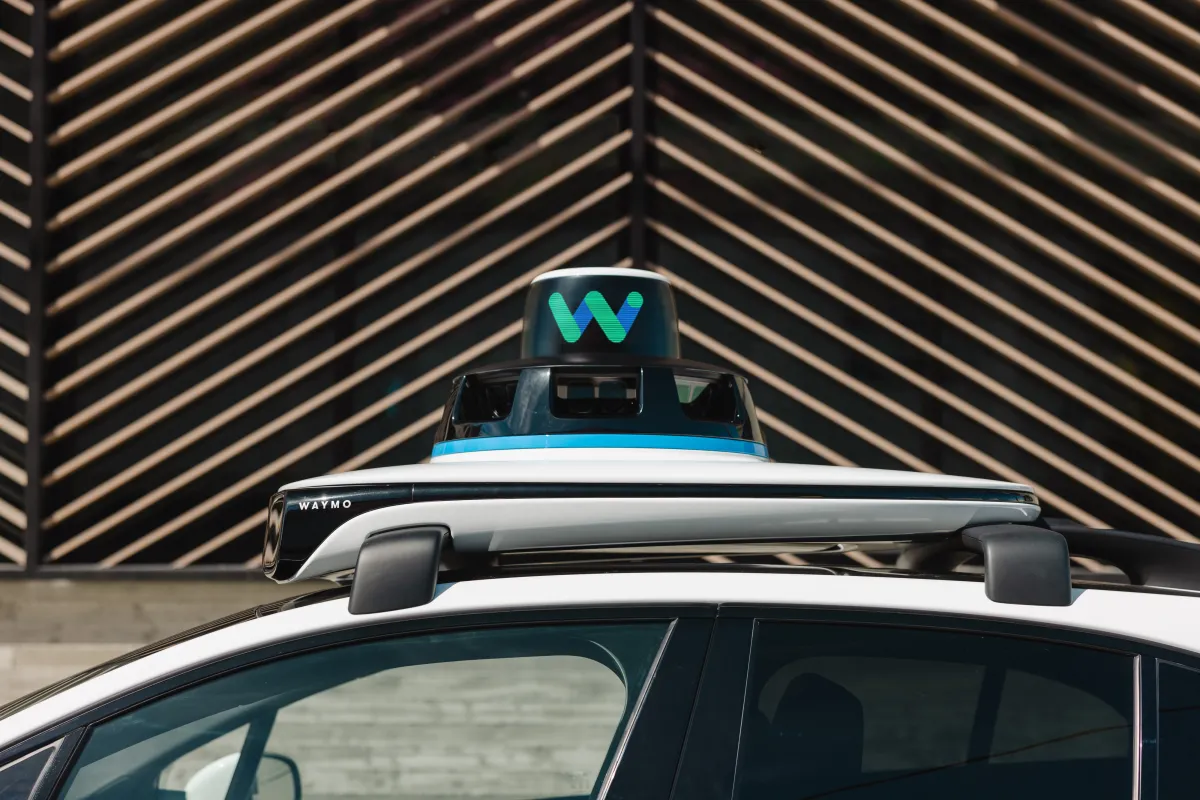
John Krafcik, the former chief executive of Waymo, has intensified his criticism of Tesla’s self-driving strategy, arguing that the automaker’s reliance on cameras alone leaves its vehicles at a fundamental disadvantage compared with rivals that use multiple sensing technologies.
Speaking in comments reported by Automotive News from the CES 2026 technology show, Krafcik said Tesla’s Full Self-Driving (FSD) system suffers from inherent limitations because it lacks redundancy from sensors such as LiDAR and radar. John Krafcik, a longtime figure in the autonomous driving industry, said Tesla’s hardware configuration constrains what its artificial intelligence can reliably perceive.
See also: Waymo Renames Zeekr-Built Robotaxi Ahead of Commercial Launch
“Human vision is so much more capable than the vision of a car equipped with seven 5-megapixel cameras,” Krafcik said. “So you’re basically dispersing those 5 megapixels in a way that makes the actual effective vision more like 20/60 or 20/70. The rest of the cameras in a car like that wouldn’t even pass a DMV vision test.”

Tesla, led by CEO Elon Musk, has removed radar and ultrasonic sensors from its vehicles in recent years and has consistently rejected LiDAR, arguing that a vision-only system modeled on human driving is sufficient. Krafcik said that decision has “handcuffed” Tesla’s AI to a noisier and less reliable data stream than those used by competitors such as Waymo and Zoox, which employ sensor fusion combining cameras, LiDAR and radar.
See also: Musk Warns of Slow Initial Ramp for Tesla Cybercab and Optimus Production
“And then you have LiDAR and radar providing completely different modalities of active sensing to complement the passive sensing from the cameras,” Krafcik added. “That’s truly superhuman… as opposed to a car that has a really bad case of myopia, should be wearing glasses, and operates on a very limited data cycle.”
Krafcik has previously warned that Tesla’s ambitions for unsupervised autonomous driving would face setbacks. In early 2025, he predicted the company would “fake” progress on its Robotaxi rollout, a claim that gained traction later that year when Tesla’s pilot service in Austin relied on safety drivers and remote monitoring. Tesla has said those measures were temporary, but has not yet removed safety monitors from the service.
See also: Waymo to Update Robotaxi Software After Power Outage Stalls Vehicles in San Francisco
Krafcik now argues that the challenges stem from hardware choices as much as software, saying camera-only systems struggle in difficult conditions such as glare, heavy rain or low-contrast environments—scenarios where depth and velocity data from LiDAR and radar can provide a critical advantage. Tesla has not commented on his latest remarks.