


Ford Motor reported a $4.8 billion operating loss in 2025 for its battery-electric vehicle division, Model e, marking a slight improvement from the $5.1 billion loss recorded a year earlier, as the company moves to reduce its exposure to electric mobility.
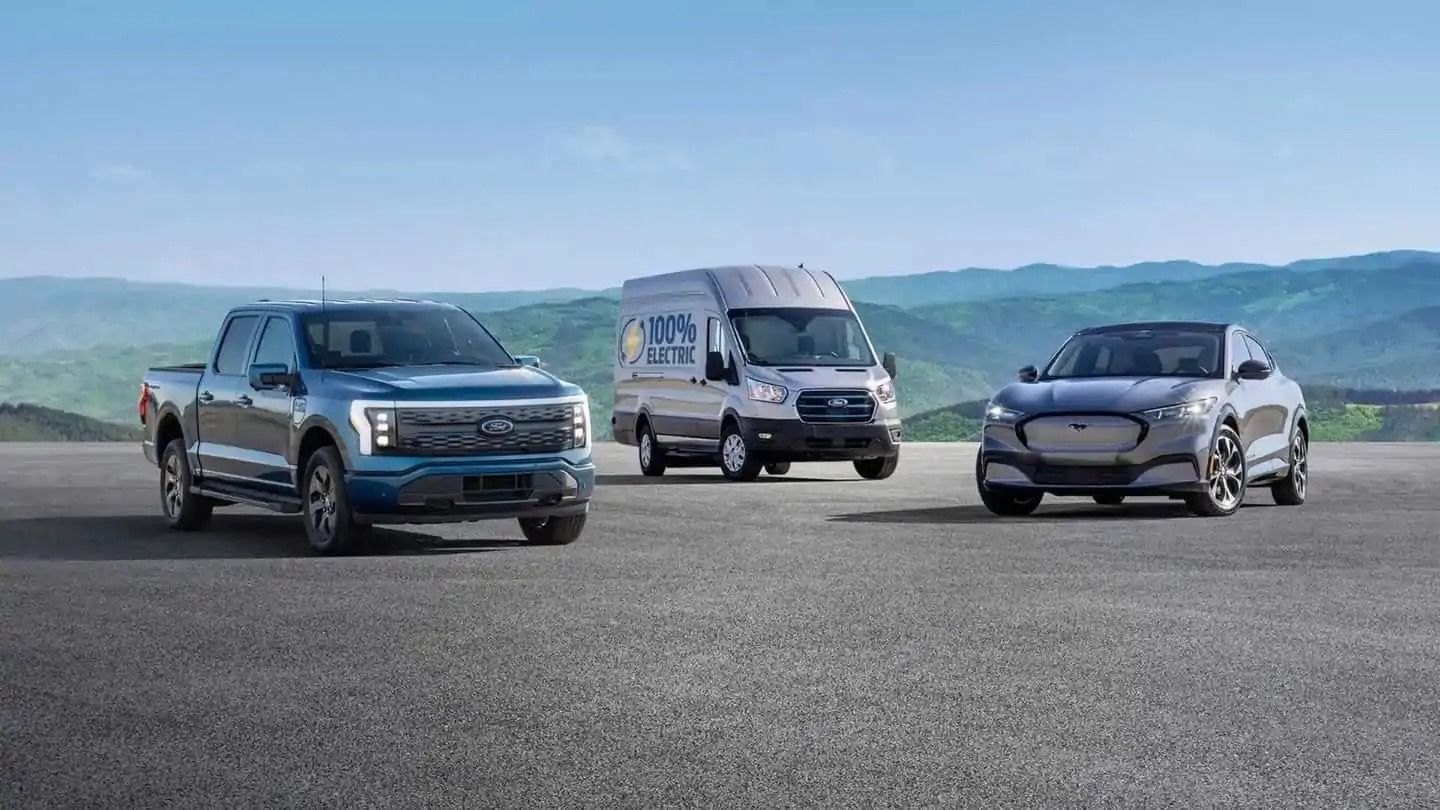
The Model e division includes battery-electric passenger vehicles such as the Ford Mustang Mach-E and the Ford F-150 Lightning, production of which was permanently halted in the second half of 2025. It also covers the electric Ford Explorer and Ford Capri, introduced in Europe in 2024 and manufactured in Cologne, Germany. Electric commercial vans such as the E-Transit and E-Transit Custom are reported under the Ford Pro division and are not included in Model e results.
See also: Ford Pledges Five New Models Under $40,000 to Address Affordability Gap
The $4.8 billion loss reflects earnings before interest and taxes (EBIT) from operations. In addition, Ford recorded $10.7 billion in impairments in the fourth quarter of 2025 tied to asset write-downs and the cancellation of electric vehicle programs within Model e. These charges form part of the broader $19.5 billion in write-downs announced in December, when Ford unveiled a restructuring of its EV business. The measures included permanently ending production of the F-150 Lightning and scrapping the planned T3 next-generation electric pickup project.
Despite the losses, Model e posted revenue growth of 73% year-on-year to $6.7 billion in 2025. However, the reduction in operating losses was limited to 9.4%, suggesting continued challenges in scaling the business and absorbing fixed costs through higher volumes.
See also: Ford in Talks With BYD Over Hybrid Battery Supply, WSJ Reports
Ford’s overall revenue rose 1% to $187.3 billion in 2025, meaning Model e accounted for approximately 3.6% of total company revenue. Profitable divisions within the group offset the EV unit’s losses.
For 2026, Ford expects Model e’s losses to narrow slightly to between $4.0 billion and $4.5 billion. The company also plans to recognize the remaining $7 billion in EV-related impairments across 2026 and 2027 as part of its restructuring process.