

The Volkswagen ID. California Cruise is Volkswagen Commercial Vehicles’ first fully electric California camper van and the first member of a new all-electric California family. Based on the rear-wheel-drive ID. Buzz Pro, the electric recreational vehicle is offered with short- and long-wheelbase configurations and combines Volkswagen’s established camper concept with battery-electric technology.
The ID. California Cruise starts at €60,761 for the short-wheelbase version. Volkswagen has not yet announced pricing for the long-wheelbase model. First deliveries are planned for early 2027, with additional California models expected to follow by 2028.
Volkswagen ID. California Cruise Pricing
The short-wheelbase ID. California Cruise starts at €60,761. Pricing for the long-wheelbase version has not yet been disclosed.
The camping version includes the Interior Style Package, Comfort Package and PowerSocket discharge adapter for the vehicle-to-load function as standard. These packages are available as optional equipment on the standard ID. Buzz.
Electric Powertrain and Battery
The ID. California Cruise is based on the ID. Buzz Pro and uses a 210 kW rear-wheel-drive electric powertrain.
The short-wheelbase version is equipped with a 79 kWh battery, while the long-wheelbase version uses an 86 kWh battery. Both batteries are integrated into the vehicle floor.
Volkswagen has not yet disclosed the official WLTP range figures for the camping version. The ID. Buzz Pro, which provides the technical basis for the model, achieves 460 km or 498 km WLTP, depending on battery capacity.
Vehicle-to-Load Capability
The ID. California Cruise is equipped with vehicle-to-load (V2L) functionality, making its battery useful as a mobile power source during camping trips.
The system provides up to 2 kW of continuous output and 3.6 kW of peak power for external devices. The required PowerSocket discharge adapter is included as standard with the California Cruise.
Camping and Sleeping Equipment
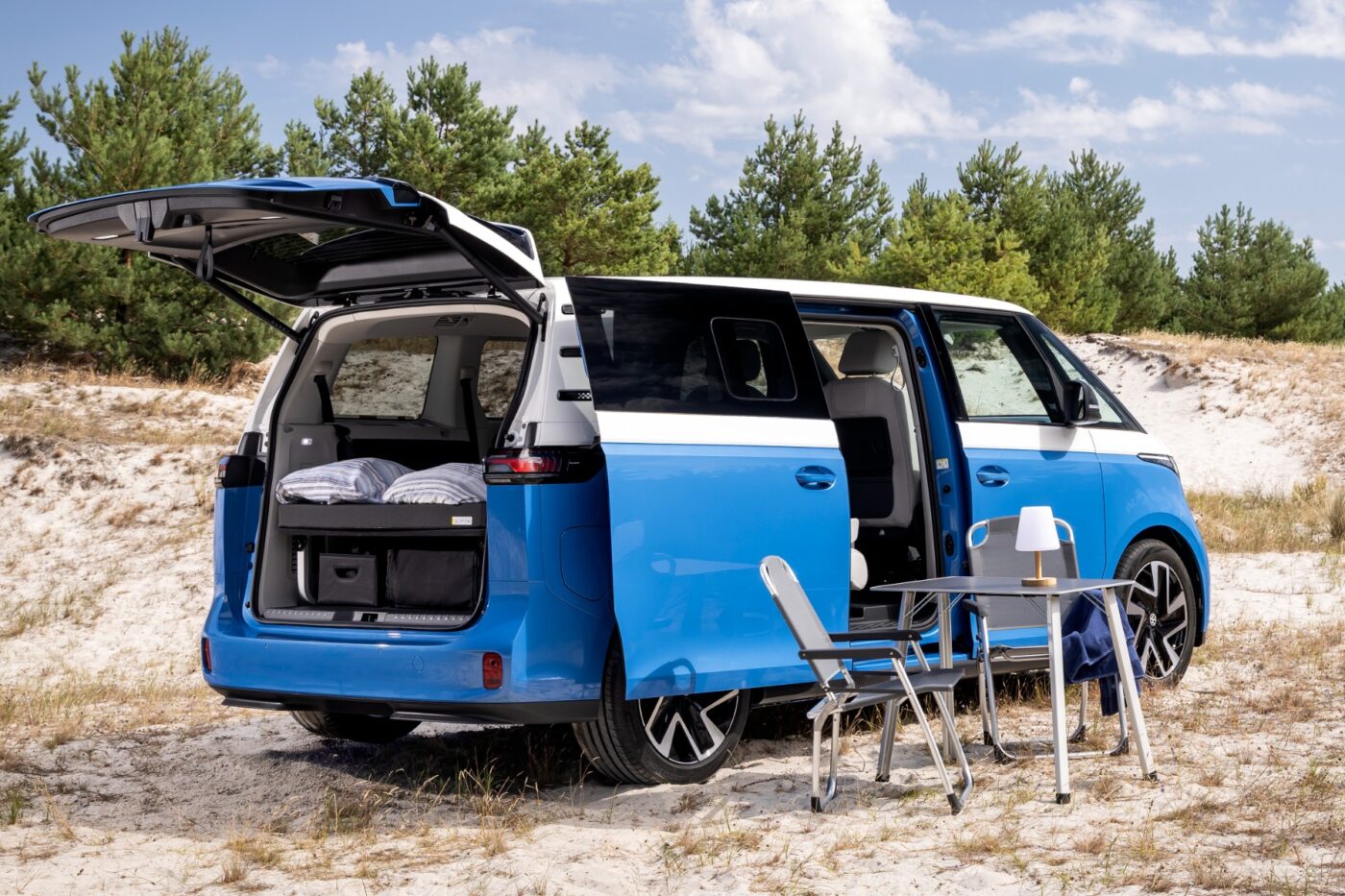
The ID. California Cruise has been equipped with camping hardware specifically developed for the electric camper.
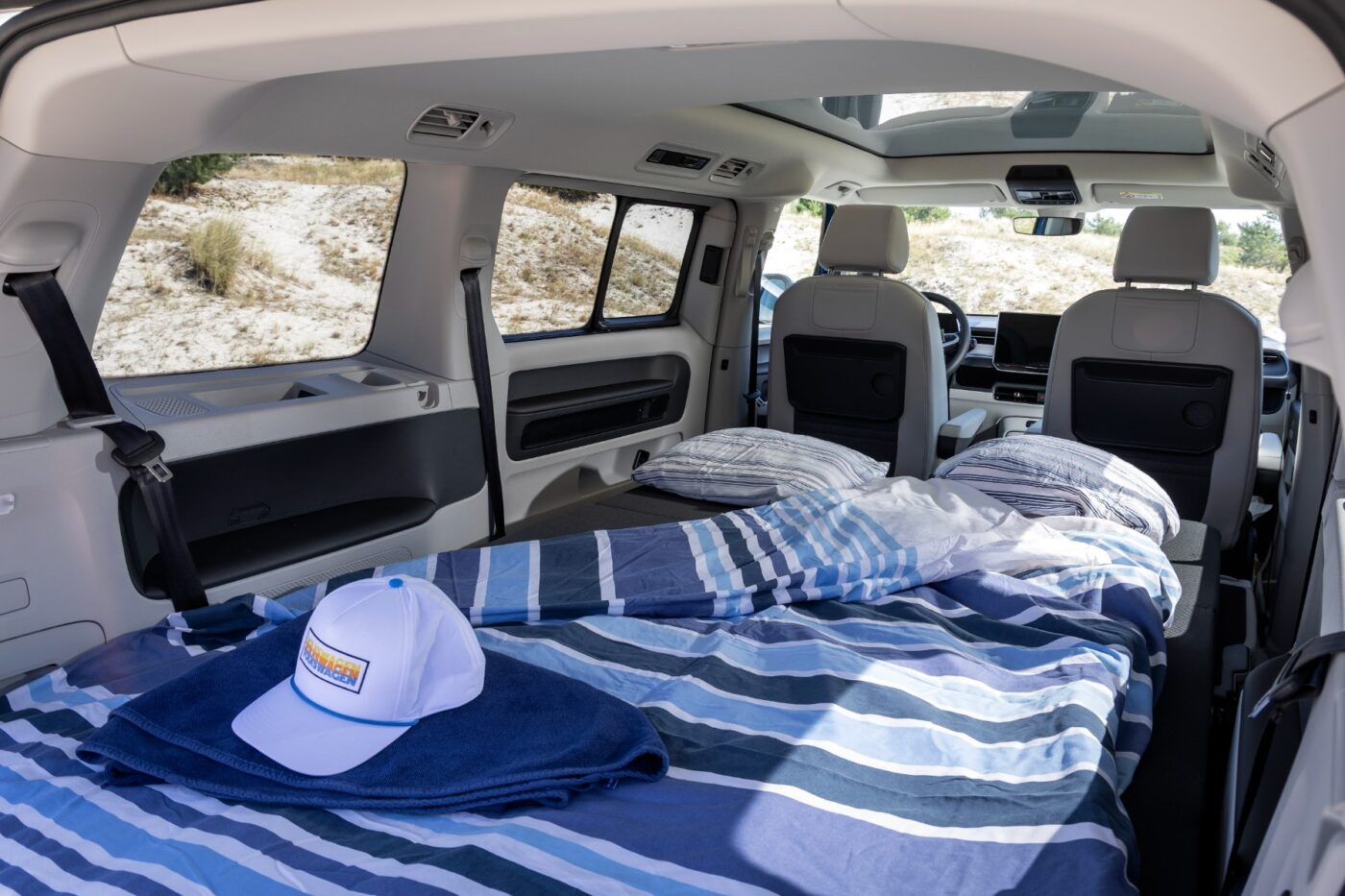
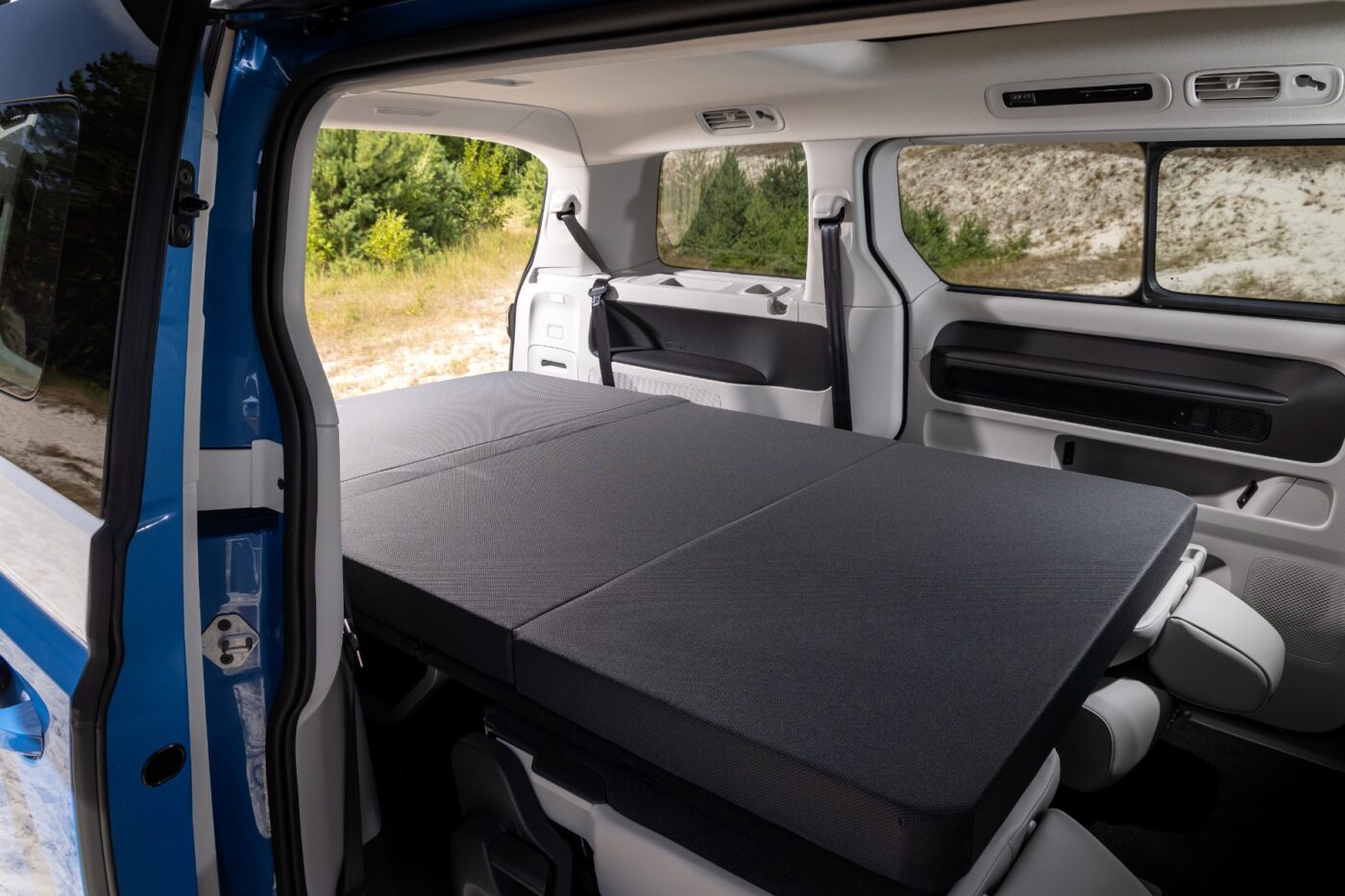
Its sleeping solution accommodates two people and provides a sleeping surface measuring 2.03 meters in length and 1.20 meters in width.
The sleeping area uses a newly developed nine-centimeter-thick folding mattress designed to improve comfort.
Standard camping equipment also includes ventilation grilles for the front side windows, blackout elements for all windows, two camping chairs and a camping table.
A panoramic glass roof is available as an optional feature and includes matching blackout functionality.
California Mode
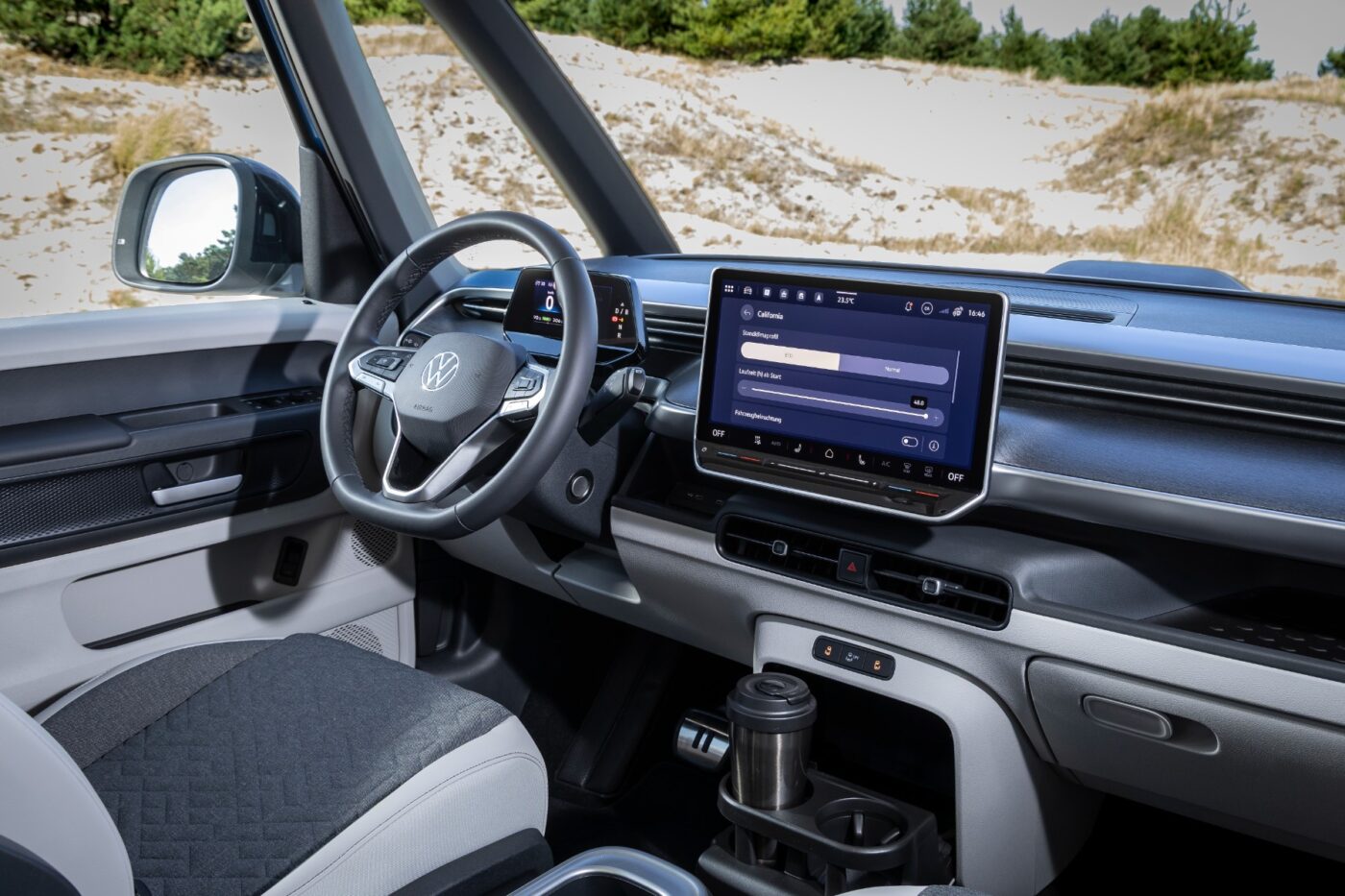
Volkswagen Commercial Vehicles has introduced a dedicated California Mode for the electric camper.
The system allows users to adjust lighting and comfort functions for camping situations while maintaining continuous power to the vehicle’s USB ports.
The air-conditioning system can heat or cool the cabin, creating a more comfortable sleeping environment. Volkswagen says the interior can remain continuously climate-controlled for up to 48 hours, depending on the battery’s state of charge and the difference between the selected and outside temperatures.
Exterior Design
The ID. California Cruise retains the recognizable design of the ID. Buzz while receiving specific styling elements that distinguish the camper version.
These include exclusive seat covers, California lettering on the rear and special Cruise decals on the sides.
The vehicle is available in both short- and long-wheelbase configurations, giving buyers different options for battery capacity and overall vehicle configuration.
Volkswagen California Heritage
The California name has been associated with Volkswagen camper vans since 1988, when the company introduced a motorhome based on the VW Bus.
Over several generations, the California developed beyond a model designation to become a lifestyle and recreational vehicle brand within Volkswagen Commercial Vehicles.
The ID. California Cruise represents the first time the California concept has been transferred to an electric vehicle platform, combining the traditional camper van format with Volkswagen’s electric ID. family.
Weight and Payload
Volkswagen Commercial Vehicles has not yet provided detailed weight figures for the ID. California Cruise.
Vehicle weight has been an important consideration in developing an electric camper based on the ID. Buzz because additional camping equipment can affect overall mass, payload and efficiency.
The exact tare weight and payload figures for the short- and long-wheelbase versions therefore remain undisclosed.
Volkswagen ID. California Cruise Specifications at a Glance
| Specification | Volkswagen ID. California Cruise |
|---|---|
| Vehicle type | Fully electric camper van |
| Base vehicle | ID. Buzz Pro |
| Drive | Rear-wheel drive |
| Motor output | 210 kW |
| Short-wheelbase battery | 79 kWh |
| Long-wheelbase battery | 86 kWh |
| WLTP range | Not yet disclosed |
| ID. Buzz Pro reference range | 460-498 km WLTP |
| V2L | Yes |
| Continuous V2L output | 2 kW |
| Peak V2L output | 3.6 kW |
| Sleeping capacity | 2 people |
| Sleeping surface | 2.03 × 1.20 meters |
| Mattress thickness | 9 cm |
| Camping chairs | 2 |
| Camping table | Included |
| California Mode | Yes |
| Climate operation | Up to 48 hours, depending on conditions |
| Wheelbase options | Short and long |
| Starting price | €60,761 |
| First deliveries | Early 2027 |
| Additional California models | Planned through 2028 |
Conclusion
The Volkswagen ID. California Cruise brings the long-running California camper concept into the electric mobility era. Based on the ID. Buzz Pro, it combines a 210 kW rear-wheel-drive powertrain with either a 79 kWh or 86 kWh battery, depending on the wheelbase.
Its camping-focused features include sleeping accommodation for two, blackout equipment, camping furniture, V2L functionality and a dedicated California Mode capable of maintaining cabin heating or cooling for extended periods.
With a starting price of €60,761, the ID. California Cruise represents Volkswagen Commercial Vehicles’ first fully electric California camper and establishes the foundation for a broader electric California family expected to expand through 2028.