





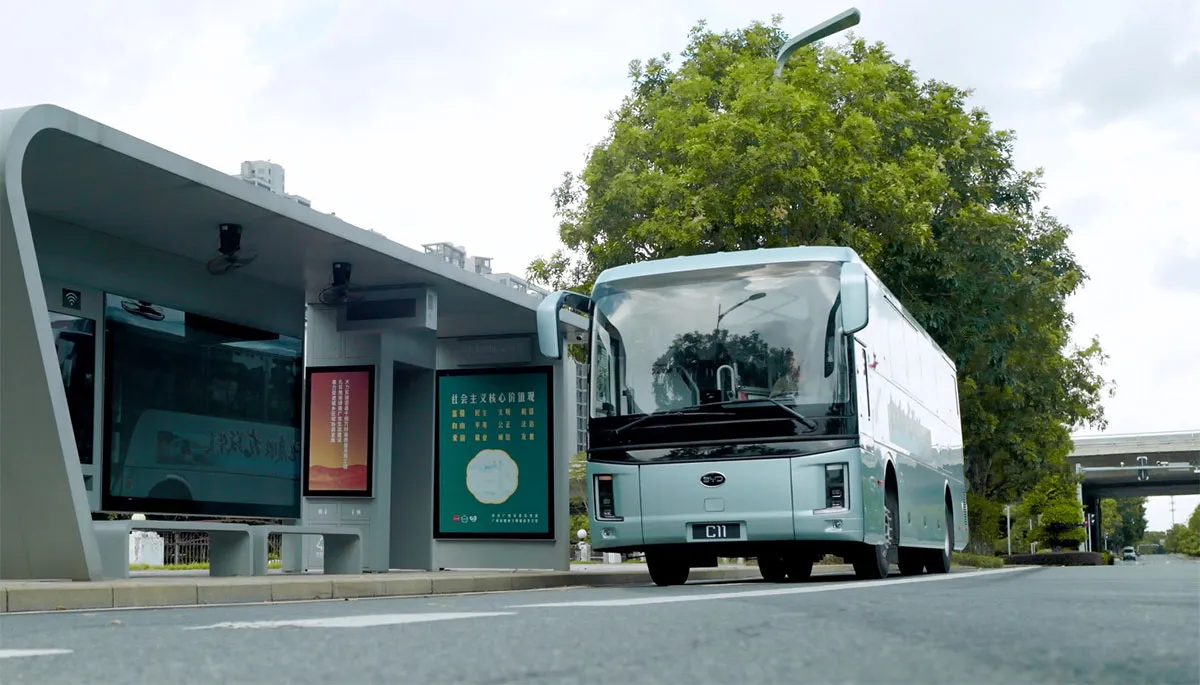
BYD has unveiled its latest innovation in electric mobility, the e-Bus Platform 3.0, designed to enhance both safety and performance for public transportation. One of the standout features is the high-speed tire blowout stability system, which maintains vehicle balance even at speeds of up to 63 mph (100 km/h). The system is engineered to activate within milliseconds of detecting a tire blowout, providing an added layer of safety for passengers.
The platform also includes a driver-assist safety feature: a dashboard button that allows passengers to bring the bus to a complete stop if the driver becomes incapacitated. This technology underscores BYD’s commitment to passenger protection and operational reliability.
At the core of the e-Bus Platform 3.0 is the cell-to-chassis battery system, which integrates BYD’s Blade lithium-iron-phosphate (LFP) batteries directly into the chassis. This design lowers the bus’s ride height, offering potential benefits for double-decker electric buses and overall vehicle stability.
The platform also supports the company’s first 1,000-volt charging system for buses, enabling faster energy replenishment, though specific charging times have not yet been disclosed.
Many of the innovations in the e-Bus Platform 3.0 are adapted from BYD’s passenger vehicle technology, illustrating the company’s strategy of leveraging proven automotive systems across different vehicle segments.
The first bus built on this platform, the C11, is currently available in China with five trims and driving ranges of up to 453 miles (730 km) under CLTC standards.
While BYD’s electric cars are not yet sold in the United States, its buses have been operating in the country for over a decade, including production of electric buses and trucks in California. This suggests that American passengers may already experience BYD’s latest safety and performance innovations firsthand.


