
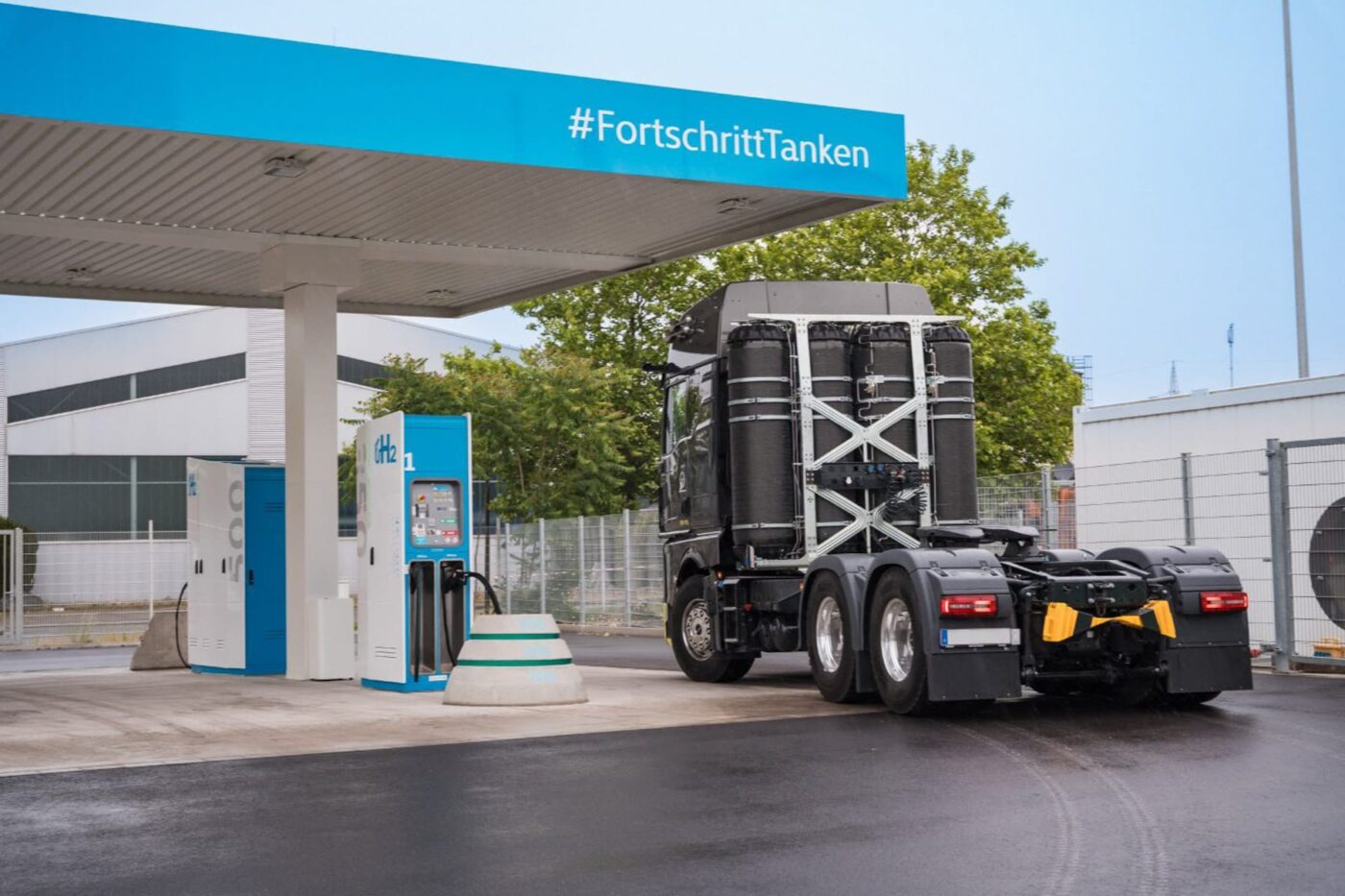
Six European hydrogen refuelling station operators have joined forces to accelerate the rollout of hydrogen mobility infrastructure, even as Germany prepares to retire a significant number of early-generation stations. The newly formed H2 Infrastructure Alliance brings together companies from Sweden, France, the Netherlands, Germany, Belgium, and France, with a combined 92 stations serving light and heavy commercial vehicles across the region.
The alliance partners—Hydri, TEAL Mobility, Fountain Fuel, H2 Mobility, Virya Energy and HYmpulsion—plan to add 39 large-capacity stations by 2028, a network they say will be capable of serving more than 1,800 trucks per day. The group argues that infrastructure deployment must move in step with vehicle availability, urging manufacturers to accelerate the rollout of hydrogen models. “With an ambitious yet realistic pace, it will be possible to realize a connected network of stations that cover Europe,” the alliance said.
The partners likened the current stage of hydrogen mobility to the early 2000s expansion of mobile telecommunications, where initial infrastructure investments created consumer uptake that later justified larger-scale buildouts. “Transmission towers and good signal coverage led to a strong increase in mobile telephone use,” they said, adding that wider network utilisation ultimately helped reduce overall system costs.
Despite the push for expansion, Germany is set to experience a contraction in the near term. H2 Mobility, one of the alliance members, said it will shut 14 stations by the end of 2025. The sites—among them Berlin-Rothenbachstraße, Essen, Ingolstadt and Limburg—were built more than a decade ago for a passenger car market that has not materialised at the scale once expected. “The stations that marked the beginning of hydrogen mobility more than ten years ago can no longer be adapted to today’s changing technical standards and growing requirements,” said Martin Jüngel, Managing Director and CFO of H2 Mobility.
Jüngel noted that demand from buses and trucks now accounts for more than 70% of hydrogen sales in Germany, shifting the focus toward higher-performance stations designed for commercial fleets. He said next-generation sites will offer faster refuelling at 350 bar and greater resilience. “The realisation of a Europe-wide filling station network is already in full swing and now requires commitment on the part of OEMs for increasing vehicle numbers,” he added.
In parallel, H2 Mobility plans to demonstrate the potential for hydrogen price reductions through a partnership with fuel cell truck rental company Hylane. From January 1, 2026, Hylane customers will be able to refuel at selected stations for around €8 per kilogram. The operator said the price reflects higher guaranteed demand and improved utilisation of new high-capacity sites, particularly in the Düsseldorf and Rhine-Neckar regions.
The alliance’s expansion plans come at a time when commercial vehicle strategies remain mixed across Europe. While Hyundai has introduced a new generation of the Nexo and BMW aims to commercialise a fuel cell X5 by 2028, major truck producers remain cautious. Daimler Truck continues customer testing of its GenH2 Truck, with series production not expected before the next decade.