

The European Union and India have agreed on a comprehensive trade deal that will significantly lower import tariffs for European-made vehicles entering the Indian market, a move that could reshape trade flows between the two economies and boost the competitiveness of European automakers in South Asia.
Under the agreement, tariffs on a defined annual quota of motor vehicles exported from the EU to India will be gradually reduced from the current 110% to as low as 10%. The quota is set at 250,000 vehicles per year. In addition, duties on automotive components are expected to be fully eliminated within five to ten years, according to initial details released by the EU.
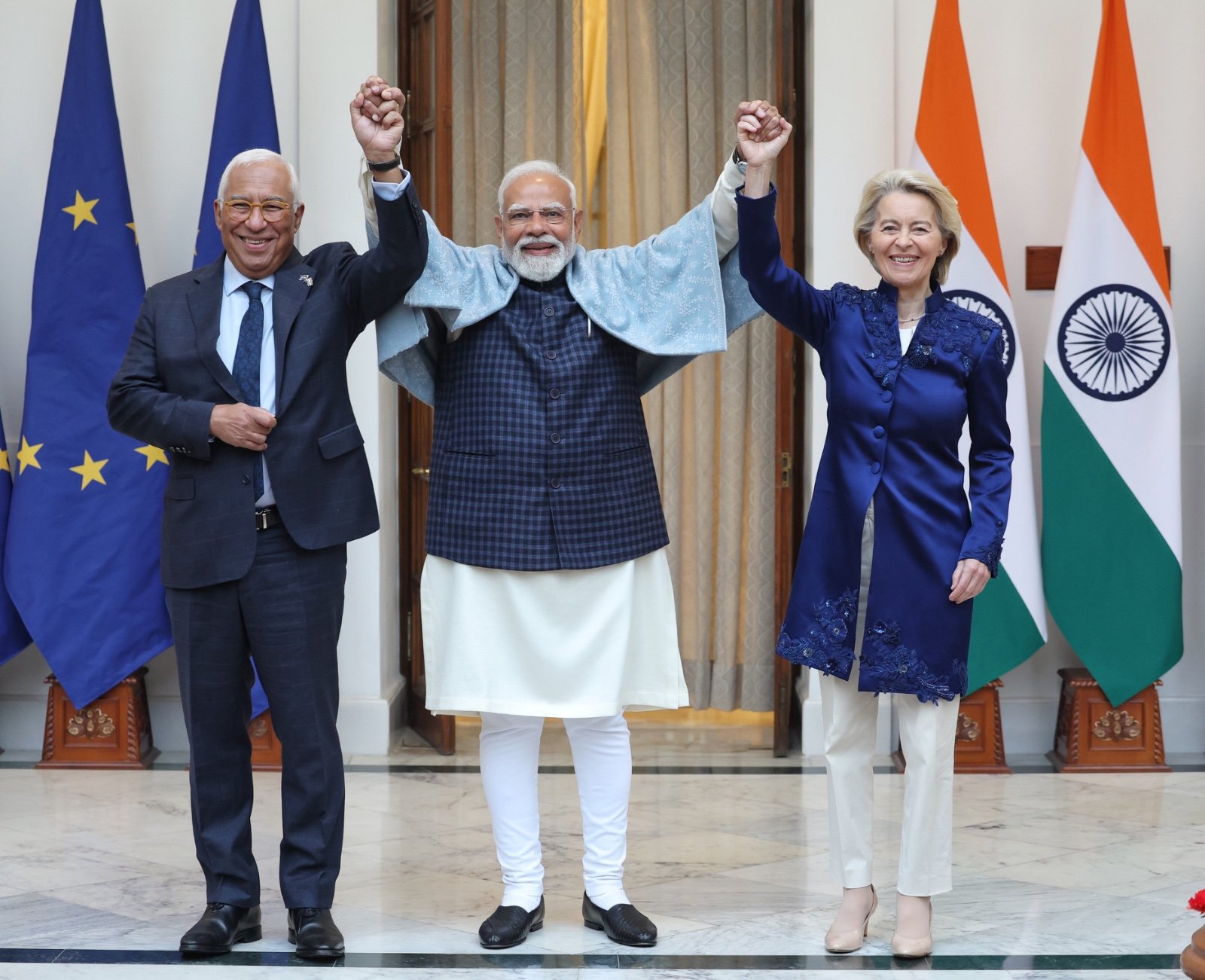
The deal was announced in New Delhi by Ursula von der Leyen and Indian Prime Minister Narendra Modi, marking the conclusion of negotiations to establish a wide-ranging free trade zone between the two sides.
Despite India being the world’s fourth-largest economy, European vehicles — both electric and combustion-powered — have historically struggled to gain traction in the market due to high import tariffs. As a result, the EU has played only a limited role in India’s auto imports. The tariff reductions are expected to materially improve the position of European electric vehicles in particular, as India accelerates its transport electrification efforts.
See also: Mercedes-Benz Launches EQS SUV Assembly in India, Expanding EV Lineup
The EU has identified the automotive sector as one of the main beneficiaries of the agreement, although several aspects remain unresolved. Brussels has yet to disclose what tariff treatment Indian vehicle exports will receive in the EU, and some technical details of the agreement are still being finalised.
Beyond autos, the agreement aims to eliminate or reduce tariffs on 97% of EU goods exports to India, with the European Commission projecting that EU exports to India could double by 2032. Tariffs that currently reach up to 44% on machinery, 22% on chemicals and 11% on pharmaceuticals are set to be largely removed. The EU estimates the reductions could save European exporters around €4 billion annually in duties.
See also: Mercedes-Benz Launches MB.Charge in India With Access to 9,000 Fast Chargers
India, home to more than 1.45 billion people, is the world’s most populous country, while the EU has a population of about 450 million. Together, the two economies account for close to a quarter of global GDP and the world’s population. The agreement comes amid heightened geopolitical tensions and broader global economic uncertainty, prompting the EU to frame the deal as a signal of continued commitment to open, rules-based trade.
The trade pact also includes sustainability provisions aimed at strengthening environmental and climate protection, reflecting India’s rapid push to reduce fossil fuel use, particularly in transport, and to develop hydrogen-based fuels for shipping and aviation. Other elements of the agreement grant EU service providers improved access to the Indian market in areas such as financial and maritime services.
See also: BMW India Plans Three New EV Launches as It Scales Line-Up and Retail Network
While vehicle imports will be subject to a quota, no such limits have been specified for machinery, electrical equipment, aircraft or spacecraft, which are set to enter India from the EU at zero tariff once the agreement takes effect.
The deal is not expected to enter into force immediately. Draft texts are due to be published by the EU, followed by legal review and translation. The agreement will then require approval by the European Council and the European Parliament, as well as ratification by India. Unlike the stalled EU-Mercosur trade deal, opposition within the European Parliament is seen as less likely, as the India agreement does not include provisions that heavily affect European agriculture.
See also: India Electric Car Sales Rise 77% in 2025 as Public Charging Network Expands Beyond 27,000 Stations
The announcement follows earlier indications that India was considering lowering tariffs on European-made vehicles, including electric models, as part of the negotiations. It also comes shortly after the EU and China reached an agreement on price undertakings for Chinese electric vehicle exports to Europe, underscoring the EU’s broader efforts to recalibrate its trade relationships in the global auto sector.