



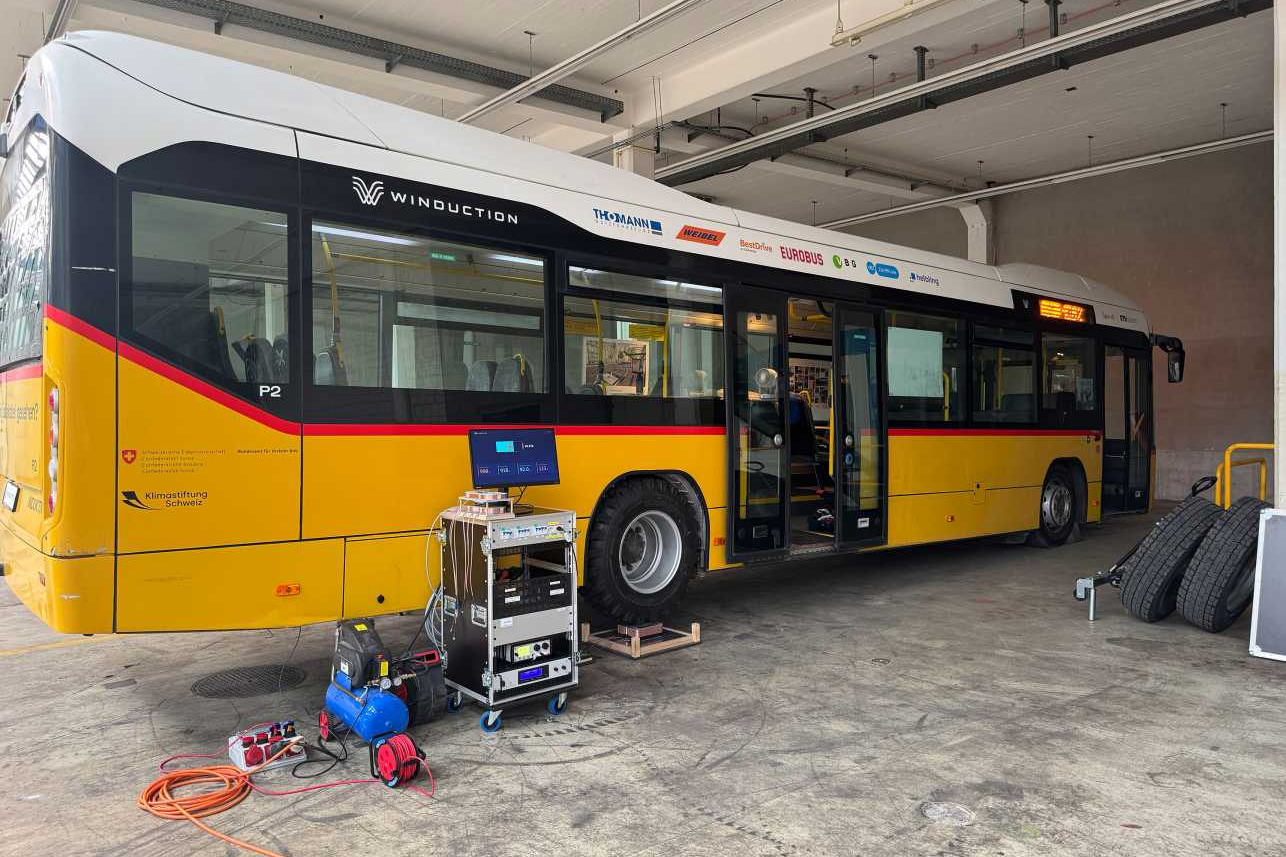
Winduction, a spin-off from ETH Zurich, has developed an inductive charging system designed to supply electricity to electric buses through their wheels at bus stops. The technology could allow operators to use smaller batteries and reduce vehicle weight, with a pilot project planned for 2028.
The system transfers energy from a charging plate embedded in the road surface to a coil integrated into a specially developed bus tyre. When a bus stops above the plate, a magnetic field transfers energy into the vehicle’s battery.
Charging System Transfers Energy Through Bus Wheels
Unlike conventional inductive charging systems that use a receiver coil mounted beneath the vehicle, Winduction integrates the vehicle-side coil into the wheel.
The approach is intended to reduce the distance between the charging components on the ground and the vehicle. According to the company, the system achieves more than 90% efficiency between the ground charging plate and the vehicle.
The technology is designed to recharge buses during short stops throughout the day, allowing them to receive additional energy while operating on scheduled routes.
Smaller Batteries Could Reduce Vehicle Costs
Winduction says opportunity charging at bus stops could reduce the battery capacity required for electric buses. Smaller batteries could lower acquisition costs and vehicle weight while potentially freeing up space or increasing passenger and payload capacity.
Daytime charging could also reduce the need for extended overnight depot charging and help limit peak electricity demand.
For a route connecting Zurich Airport and Zurich Oerlikon, Winduction estimates that charging plates would be required at only two of the route’s 24 stops. Based on the company’s calculations, buses operating on the route for 16 hours per day would collectively charge for around three hours.
Winduction compares this with approximately five hours of simultaneous overnight depot charging currently required by the electric buses operating on the route. These figures are company estimates rather than results from a completed operational trial.
Specially Developed Tyres Required
One technical challenge involves the steel belts used in conventional bus tyres. According to Winduction, these components would interact with the magnetic field and convert some transferred energy into heat.
The company is therefore working with partners to develop tyres without steel reinforcement for use with the charging system.
Winduction expects the additional tyre costs to represent a relatively small share of a bus’s overall lifecycle costs, although this will need to be assessed as the technology develops.
Test Infrastructure Under Development in Switzerland
Supported by the Swiss Federal Office of Transport and the Swiss Climate Foundation, Winduction is developing test infrastructure in Winterthur. The facilities will include a laboratory and a dedicated charging stop.
The next development stage involves integrating the system’s components into a near-industrial configuration and converting a complete electric bus for testing.
The company is working with transport operators to evaluate potential savings and identify suitable routes for deployment. Discussions are reportedly underway with several Swiss operators, including those considering applications in the Zurich Airport region.
Wireless Charging Developments Extend Beyond Buses
Inductive charging is also being investigated for other vehicle applications.
Honda, Taisei and Taisei Rotec are developing a dynamic wireless power transfer system that uses coils embedded in road surfaces to charge vehicles while they are moving. The partners plan demonstrations in the Japanese fiscal year 2027 and aim to test charging power of up to 150 kW for heavy-duty commercial vehicles.
Winduction’s system differs by transferring energy while buses are stationary at designated stops, rather than charging vehicles in motion.
Pilot Operation Planned for 2028
Winduction plans to conduct its first pilot operation under real-world conditions in 2028. The project is intended to evaluate the integrated system and establish how the technology performs in regular bus operations.
The proposed trial comes as Zurich continues to expand its electric bus fleet. Public transport operator VBZ has decided to procure 20 additional electric buses from Yutong and Daimler Buses, which are expected to be needed from mid-2027.
The results of Winduction’s planned pilot will help determine whether wheel-based inductive charging can provide a practical alternative or complement to conventional depot and plug-in charging systems.


