




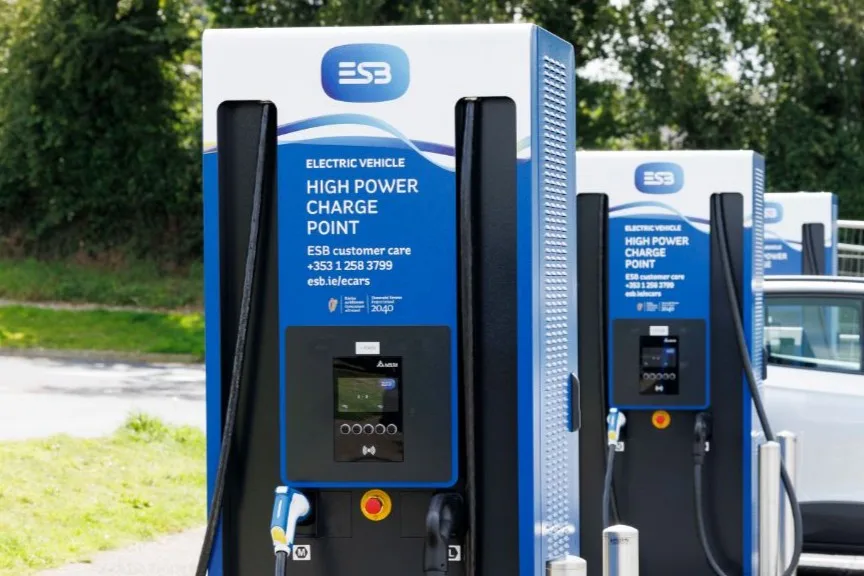
ESB eCars has introduced higher tariffs across its public electric vehicle (EV) charging network in Ireland and Northern Ireland, increasing charging costs for both pay-as-you-go customers and subscribers while simplifying its pricing structure for DC charging.
The revised tariffs group all direct current (DC) chargers above 50kW into a single pricing category, replacing the previous tiered system.
New Charging Prices
In the Republic of Ireland, pay-as-you-go customers now pay €0.60 per kilowatt-hour (kWh) when using AC chargers of up to 50kW and €0.72/kWh for all DC chargers above 50kW.
Under the previous pricing model, ESB eCars charged different rates for fast and high-power DC chargers, including separate pricing for units above 150kW.
Customers enrolled in the company’s subscription plan, which costs €4.79 per month with a 12-month commitment, receive discounted rates of €0.55/kWh for AC charging and €0.67/kWh for DC charging.
Drivers using contactless payment are charged €0.61/kWh for AC charging and €0.73/kWh for DC charging.
Northern Ireland Tariffs
A similar pricing structure has been introduced in Northern Ireland.
Subscribers pay £0.57/kWh for charging at stations up to 50kW and £0.70/kWh for chargers above 50kW.
Pay-as-you-go customers are charged £0.60/kWh and £0.74/kWh respectively, while contactless payments cost £0.61/kWh for AC charging and £0.75/kWh for DC charging.
Overstay Fees Remain
ESB eCars will continue applying overstay charges to encourage charger availability.
Drivers remaining connected to rapid or high-power chargers for longer than 45 minutes will incur an overstay fee of €0.50 or £0.50 per minute, depending on the location, up to a maximum of €22.50 or £22.50.
The same fee applies after 10 hours of connection at AC charging stations.
Higher Costs Drive Tariff Changes
According to ESB eCars, the revised pricing reflects continued increases in energy prices and operating costs.
The company noted that public charging tariffs had remained unchanged since July 2025, when prices were last adjusted.
ESB said the latest tariff revision will support the continued maintenance of its charging network while funding further investment in high-power charging infrastructure and expanding public charging availability across Ireland and Northern Ireland.


