

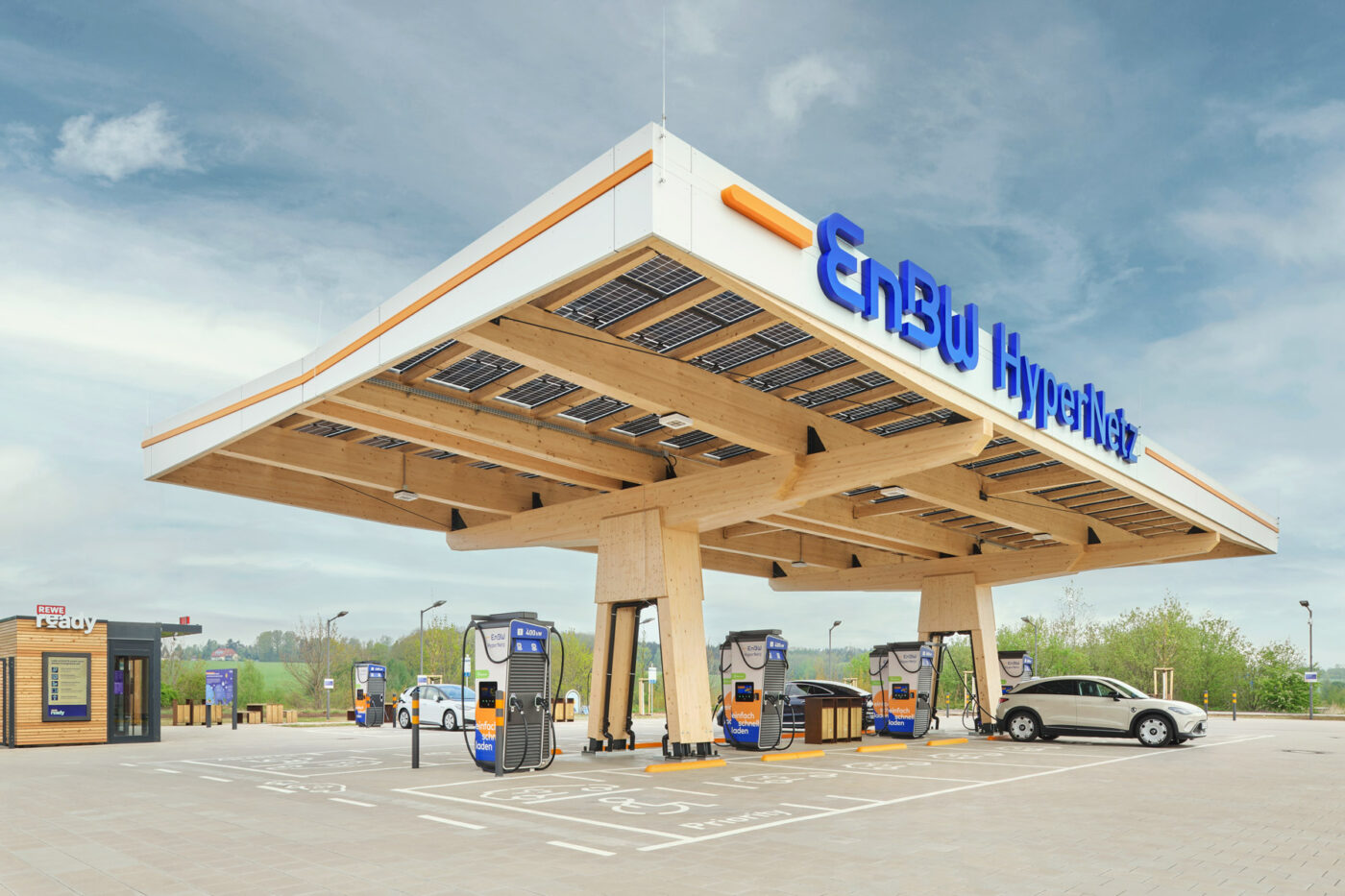
German utility EnBW will lower prices for electric vehicle charging at its mobility+ network from December, the company said on Wednesday, as part of wider reductions in electricity, gas, and heating costs.
The changes will reduce the S and M charging tariffs by three cents per kilowatt hour, while the top-tier L tariff will see a reduction in its monthly base fee. Under the new pricing, the S tariff without a monthly fee will drop to €0.56 per kWh from €0.59, and the M tariff, which carries a €5.99 monthly fee, will fall to €0.46 per kWh. The L tariff will remain at €0.39 per kWh, but its monthly fee will decrease to €11.99 from €17.99. Roaming prices for charging at other operators’ points will start at €0.56 per kWh, with an upper limit of €0.89 per kWh.
“This means that the prices in the EnBW mobility+ charging offer are overall at the lower end of the market average. All customers will be informed individually about their price reduction in the coming days,” the company said in a statement.
Lars Jacobs, EnBW’s Chief Commercial Officer E-Mobility, said the reduction could save customers on the M tariff up to €100 per year. “We regularly look at where we can offer our customers cost reductions or other benefits. After lowering the ad hoc prices for fast charging to €0.79/kWh in August, we are now able to offer this to all our customers across the board,” he said.
Charging prices reflect multiple factors, including electricity procurement, grid fees, and infrastructure investments. Jacobs noted that falling grid fees at the start of 2025 contribute to the reduction but are not the sole factor. Across Germany, grid fees are expected to decline by an average of 1.95 cents per kWh, although regional differences exist.
EnBW does not plan to implement dynamic charging prices in the near term. “We know from numerous customer surveys that our customers want precisely this predictability and reliability of consistent prices,” Jacobs said. He added that two-thirds of charging costs are determined by grid fees, taxes, and other non-electricity components, meaning changes in wholesale electricity prices have a limited effect on final customer prices.
Ad hoc charging—paying directly without registration—accounts for only a small portion of usage, with around 95% of customers using subscription tariffs. Jacobs said, “Electric mobility works differently from refuelling; it is a digital business… Our charging prices are the same at more than 7,500 EnBW fast charging points throughout Germany, regardless of when and where I charge: I know what I’m getting.”
EnBW also confirmed that it will continue investing in expanding its fast-charging network, including high-power charging parks along motorways and in retail locations. Jacobs said the company invests up to €200 million annually in the network and aims for profitability in the long term. “We generated a positive operating result for the first time in 2024. However, it will take a few more years before the business is able to support itself in terms of depreciation and investment costs,” he said.
Source: Electrive