




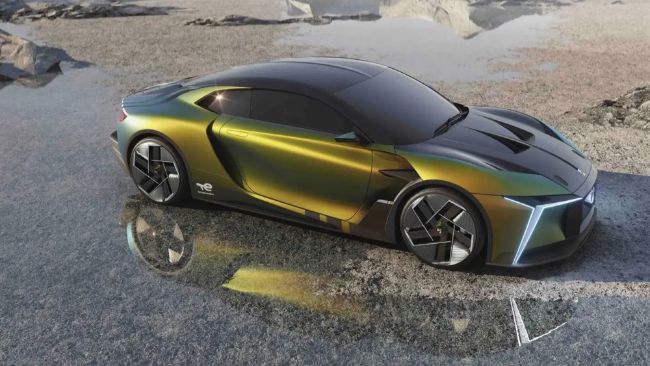
DS Automobiles’ latest concept car illustrates that future cars don’t need conventional brakes. Where, a set of ordinary disc brakes, will be replaced with regenerative braking technology to regulate the speed.
This technology was developed with the Formula E DS team and uses the exact same electric motor in its racing cars. This technology will regulate the braking of the two-door coupe producing 804 hp and 8,000 Nm of torque, with the ability to accelerate from 0-100 kph in 2.0 seconds. And, take advantage of the 350 kW charging technology that charges the battery in just five minutes.
“Formula E is about maximizing performance and efficiency, and DS E-Tense Performance is our vision of a road car that leverages our racing technology,” said Beatrice Foucher, CEO of DS Automobiles.
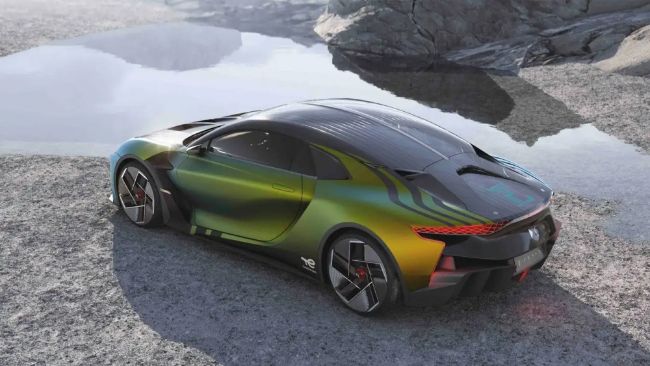

Regenerative braking is nothing new. These are commonly found in electric and hybrid vehicles. DS Automobiles looked further into the future and explored ideas for eliminating conventional rotors and hydraulic calipers.
See also: Deus Vayenne electric hypercar boasts 2.200 hp and 248 mph top speed
The advantage of such an arrangement is the reduction in weight as it removes the heavy disc brake hardware that most cars typically use steel, rather than the lighter carbon rotors.
Making use of all the braking energy, rather than letting it go to waste on the heat generated from the friction of the bearings pushing against the discs, is also great for efficiency, as it can be channeled back into battery charging.
“Regenerative braking is a very powerful way to not only slow down a vehicle, but also help improve battery performance. The DS E Tense Performance takes technology to a new level, with regenerative braking used only to slow down the vehicle,” concluded Foucher.


