
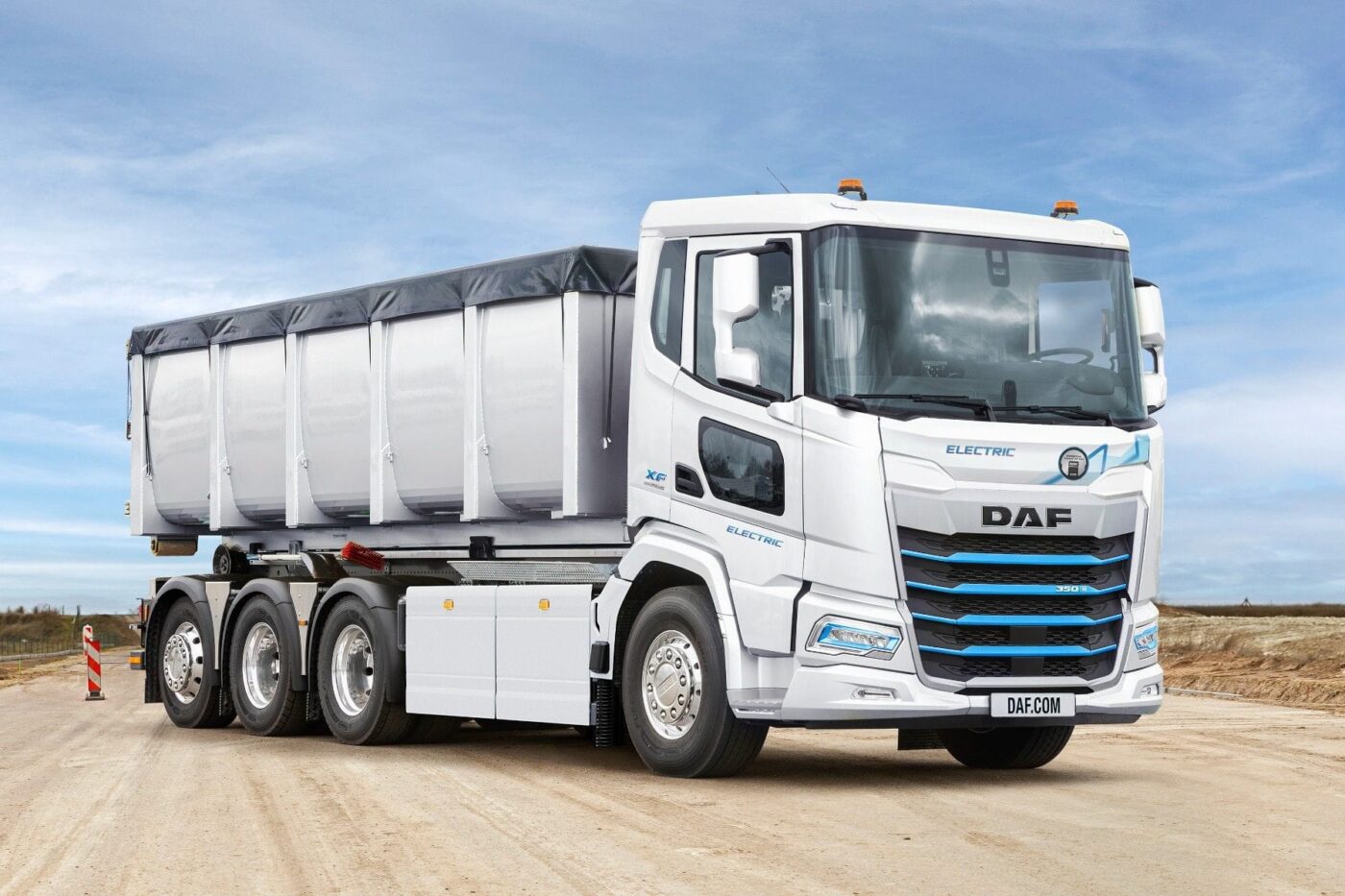
DAF Trucks said it is expanding its fully electric truck portfolio to include 6×2, 6×4 and 8×4 configurations, targeting specialised transport and construction applications as it broadens its zero-emission offering beyond long-haul and distribution use.
The new axle variants will be available across the XD and XF Electric ranges, as well as the newer XG and XG+ Electric models, which feature larger cabs aimed at long-distance operations. All vehicles are produced at DAF’s Eindhoven plant and are battery-electric versions of platforms previously offered only with internal combustion engines.
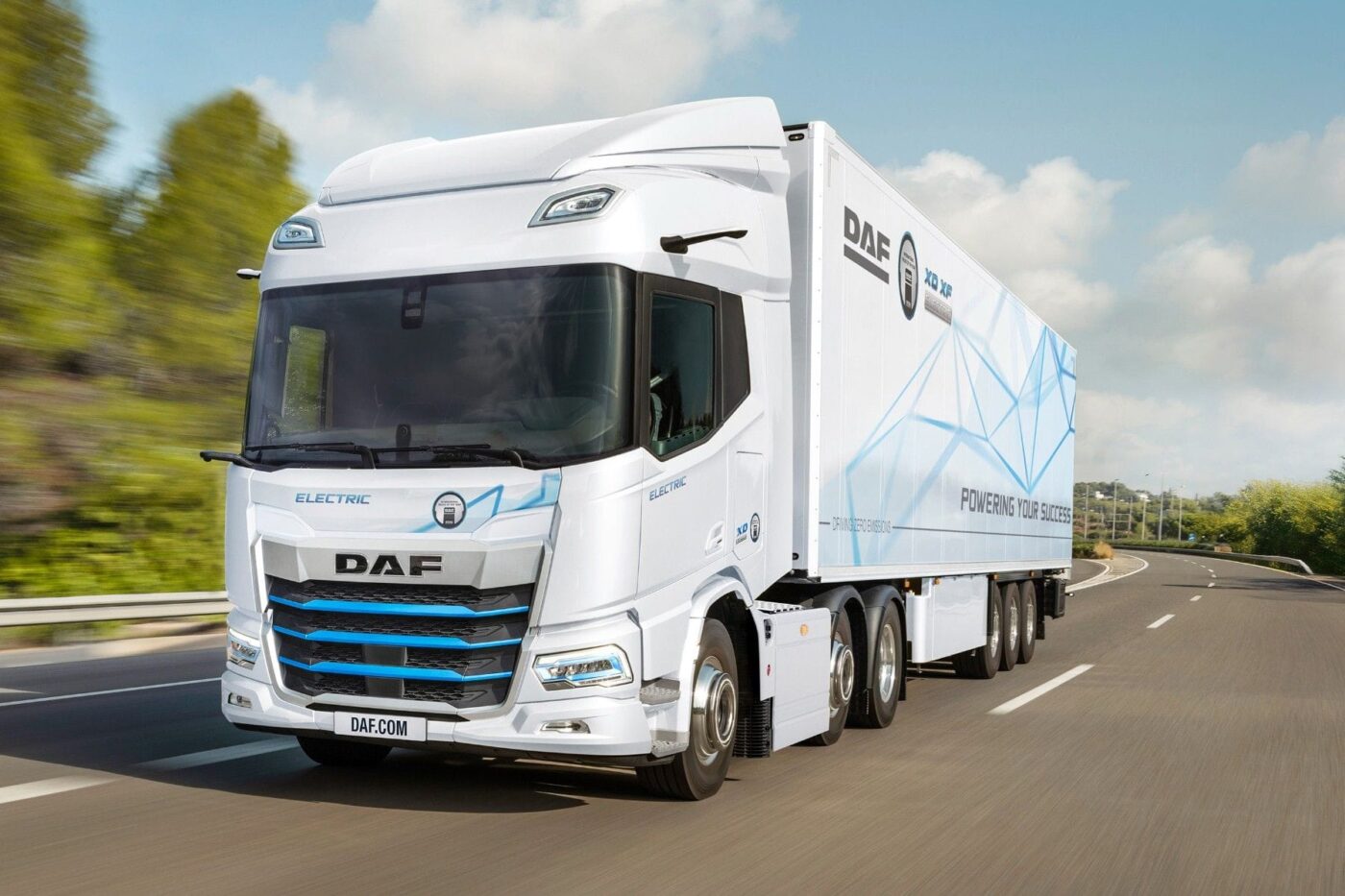
DAF said the electric versions were integrated into the vehicle development process from the outset, allowing the manufacturer to extend electrification to more demanding applications. The trucks are powered by electric motors supplied by parent company Paccar, delivering outputs between 170 kW and 350 kW, with lithium iron phosphate (LFP) battery options ranging from 210 kWh to 525 kWh. The largest battery configuration is designed to provide a driving range of more than 500 kilometres, with DC fast-charging capability of up to 325 kW.
Among the new models are the FTG and FTN Electric 6×2 tractor units, available with either a steered pusher axle or a steered trailing axle, and offering gross vehicle weights of up to 50 tonnes. DAF positions these variants for heavy-duty distribution, construction material transport and applications requiring high manoeuvrability, including extra-long “EcoCombi” road trains.
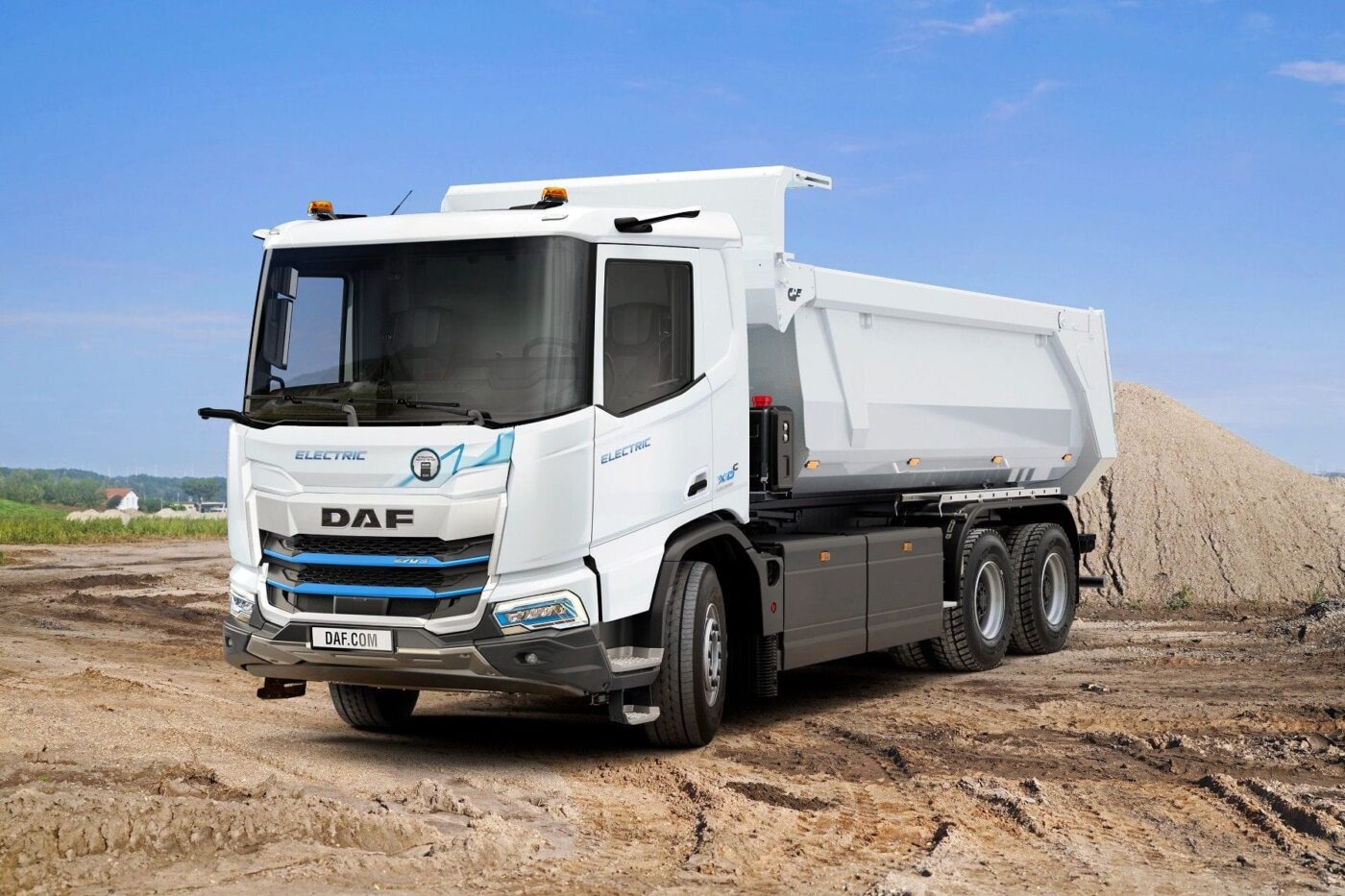
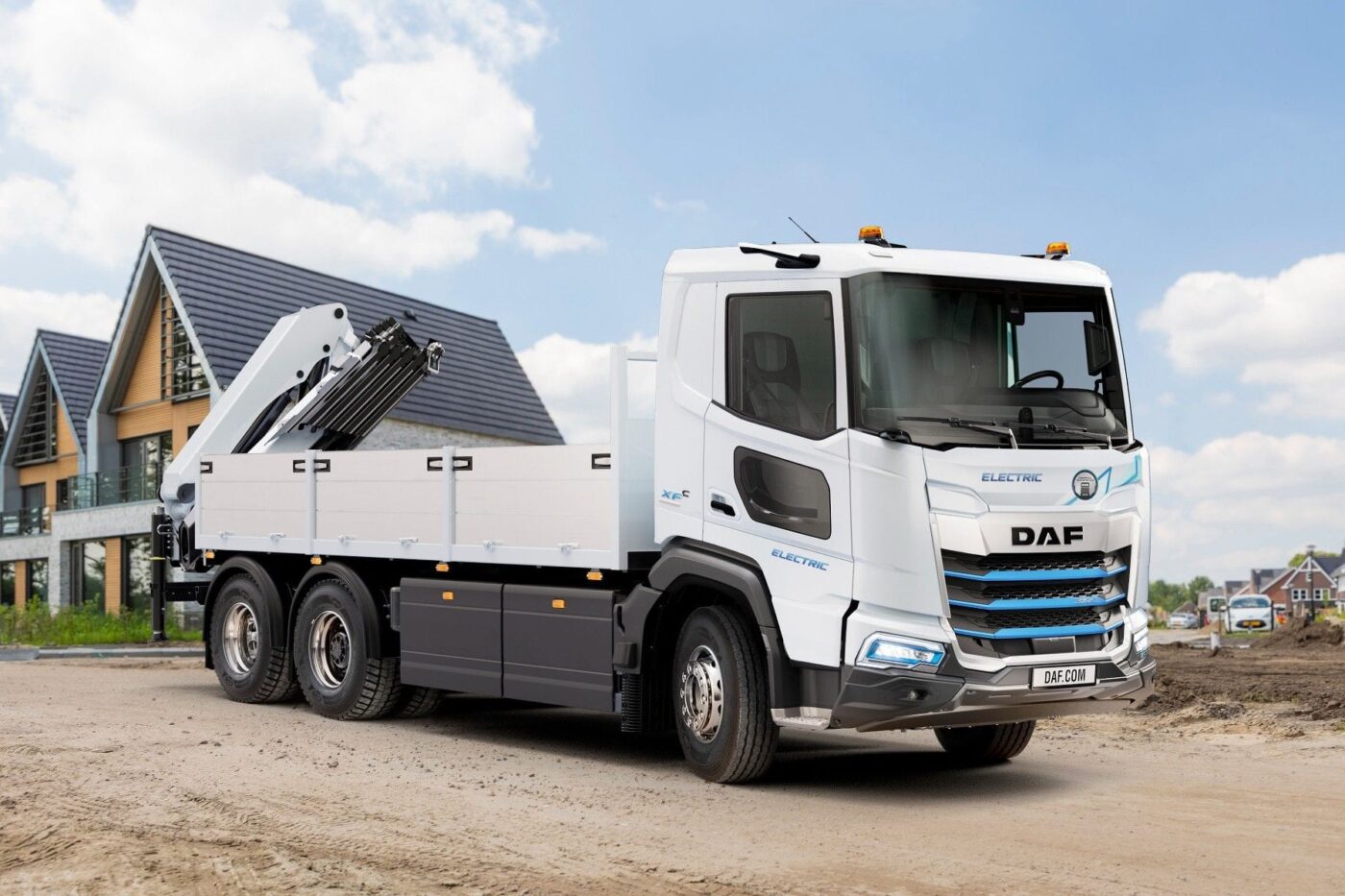
The line-up also includes the FAS Electric, a 6×2 rigid truck with a trailing axle and a gross vehicle weight of up to 28 tonnes, designed for tippers and demountable container systems. For construction-focused operations, DAF has added the FAT Electric 6×4 and FAW Electric 8×4 models, both featuring double-driven rear axles and aimed at heavy-duty tasks such as concrete mixers, tippers and bulk material transport. The FAW Electric supports gross vehicle weights of up to 37 tonnes.
DAF said all new variants support flexible battery placement to accommodate different bodywork configurations and can be equipped with an optional 650-volt electric power take-off (ePTO) delivering 25 kW, 60 kW or 100 kW to power auxiliary equipment such as refrigeration units or tipping systems.
“By adding multi-axle and double-drive configurations, we now offer zero-emission solutions for nearly all transport applications,” said Jeroen van den Oetelaar, a member of DAF’s board and head of product development. He said the new electric models retain the safety, comfort and usability characteristics of DAF’s New Generation trucks while enabling tailor-made solutions for customers transitioning to electric transport.
The expansion reflects growing interest in electrification beyond urban delivery and long-haul trucking, as manufacturers seek to address emissions reduction targets in sectors such as construction, waste management and specialised heavy transport.