




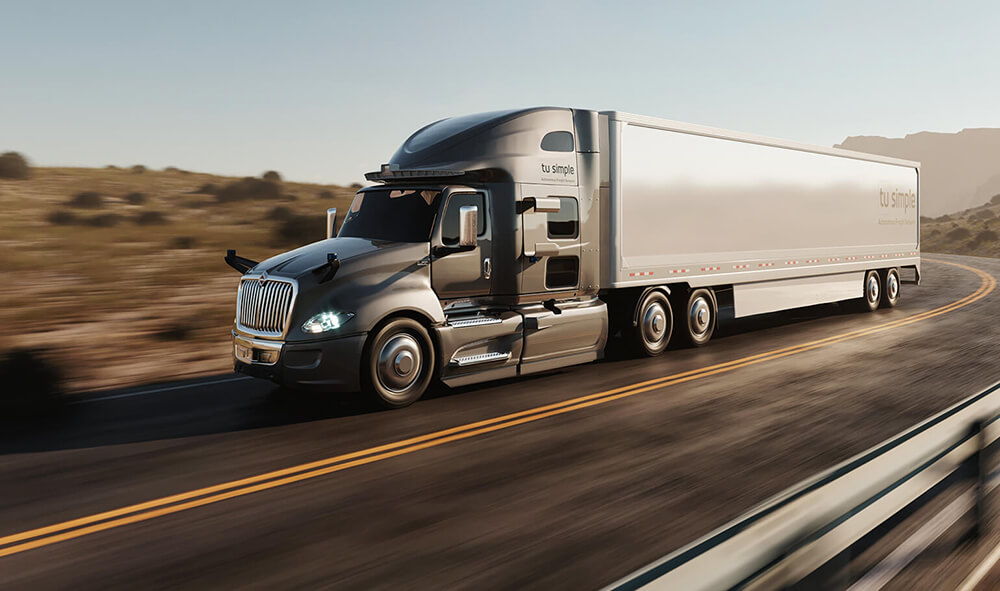
Self-driving truck startup TuSimple, which rebranded to CreateAI in late 2024, transferred a cache of sensitive U.S.-developed autonomous vehicle technology to a Beijing-owned company shortly after pledging to the U.S. government to cease such activity, The Wall Street Journal reported, citing hundreds of pages of internal documents and correspondence.
According to the report, the transfers occurred around February 2022—just one week after TuSimple signed a national security agreement with U.S. regulators requiring it to implement firewalls and sever operational ties with China-based employees and partners. The recipient of the data was Foton Motor, a Chinese truck manufacturer owned by the state-run BAIC Group.
The data transfers reportedly continued for up to six months, until TuSimple’s compliance deadline under the agreement. While a subsequent review by the Committee on Foreign Investment in the United States (CFIUS) found that the activity did not formally breach the agreement, TuSimple was fined for unrelated violations and paid a $6 million settlement without admitting wrongdoing, according to the Journal.
TuSimple, now operating as CreateAI, did not respond to a request for comment by TechCrunch.
The disclosures add to a growing list of controversies surrounding the once-prominent U.S. AV startup. In late 2023, some shareholders sought to block the company from transferring approximately $450 million to its Chinese subsidiary amid a strategic shift toward AI animation and content generation. Co-founder Xiaodi Hou, who is seeking to regain control of his voting shares, continues to push in court for the company’s liquidation.
Founded in 2015 by Hou and Lu Chen, TuSimple rapidly emerged as a leader in autonomous trucking, raising $2 billion from Chinese and American investors and completing a milestone fully driverless run on a U.S. highway. However, the company’s fortunes declined amid scrutiny over its Chinese ties, resulting in its delisting from the Nasdaq in January 2024 and exit from U.S. operations.
The Journal’s report also highlights TuSimple’s overlap with Hydron, a Chinese hydrogen truck startup founded by Chen, which shared offices with TuSimple China. During a 2022 CFIUS probe, TuSimple admitted that employees had worked on Hydron projects during paid hours and shared confidential AV technology with the firm. Internal documents show TuSimple had brokered a deal in 2021 for Hydron and Foton to jointly develop autonomous trucks. Foton also maintains ties with a Chinese military university involved in AV research.
Through a combination of internal communications, including Slack messages and video calls, TuSimple reportedly provided Chinese partners with technical data such as server specifications, brake and sensor designs, chipsets, and steering systems. Employees in China also routinely downloaded American-developed source code, the Journal said.
As the U.S. sharpens its scrutiny of Chinese tech investments, TuSimple’s actions are likely to reinforce efforts to curb cross-border technology transfers in sensitive industries. The case has become a cautionary example in Washington, fueling a shift toward more aggressive national security safeguards.


