
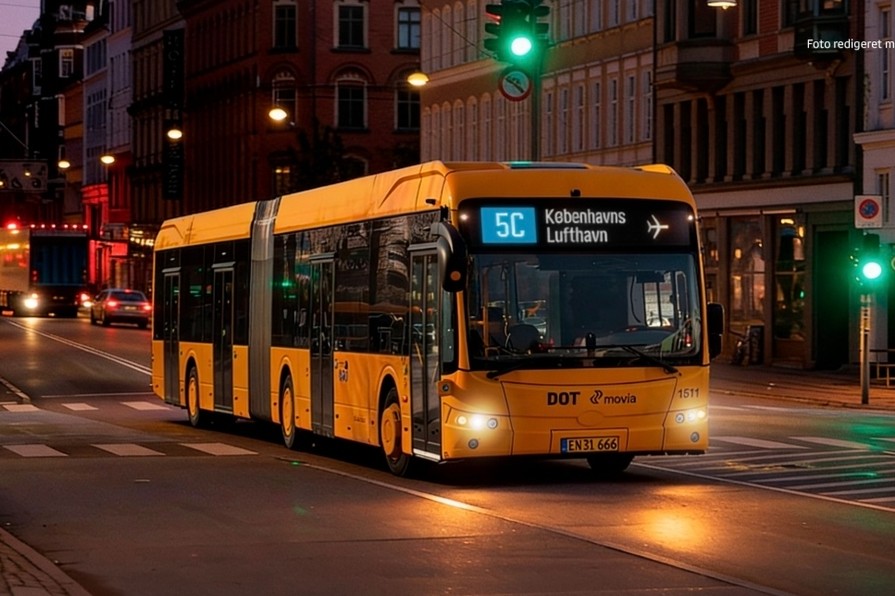
The city of Copenhagen has completed its transition to a fully electric bus network after converting its final two routes, 19 and 5C, marking a major milestone in its efforts to decarbonise public transport.
The transition was finalised on March 29, when transport operator Movia deployed electric buses on the last remaining diesel-operated routes. Route 19 received 15 new electric buses, while route 5C—Denmark’s busiest bus line, carrying around 17 million passengers annually—now operates with 37 electric buses.
Copenhagen first set out its electrification strategy in 2016, aiming to convert all 42 municipal bus routes to emission-free vehicles. By 2023, around 90% of routes were already electrified, with the city committing to complete the transition by 2025. The final rollout represents a slight delay but fulfills the broader objective.
Sisse Marie Welling, Lord Mayor of Copenhagen, said: “The fight for cleaner air has been a key issue for me since I entered politics, and that’s why I’m also really happy that we’ve now completely completed the transition to 100 per cent electric buses. It’s a huge milestone that Copenhagen is now a city where public transport is green, and neither pollutes nor emits CO2.”
Jeppe Gaard, Transport Director at Movia, highlighted the broader regional impact. “Congratulations to the Municipality of Copenhagen. Of course, with the new electric buses on lines 19 and 5C, but equally with all of the municipality’s bus lines now running on electricity. It is a historic milestone that has contributed to Movia’s total share of electric buses today being up to 72 per cent,” he said.
Movia introduced its first electric buses in 2019, following a 2016 decision by its owners—45 municipalities and two regions in Zealand—to electrify half of its fleet by 2030. That target was reached in 2024, six years ahead of schedule.
Despite the milestone, diesel buses will not be entirely eliminated immediately. The city said they may still be used in exceptional circumstances, such as operational disruptions or special services, until the full fleet transition is completed.