



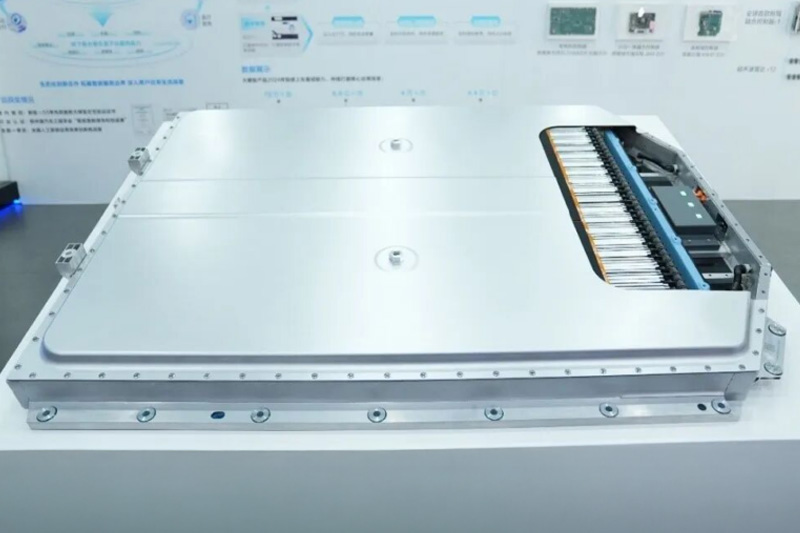
Chinese solid-state battery developer WeLion said it has made significant progress toward its long-term goal of achieving an energy density of 1,000 watt-hours per kilogramme (Wh/kg), reporting laboratory results that have already reached 824 Wh/kg, though the technology is not yet ready for commercial deployment.
WeLion is among a group of companies pursuing solid-state battery technology, alongside firms such as Factorial, which partners with Mercedes-Benz, and QuantumScape, backed by Volkswagen. Solid-state batteries replace the liquid electrolyte used in conventional lithium-ion cells with a solid material, a shift widely expected to improve driving range, charging speed and safety.
See also: WeLion New Energy Starts IPO Process, Could Become China’s First Listed Solid-State Battery Firm
According to WeLion chief executive Yu Huigen, the company has now demonstrated what it describes as a record energy density in controlled laboratory conditions. “We expect to break the 1,000 Wh/kg barrier in the long term,” Yu said, without providing a detailed timeline.
By comparison, today’s widely used lithium iron phosphate (LFP) batteries typically offer energy densities of around 150 to 180 Wh/kg, while many solid-state battery developers publicly target levels of 350 to 500 Wh/kg. WeLion has not disclosed technical details explaining how it plans to sustain a substantial lead over competitors.
See also: BASF Supplies Cathode Materials To WeLion For Semi-Solid-State Batteries
Yu said cost remains the main barrier to large-scale commercialisation, particularly due to the high price of raw materials used in sulphide-based solid electrolytes, according to Car News China. “Initially, these batteries will be deployed in price-insensitive applications where safety is paramount,” Yu said, pointing to potential uses such as humanoid robots.
WeLion already supplies semi-solid-state batteries to Nio and has established production facilities in Beijing, Jiangsu, Zhejiang and Shandong, with a combined annual capacity of 28.2 gigawatt-hours (GWh). The company aims to expand capacity beyond 100 GWh and begin mass production of fully solid-state batteries by 2027.
See also: Volkswagen’s PowerCo Starts Battery Cell Production at Salzgitter Gigafactory
The company is also exploring an initial public offering, which, if completed, would make WeLion the first pure solid-state battery producer to list in China, Yu said.


