
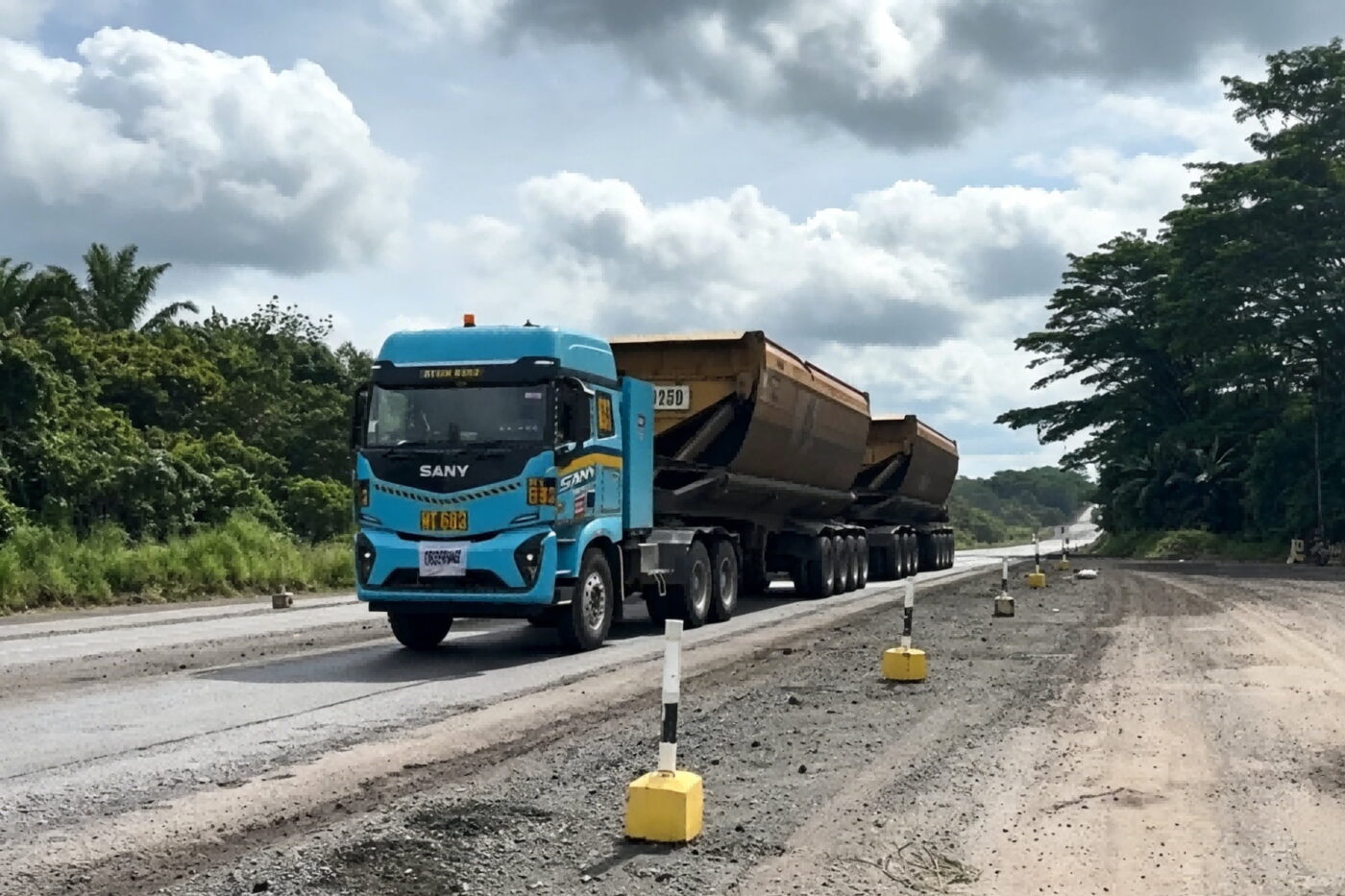
China has unveiled an ambitious national strategy to accelerate the adoption of new energy vehicles (NEVs) in the heavy-duty trucking sector, targeting a 40% share of new registrations for trucks over 12 tonnes by 2030.
The plan, jointly issued by 11 government agencies, outlines a series of infrastructure, financing and policy measures designed to accelerate the transition toward lower-emission freight transportation across the country.
In China, NEVs include battery-electric vehicles (BEVs), plug-in hybrid electric vehicles (PHEVs) and hydrogen fuel cell vehicles.
Ambitious 2030 Targets
Under the new roadmap, China aims to significantly increase the presence of NEV trucks in the heavy-duty transport sector by the end of the decade.
Key objectives include:
- Achieving a 40% market share for NEV trucks in new registrations of vehicles over 12 tonnes.
- Expanding the national NEV truck fleet to approximately 1.6 million vehicles, representing around 20% of the country’s heavy-duty truck population.
- Increasing the share of freight transported by NEV trucks on highways to 18%.
The targets build on rapid growth already seen in the sector. According to Chinese industry data, sales of heavy-duty NEV trucks above 12 tonnes reached 231,100 units in 2025, representing a 182% increase compared with the previous year and accounting for 29% of new registrations.
Major Infrastructure Expansion
To support the transition, authorities plan to coordinate the construction of approximately 3,000 charging and battery-swapping stations dedicated to heavy-duty vehicles.
The government also intends to establish 30,000 kilometres of carbon-neutral freight corridors along key highway routes.
Under the plan, operators of newly built or upgraded motorway service areas will be required to install charging infrastructure or reserve space for future deployment.
Battery swapping is expected to play an important role in China’s heavy-truck electrification strategy, allowing commercial vehicles to minimize downtime while improving fleet utilization.
Focus on Key Freight Corridors
The roadmap also introduces regional targets for areas with high freight activity and significant air quality challenges.
Specific regions, including the Beijing-Tianjin-Hebei economic cluster and the Fenwei Plain, are expected to achieve electrification rates of up to 80% for regular short-distance freight shuttle operations.
The government views these routes as particularly suitable for electrification due to predictable operating patterns and centralized charging opportunities.
Financial and Policy Support
Alongside infrastructure investment, China plans to expand financial incentives to support fleet operators and logistics companies.
Measures include:
- Enhanced fiscal support for vehicle purchases and charging infrastructure.
- Greater use of green financing instruments and dedicated local government bonds.
- Promotion of battery leasing and vehicle-battery separation business models.
- Continued development of regulations supporting NEV truck deployment.
These initiatives are intended to reduce upfront costs for operators while encouraging wider adoption of electric and alternative-energy commercial vehicles.
China Pulls Further Ahead
China’s heavy-duty NEV truck market already significantly exceeds adoption levels seen in other major regions.
According to industry data, Europe registered 6,372 externally chargeable trucks above 16 tonnes in 2025, representing approximately 2% of new registrations.
Even when including electric trucks above 12 tonnes, the European market remains far behind China’s rapidly expanding heavy-duty electrification efforts.
With aggressive targets, large-scale infrastructure investments and strong policy support, China is positioning itself to become the world’s leading market for zero-emission heavy-duty freight transport over the coming decade.
Source: CnEVPost